
















































Coinbase Centrifuge Investment Makes Base Tokenization Bet Explicit
The Coinbase Centrifuge investment is reportedly a seven-figure Coinbase allocation to Centrifuge, with the project named as Base’s main asset tokenization partner. Coinbase is putting a “seven-figure sum” into Centrifuge, according to an undated wire post. I’ll be honest: that is a thin headline if someone is trying to trade it alone. But for traders, it ties together three live screens they already watch every week: COIN’s exchange business, Base activity, and the real world asset tokenization trade.
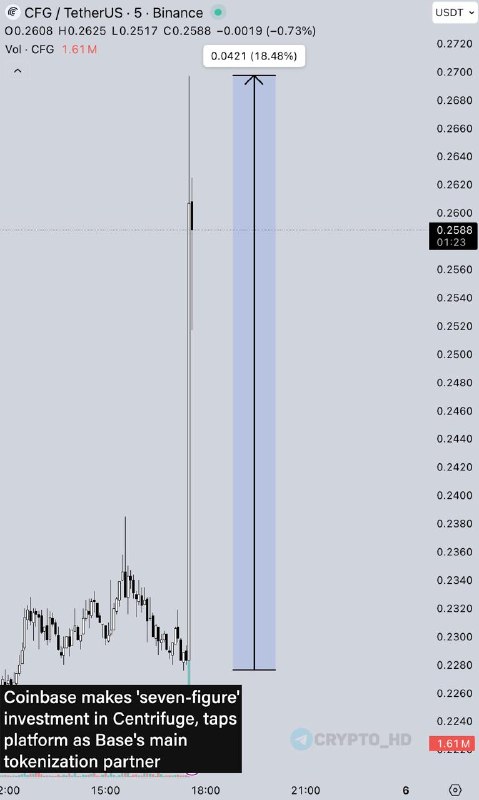
The facts are thin. Very thin. The report names Coinbase, Centrifuge, a “seven-figure sum,” Base, and asset tokenization. It gives no exact dollar amount, no date, no valuation, and no executive quote. Most crypto headlines want you to fill those blanks with a big story. That’s only half right. In infrastructure, the story can move first, but revenue, usage, and tokenized asset flows still have to show up later.
The Coinbase Centrifuge investment looks more like an adoption signal than proof of near term revenue. Coinbase is no longer just a retail exchange under the COIN ticker; through Base, it also has a stake in where on-chain activity settles. Coinbase says Base launched in 2023 as an Ethereum Layer 2 network built to bring users and applications on-chain. Since then, Base has become one of Coinbase’s bigger bets outside trading fees. Centrifuge’s Base role puts tokenized assets closer to that distribution channel. My take: do not treat this as cash flow yet. A seven-figure check is an endorsement, not a revenue line.
Tokenization means turning real world or financial assets into blockchain tokens that can be issued, transferred, and settled on-chain. Simple idea. Messy execution. Why does this matter? Because tokenization is one of the few crypto themes in 2026 that can still make sense to both ETH investors and traditional finance allocators. Context/analysis: the Ethereum Foundation says the Merge was completed on September 15, 2022, shifting ETH’s market story toward settlement, staking, and infrastructure. After 2023, tokenized treasury products became a regular institutional talking point as asset managers and blockchain firms pitched on-chain access to yield bearing instruments. Centrifuge fits that lane. If Base becomes a preferred venue for real world asset issuance, ETH and COIN traders will care about the practical result: fees, users, liquidity that sticks, and whether institutions keep coming back after the first announcement cycle.
The regulatory angle is hard to miss, but the report does not give much to work with. Tokenized assets can touch securities, lending, funds, custody, market structure rules. Counter to the usual crypto take, that complexity is not automatically bearish. It could help Coinbase if Base becomes a trusted distribution layer. It could also slow everything down. Coinbase has spent years under U.S. regulatory scrutiny, and tokenized assets sit close to several rulebooks at once. The source does not mention the SEC, CFTC, or any filing, so none should be assumed. The market question is still fair: does Base become a compliant venue for tokenized assets, or does regulatory uncertainty keep institutions cautious until real volume appears?
Macro matters too, even though the wire post says nothing about rates or inflation. Interest rates shape demand for yield linked crypto products. Context/analysis: the Federal Reserve says U.S. monetary policy affects financial conditions, risk appetite, and yield expectations. When U.S. rates stay high, investors ask whether tokenized assets can offer on-chain access to yield without taking straight BTC or ETH exposure. Is that overreading a short wire item? Maybe. Still, the Coinbase-Centrifuge tie-up has more weight than a routine project headline because it points to a market trying to move real world collateral on-chain while traders still price BTC and ETH around Federal Reserve dates.
The biggest missing pieces are basic ones: no executive quote, no launch timetable, no valuation, no revenue target. No Coinbase executive. No Centrifuge executive. No analyst target. No percentage goal. I like that absence more than a polished quote, oddly enough, because it keeps the trade cleaner. Yes, this contradicts the instinct to want more detail. Bear with me. The near term read should focus less on promises and more on what appears after the headline fades: Base activity, Centrifuge integrations, COIN sentiment, ETH liquidity, actual tokenized asset flows on-chain.
What this means
The Coinbase Centrifuge investment makes Coinbase’s Base tokenization push harder to ignore. Coinbase appears to want Base to compete for more than memecoins and DeFi apps. Add consumer crypto too, but that is not the whole point. It wants a shot at tokenized assets with institutional appeal. The affected names are plain enough: COIN for Coinbase equity sentiment, ETH because Base sits in the Ethereum ecosystem, and Centrifuge because it is the protocol named in the wire. Coinbase describes Base as an on-chain platform for applications and users, so asset distribution is a logical next step. If traders buy the real world asset story in 2026, they will want measurable Base growth, not another tokenization headline dressed up nicely.
The test is simple: does the Coinbase Centrifuge investment lead to visible Base usage, tokenized asset issuance, and liquidity that lasts? Watch the next Federal Reserve decision on June 17, 2026, because rate expectations still shape demand for yield linked crypto themes. Watch Base after the headline too: total value locked, tokenized asset issuance, Centrifuge announcements, COIN’s reaction around future Coinbase earnings dates. BTC holding or losing major round numbers such as $60,000 still sets the risk mood. ETH strength would make the Base tokenization story much easier for traders to believe. That is the tell.