















































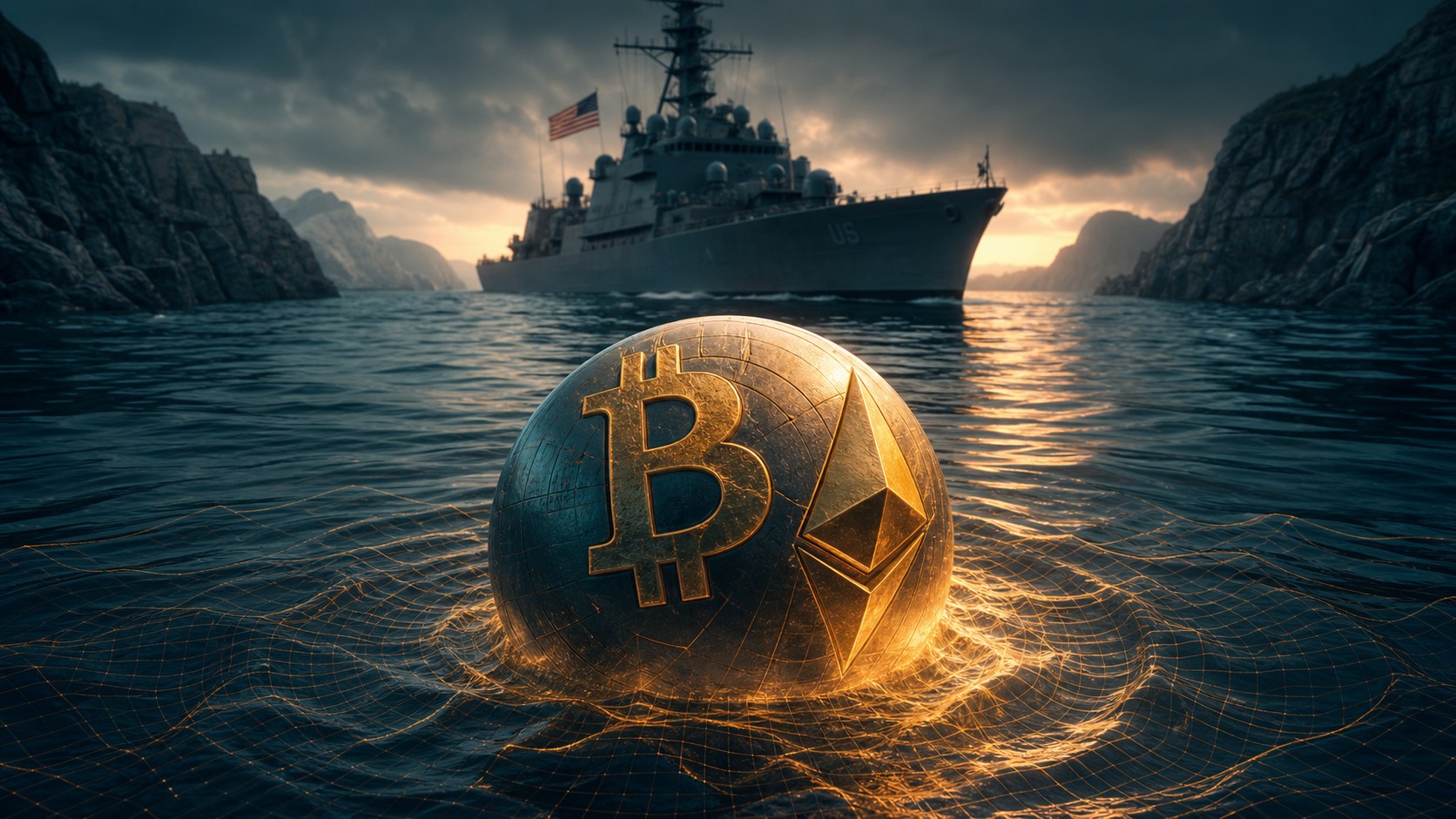
Hormuz Strait Crypto Impact Returns as U.S. Escort Report Shifts
Reports on U.S. naval escorts in the Strait of Hormuz are messy enough to put the Hormuz Strait crypto impact trade back on traders’ screens. The WSJ said the U.S. Navy had resumed escorting vessels through Hormuz. A later Jerusalem Post update, citing U.S. officials, said U.S. forces are not escorting commercial ships there right now. For BTC and ETH traders, that is not much of a signal. It is a risk headline. And crypto does not usually wait for the paperwork.
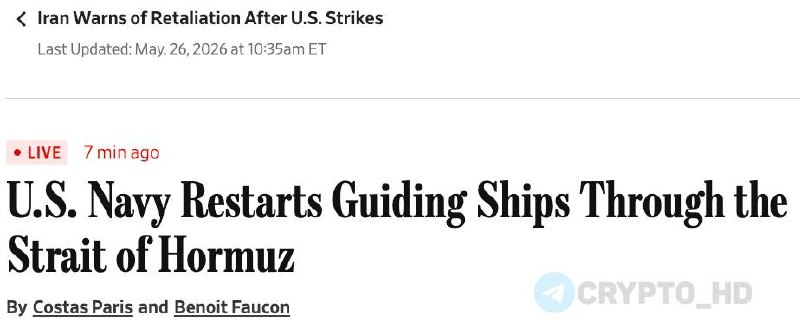
The source trail is thin. That is the awkward part. I’ll be honest: this is exactly the kind of half-formed market story that can still move screens before it deserves to. The confirmed frame is limited: the United States, Iran, the U.S. Navy, the Strait of Hormuz, the WSJ, the Jerusalem Post, and U.S. officials are all connected to the story. The WSJ version pointed to renewed U.S. Navy escort activity. The Jerusalem Post update pushed back and said U.S. forces are not currently escorting commercial ships through the Strait of Hormuz. The wire does not include an official quote or ship count. It also gives no date, oil price, BTC price, ETH price, or percentage move. Those gaps matter.
Crypto often trades the first shock before anyone has sorted out the facts. Why does this matter? Because with a Strait of Hormuz headline, the first market question is oil, not Bitcoin. Hormuz is one of those places where energy traders pay attention immediately, so even a hint of U.S.-Iran military friction can move through the usual chain: oil risk rises, inflation worries return, rate-cut hopes cool, risk assets wobble. That is where BTC and ETH come in. During the January 2020 Soleimani strike window, BTC rose about 8%. That does not prove BTC is a war hedge. It does show how geopolitical crypto trades can look defensive for a day or two before liquidity and rates take over again.
Still, BTC is not a clean wartime hedge. Gold usually gets that bid first. Bitcoin sometimes follows. Sometimes it sits there. Sometimes it trades like a levered tech stock having a bad session. My take: the safe haven crypto debate is much cleaner in podcasts than it is on an exchange order book. The source does not say oil moved, gold moved, BTC moved, or ETH moved. Even so, traders will watch whether BTC can hold up if Hormuz headlines get louder. BTC wants the digital gold story, but leveraged crypto books still run on dollar liquidity, funding rates, exchange positioning, and forced selling.
The second crypto angle is oil prices and crypto correlation. Most market notes say higher crude is bad for risk assets. That is only half right. If Hormuz risk pushes crude higher, the market may start pricing more inflation pressure, and that can hurt long-duration assets. BTC and ETH often struggle when real yields rise or when traders think the Fed will stay tighter for longer. This is where a shipping scare stops being just geopolitics and starts showing up in portfolios. A U.S.-Iran headline can become a BTC volatility event even without a crypto-native catalyst. COIN and miners can get hit too. High-beta altcoins usually feel it faster.
The update may matter more than the original report. The WSJ said U.S. Navy escorts had resumed. The Jerusalem Post, citing U.S. officials, said the U.S. military is not currently escorting commercial vessels through the Strait of Hormuz. That split tells traders the information is unstable. In crypto, that usually means wider spreads, faster liquidations, and sharper reactions to the next headline. The first move can be wrong. The second one can hurt.
There is no reaction quote in the source, so inventing one would be bad editing. I would keep this simple: this is headline risk, not a confirmed market regime shift. BTC traders should separate geopolitical noise from the actual trade trigger. A verified escort policy would matter. So would an Iranian response. A shipping disruption would matter even more. Until then, this belongs on the risk dashboard, not in the certainty pile.
What this means
Middle East shipping risk is close enough to crypto markets to matter again, even with the facts still incomplete. For BTC, the question is blunt: do traders treat the Strait of Hormuz as a safe haven catalyst, or as an inflation shock that pressures risk assets? ETH may be more exposed if the market reads higher oil risk as higher-rate risk, since ETH still trades heavily on liquidity expectations. Watch BTC first. Then ETH/BTC. Then COIN as the listed equity proxy for crypto risk appetite.
Next, look for a confirmed U.S. military statement, another WSJ or Jerusalem Post update, or any Iran Foreign Ministry comment tied directly to the Strait of Hormuz. Is this overkill? For a market that liquidates first and reads carefully later, no. For markets, the checks are BTC spot direction and CME crypto futures positioning. Also watch whether BTC holds its nearest major technical level after the next U.S. macro catalyst. Yes, this sounds like it contradicts the earlier point about weak source material. It does not. Weak source material is exactly why confirmation matters. The next scheduled FOMC decision after May 27, 2026 is June 17, 2026. That date matters if Hormuz risk feeds the inflation debate before the Fed speaks.
FAQ
What is the Strait of Hormuz?
The Strait of Hormuz connects the Persian Gulf to the Arabian Sea. It matters because a large share of global oil shipments passes through it.
Why is the Strait of Hormuz important for crypto markets?
Tension in the Strait of Hormuz can move oil prices. If oil rises, traders may worry more about inflation, interest rates, BTC, and ETH.
Are U.S. forces currently escorting commercial ships in the Strait of Hormuz?
U.S. officials cited by the Jerusalem Post said U.S. forces are not currently escorting commercial ships through the Strait of Hormuz. That followed an earlier WSJ report saying escorts had resumed.
How do geopolitical events in the Strait of Hormuz affect Bitcoin (BTC)?
BTC can trade like a safe haven asset during some geopolitical shocks. Counter to the usual shortcut, though, it can also trade like a risk asset when traders focus on inflation, rates, and liquidity.
How do geopolitical events in the Strait of Hormuz affect Ethereum (ETH)?
ETH may be more exposed if Hormuz risk pushes oil higher and traders start pricing in stickier inflation or higher interest rates. ETH still depends heavily on liquidity conditions.
What is the “Hormuz Strait crypto impact”?
The “Hormuz Strait crypto impact” is the way shipping security and geopolitical risk in the Strait of Hormuz can affect crypto markets through oil prices, inflation expectations, and risk appetite.
What sources reported on U.S. naval escorts in the Strait of Hormuz?
The Wall Street Journal first reported resumed U.S. Navy escorts. The Jerusalem Post later cited U.S. officials saying U.S. forces are not currently escorting commercial ships.
What is the main market question when a Strait of Hormuz headline hits?
The main question is whether the headline moves oil prices. If it does, the reaction can spill into inflation expectations, rates pricing, and risk assets.
Did Bitcoin act as a safe haven during the January 2020 Soleimani strike?
During the January 2020 Soleimani strike window, Bitcoin gained about 8%. That suggests a short defensive reaction, but it does not make BTC a reliable wartime hedge.
What is the relationship between oil prices and crypto correlation?
If Hormuz risk lifts crude oil prices, traders may price in more inflation pressure. That can weigh on BTC and ETH, especially if real yields rise or the Fed is expected to stay hawkish.
What does “unstable information” mean for crypto markets?
In crypto, conflicting reports can mean wider spreads, faster liquidations, and sharper reactions to the next headline.
What should BTC traders watch for regarding Hormuz Strait developments?
BTC traders should watch for a confirmed U.S. military statement, follow-up reporting from the WSJ or Jerusalem Post, and any Iran Foreign Ministry comment that directly addresses the Strait of Hormuz.
What are the concrete market checks for traders monitoring Hormuz Strait impact?
The main checks are BTC spot direction, CME crypto futures positioning, and whether BTC holds its nearest major technical level after the next U.S. macro catalyst.
When is the next scheduled FOMC decision after May 27, 2026?
The next scheduled FOMC decision after May 27, 2026 is June 17, 2026. It becomes more important if Hormuz risk heats up the inflation debate before the Fed announcement.