
















































Russia Telegram Unblock Request: A Crypto Adoption Signal?
Russian State Duma deputies recently asked officials to review restrictions on Telegram. Their case was not subtle: the blocks cost too much, and they do not work. I’ll be honest: that is the part that matters. If the request is real and moves beyond paperwork, it may show how Russia is recalculating the value of digital control. Maybe. I would not build a grand crypto thesis on it yet. But when Moscow even appears to soften toward an online network it cannot fully dominate, crypto markets should at least notice.
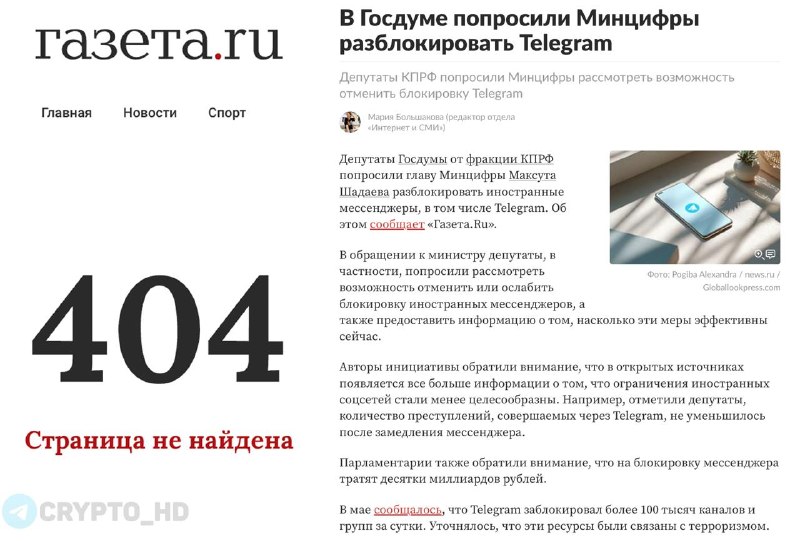
The request came from deputies in the Communist Party of the Russian Federation (KPRF) and went to Maksut Shadayev, head of the Ministry of Digital Development, Communications and Mass Media. They asked officials to review restrictions on foreign messengers and named Telegram directly. Their claim was blunt: slowdowns and blocks have not reduced crime on Telegram, while costing the state “tens of billions of rubles.” Then it got odd. The original “Gazeta.Ru” article disappeared and now returns a 404, although copies of the story are still circulating. The official appeal is hard to find too. Does that prove suppression? No. But it does make the episode feel less like routine policy chatter.
This is not just about one messaging app. Telegram is where Russians read news, trade information, build communities, argue politics, and talk outside official channels. Crypto runs on similar behavior. My take: the overlap matters more than the app itself. Russia has never had a clean crypto policy; it has swung between threats, restrictions, regulation, and selective use, especially after the 2022 sanctions. The digital ruble has official support, while assets like Bitcoin (BTC) and Ethereum (ETH) still sit in a murkier legal and political zone. Most guides treat Telegram policy and crypto policy as separate tracks. That is only half right. If officials start treating Telegram less like something to crush and more like infrastructure they have to tolerate, crypto policy could be pulled along too. Slowly. Unevenly.
There is also the safe haven angle, though I would not overplay it. People look for alternatives when money, borders, bank rails, and information flows become harder to manage. That does not turn every Telegram story into a Bitcoin story. Still, the connection is real enough. After Russia’s full-scale invasion of Ukraine in February 2022 and the first major sanctions that followed, ruble-denominated crypto trading jumped, and BTC briefly traded near $45,000 before falling back. Why does this matter? Because the KPRF argument fits the same pattern: blocks cost money, users find workarounds, and the state ends up with less control than it expected. If Telegram becomes easier to access, crypto communities inside Russia could gain more reach. More channels. More payment talk. More questions about moving value when normal rails are awkward or closed.
What this means
The practical read is simple: this looks like a possible move away from blanket blocking and toward a colder cost-benefit calculation. That is not crypto liberalization. Not close. Counter to the usual crypto-market reflex, this is not automatically bullish for BTC or ETH. I would not buy either because one article vanished from “Gazeta.Ru.” What I would watch is narrower: whether the Ministry of Digital Development responds to the KPRF request, whether the tone around Telegram restrictions softens, and whether public discussion moves from punishment to practicality. A formal reply would matter more than the rumor.
The question now is whether the request goes anywhere. Officials may ignore it. They may bury it. They may also let it feed into a wider debate over foreign platforms Russia cannot fully control. Yes, this sounds like I am walking back the earlier crypto angle. I am, slightly. The Telegram signal is weak on its own; it becomes meaningful only if it lines up with Russian legislative updates, ministry statements, local crypto exchange volumes, and changes around exchange access, payments, or institutional use. Is this overkill for one unblock request? For a serious adoption signal, no. A real policy shift would show up there first, not in vague talk about digital freedom. Still, if Russia decides Telegram is too expensive to block, crypto people will read it as another small sign that censorship-resistant networks are harder to suppress than officials like to admit.