
















































UAE crypto payments government fees put Dubai adoption trade on-chain
UAE crypto payments for government fees would let people pay public sector charges through regulated virtual asset payment systems. That is the plain version. My take: Dubai’s plan to allow government fee payments through Crypto.com is more useful than another “we got a license” headline. State payment systems can drag crypto out of the trading app box and into regular financial plumbing. That part matters. For BTC and ETH investors, it is the bit worth watching.
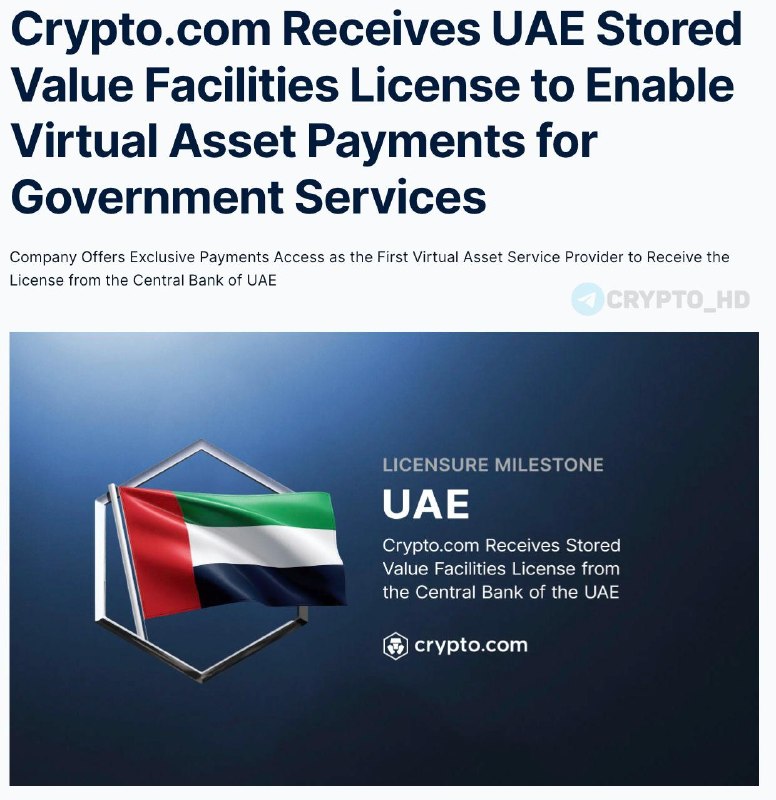
According to the Crypto.com announcement described in this article, Crypto.com, through Foris DAX Middle East FZE, received a Stored Value Facilities, or SVF, license from the Central Bank of the UAE. The license allows the exchange to work with the Dubai Department of Finance so Dubai government fees can be paid with virtual assets. The public disclosure still leaves out plenty: accepted tokens and fee volumes first, then launch date, transaction limits, and settlement details. So yes, the headline matters for adoption. But no, it is not enough yet to build a clean trade model.
The first market angle is adoption. Dubai government crypto payments put a public sector use case next to Crypto.com’s exchange business, where the company already has a consumer crypto brand. Paying a government fee is a real payment use case, not another trading screen. Does BTC jump 5% just because of this? I would not bet on that alone. I will be honest: traders should treat UAE policy as a live integration story, especially if liquid payment assets like BTC and ETH end up in the actual system. The bigger change comes when the headline moves from “licensed to operate” to “users can pay today.”
The second angle is regulation, and for once it is not the usual enforcement story. Most crypto regulation talk gets framed as crackdown risk. That is only half right. UAE crypto payment regulation matters because a licensed stored value setup connects virtual assets to payment activity inside the financial system. In the U.S., traders usually read crypto regulation through SEC, CFTC, ETF, staking, and exchange risk fights. Dubai is taking a different route: a central bank license, a named legal entity, plus a Dubai Department of Finance partnership. According to the Central Bank of the UAE framework referenced by the SVF license, stored value activity is a regulated financial services category. That gives the market something sturdier than hype. For COIN and exchange linked equities, the read through is indirect, but the competitive point is clear enough: places with clear rules can attract activity while others keep arguing over permission.
There is a macro flow angle too. Crypto government payment adoption is different from the usual speculative demand story because it depends on real transactions. In risk off markets, BTC still trades like a high beta liquidity asset more often than its loudest believers admit. During the Jan. 2020 Soleimani strike, BTC gained about 8%, which briefly helped the safe haven argument. Counter to the usual advice, I would not file this under geopolitical hedge demand. This is a different catalyst. It does not need war, sanctions, or panic buying. It needs people using the system, settlement that works, and a reason for users to hold or acquire crypto before paying fees.
No surprise, Dubai is building pipes instead of slogans. A real UAE crypto payments system comes down to usable payment loops, regulated wallet access, compliant settlement, government treasury integration, and support that does not collapse when normal users show up. Why does this matter? Because “pay government fees with crypto UAE” is just a headline until the loop touches wallets, exchanges, merchants, stable value products, and treasury systems. The SVF license matters because stored value regulation sits closer to payments than speculative token listings. We have seen this pattern before in crypto infrastructure: the boring license often matters more than the loud token announcement. If Crypto.com and the Dubai Department of Finance make the system usable at scale, the market will want to know where the volume lands: BTC, ETH, stablecoins, or exchange linked tokens.
What this means

This event means Dubai is testing crypto as regulated payment infrastructure for public sector fees, not just treating virtual assets as things to buy and sell. It points to crypto adoption moving into government payment systems in the UAE, with Dubai acting through the Dubai Department of Finance and Crypto.com’s Foris DAX Middle East FZE. For traders, BTC and ETH still come first because they are the main liquidity benchmarks for crypto risk appetite, even though the accepted assets have not been named. Is this immediately tradable? Not cleanly. The level to watch is not only price; it is whether regulated payment usage becomes visible enough to support a larger adoption premium during the next risk on stretch.
Based on the public details so far, the next market moving items are operational: accepted virtual assets, launch date, fee categories, settlement currency, transaction limits, and real usage data if anyone releases it. Watch for concrete updates from Crypto.com, the Dubai Department of Finance, and the Central Bank of the UAE. For timing, keep one eye on the next FOMC decision on June 17, 2026, because rates still drive crypto liquidity, and one eye on BTC holding major psychological levels such as $60,000 if macro volatility comes back. Yes, this slightly contradicts the adoption argument above; bear with me. Adoption helps the longer term case. Liquidity still decides the trade.
FAQ
What are UAE crypto payments for government fees?
UAE crypto payments for government fees are regulated payment arrangements that let eligible public sector charges be paid with virtual assets through approved financial infrastructure.
Which company is involved in Dubai government crypto payments?
According to the announcement described in this article, Crypto.com is involved through Foris DAX Middle East FZE and a partnership with the Dubai Department of Finance.
Which regulator is connected to the license?
According to the reported licensing structure, the Central Bank of the UAE issued the Stored Value Facilities license.
Does this mean Bitcoin and Ethereum are accepted for Dubai government fees?
The available disclosure did not name the accepted virtual assets. BTC and ETH matter to traders because they are the main liquidity benchmarks for crypto market risk.
Why does the SVF license matter?
A Stored Value Facilities license matters because it ties the crypto payment story to regulated payment infrastructure, not only exchange trading or token listings.
Is this immediately bullish for BTC or ETH?
Not by itself. A stronger signal would come from confirmed launch details, visible transaction volume, accepted assets, and settlement mechanics.
What should traders watch next?
Traders should watch for accepted tokens, launch timing, government fee categories, transaction limits, settlement currency, and any usage data released by Crypto.com, the Dubai Department of Finance, or the Central Bank of the UAE.