
















































Kazakhstan Stock Exchange Lists Solana ETF: Crypto Keeps Edging Into Regular Markets
The Kazakhstan Stock Exchange (KASE) has listed a Solana ETF. Small headline, real signal. Crypto traders now have another regulated product to point at when they argue that digital assets are creeping into regular markets.
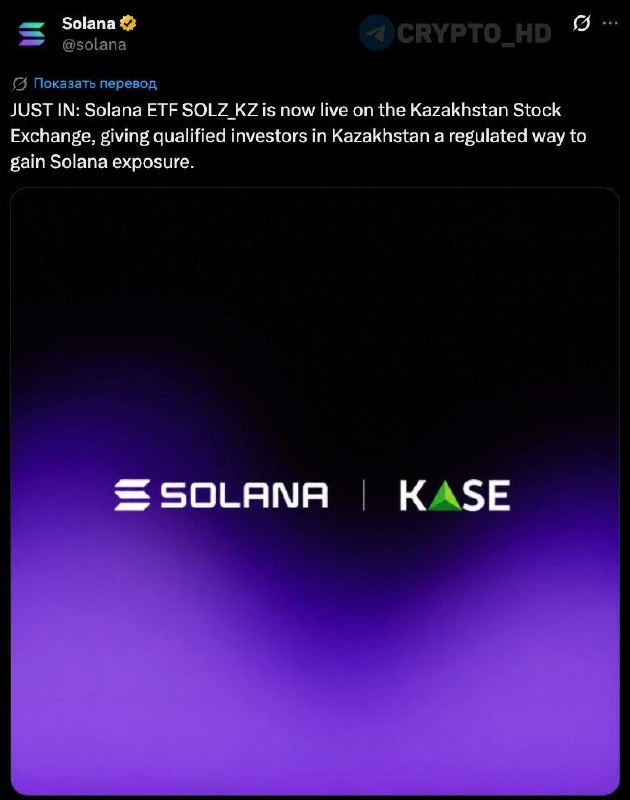
KASE is one of Central Asia’s main exchanges, so I would not lump this in with some thin offshore listing that exists mostly for a press release. The announcement did not name the ticker or fund manager, which is annoying because those details are not decoration; they tell you who is actually standing behind the product. Still, Solana (SOL) showing up in ETF form on a national stock exchange deserves attention. Traditional finance keeps inventing new wrappers for crypto exposure. The speed changes country by country.
My take: this works better as an adoption signal than as a price catalyst. The larger comparison is still the launch of US spot Bitcoin ETFs in January 2024, which helped bring in enough demand to push Bitcoin to about $73,750 in March. A Solana ETF in Kazakhstan is not remotely the same size of event. It probably will not move SOL like a US ETF might. But does that make it meaningless? No. It gives investors one more regulated path into crypto, and those paths compound over time. I would not call it a breakthrough. It is another step in moving digital assets out of exchange accounts and into normal brokerage products, where slower capital can show up and stay longer than weekend leverage traders.
Most guides frame regulation as a fight between crypto and government. That is only half right. The listing also says something quieter: for an ETF to trade on KASE, someone had to get it through the exchange and the relevant approval process. That feels different from the US, where the SEC has spent years arguing over staking services, token classifications, and securities rules. Kazakhstan seems open to some digital asset products, at least when they are wrapped inside regulated market infrastructure. Maybe that model spreads. Maybe it stays local. Either way, clearer rules make it easier for banks and brokers to touch crypto without feeling like they are walking into a lawsuit. Treasury teams care about that too.
What this means
The Solana ETF listing on the Kazakhstan Stock Exchange shows crypto adoption moving outside the usual US and European market centers.
I’ll be honest: the interesting part is not that SOL got a new headline. It is that SOL is no longer only something traded on crypto exchanges by people staring at five-minute candles. It can now sit inside a stock exchange product, with paperwork, listing standards, and familiar market plumbing around it. For SOL holders, the effect may be slow: better access and more liquidity. Maybe a cleaner reputation with institutional buyers as well. The price may barely react at first. Fine. These listings often matter more over a few months than they do in the next 24 hours.
Counter to the usual advice, investors should not watch only New York and London for the next crypto ETF signal. Watch smaller regulated markets too. One listing is interesting. Five would be harder to ignore. For SOL itself, the $180 area is still worth watching; a clean move above that level could suggest buyers are coming back with more confidence. Kazakhstan’s next crypto rules or product approvals matter too, since other countries sometimes borrow regulatory playbooks when they see one working. Is this over-reading one listing? Maybe a little. But the next altcoin ETF headline may not come from the market everyone is watching.
FAQ
Q: What is an ETF?
A: An ETF, or exchange traded fund, is an investment fund that trades on a stock exchange like a stock. It can hold assets such as shares, commodities, bonds, or crypto linked products.
Q: Why is the Kazakhstan Stock Exchange listing a Solana ETF significant?
A: It shows that regulated crypto products are moving beyond Bitcoin and Ethereum, and beyond the usual Western markets. My read is that Kazakhstan is also signaling comfort with some digital asset exposure inside its financial system.
Q: Will this Solana ETF listing immediately impact SOL’s price?
A: Probably not in a dramatic way. A Kazakhstan listed product is unlikely to match the market impact of a US ETF launch. Over time, though, it could help SOL’s reputation and access.
Q: What does this mean for global crypto regulation?
A: It suggests some regulators are more comfortable with crypto when it comes through familiar structures like ETFs. Why does this matter? Because if Kazakhstan’s approach works without major problems, other markets may consider similar rules.
Q: What is Solana (SOL)?
A: Solana (SOL) is a blockchain used for decentralized apps and crypto projects. People know it mostly for fast transactions and relatively low fees.