
















































Solayer’s restaking protocol: Solana’s quiet upgrade?
A new wire report says most crypto investors are underrating Solayer, a restaking protocol on Solana. On the surface, yes, it can look like another DeFi app with a yield angle. My take: that read is too lazy. A smaller group sees something more structural here: a possible shift in how Solana gets secured, priced, and actually used. If that view is right, Solayer could matter for Solana adoption and for how investors compare SOL with ETH.
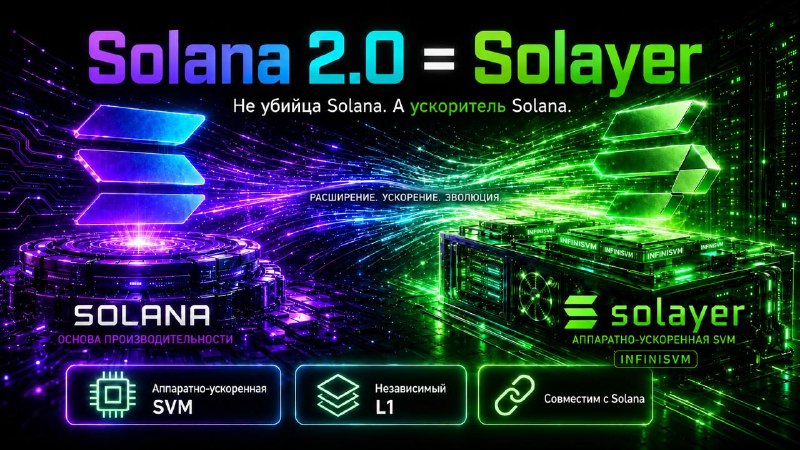
That gap is the story. Most “криптанов” (crypto enthusiasts) seem to see Solayer as standard DeFi plumbing. The minority see it as infrastructure. I get why that sounds inflated, because crypto loves big labels. Still, restaking changes what staked SOL can do. That matters. The wire report does not show the research in detail, so the larger claims still need evidence.
Crypto often spots these shifts late. Early 2020 is a useful reminder. In January 2020, while markets were reacting to the Soleimani strike and wider geopolitical stress, Bitcoin gained about 8%. That move was not about one protocol. Capital was looking for somewhere to go. Solayer would send a different signal: demand for Solana infrastructure, not safe haven demand. Why does this matter? Because if it brings in TVL, developers, and serious users, SOL may start trading less like a fast L1 bet and more like a network with deeper economic activity.
The Solana adoption angle matters, but not in the vague “next big thing” way. If Solayer really becomes what some people are calling “Solana 2.0,” it could give the network more than speed and cheap transactions. It could give teams a shared security layer to build on. Ethereum’s Merge was a very different event, and that comparison gets abused. Still, it showed that infrastructure changes can move sentiment before the technical payoff is obvious. If Solayer works, Solana could look better to enterprise teams and larger dApps that need performance without rebuilding every security assumption themselves. Big if. Crypto has buried plenty of “next big thing” stories.
What this means
The Solayer story points to a possible re-rating of Solana’s value. Not guaranteed. Not magic. But if the “Solana 2.0” thesis holds up, investors may start valuing Solana for more than speed, low fees, and retail trading activity. Restaking could make SOL more useful. Useful assets tend to attract demand. Most guides say markets price infrastructure early. That is only half right. The market often ignores infrastructure until the numbers become hard to ignore. Here, the numbers are TVL, active services, users, and developer activity.
Investors should watch Solayer’s Total Value Locked (TVL), the number of projects using it, and any direct comments from the Solana Foundation or major Solana teams. A real jump in those metrics would give the thesis more weight. The next few quarters matter. Solayer either becomes part of Solana’s core infrastructure story, or it stays in the crowded pile of DeFi projects with a good pitch. For SOL, a sustained move above $200 is one price level worth watching, especially if it comes with stronger fundamentals instead of market froth.
The Solayer protocol: a closer look at Solana restaking
Solayer is a restaking protocol that lets users re-stake SOL to help secure other decentralized applications and services on Solana.
According to the wire report, Solayer is being framed as more than a DeFi yield product. It lets users put staked SOL behind decentralized services called Actively Validated Services (AVSs). In plain English: SOL that already secures Solana can also help secure other parts of the network. Analysts quoted in the report describe this as a way to build shared security across Solana. I will be honest: that is the interesting part. The yield is just what everyone notices first.
How Solayer works
Users deposit staked SOL into Solayer. The protocol can then make that economic security available to AVSs. Restakers earn extra rewards for taking on that role. Solayer’s whitepaper says this makes staked SOL more capital efficient and gives the token more uses beyond securing the Solana mainnet. The tradeoff is easy to understand: more yield, more complexity. Also more risk before clicking anything.
Benefits for Solana
Solayer could help Solana in practical ways. It may extend Solana’s economic security to more applications. It may also help new AVSs launch without building their own security from zero. And yes, it could bring in more capital if users see restaking as a worthwhile yield strategy. Crypto Insights has argued that this model could increase Total Value Locked (TVL) on Solana. That only matters if the deposits stay put during rough markets.
Comparison with Ethereum’s restaking market
Solayer is trying to bring restaking to Solana, while Ethereum already has a large restaking experiment in EigenLayer. DeFi Pulse has reported that EigenLayer showed how restaking can turn existing staked assets into shared security for other services. Solayer is taking that idea and adapting it to Solana’s faster, lower latency design. Is this just a copycat move? Not exactly. If the adaptation works, Solana could become more appealing to developers who want restaking without Ethereum’s cost and congestion issues.
Solayer’s impact on Solana adoption and competition
If Solayer changes how Solana infrastructure is secured, it could strengthen the network’s adoption signal and bring in developers who need more than cheap transactions.
Solayer could make Solana more attractive by adding security options and new yield opportunities. That may pull in institutional investors and experienced DeFi users. It may also pull in teams building services that need shared security. CoinDesk’s market sentiment analysis has noted that new security models can bring more developer interest and capital. I would be careful with that claim, though. Interest is easy. Usage is harder. The real test is whether teams keep building on Solayer after the first wave of attention fades.
Attracting developers and capital
For developers, shared security is the pitch that matters. New projects may be able to launch without creating their own validator sets, which can cut costs and shorten launch timelines. Electric Capital’s developer survey found that security bootstrapping affects where projects deploy. If Solayer makes that easier on Solana, capital could follow the builders. It usually does. Sometimes late.
Competitive edge against Ethereum
Solayer could give Solana a sharper argument against Ethereum. Ethereum still has the bigger ecosystem. No serious person should pretend otherwise. But Solana has fast transactions and low fees, and restaking could make it more useful for apps that need performance and shared security. Counter to the usual advice, Solana does not need to “beat Ethereum” everywhere for this to matter. The Block Research has argued that chains with stronger performance and new economic models can take share from older players. Solayer gives Solana a cleaner version of that pitch.
Potential for SOL price appreciation
If Solayer increases demand for SOL, the price could benefit. More restaking means more SOL locked into the protocol. More AVSs using that security could deepen demand further. Basic supply and demand still applies, even in crypto, where people sometimes dress it up too much. JPMorgan analysts have said protocol upgrades can come before large moves in the underlying asset. That does not mean SOL automatically runs. It means the setup becomes easier for bulls to argue.
The road ahead: risks and openings for Solayer
Solayer still has to earn trust. It also has a real opening if developers decide restaking belongs near the center of Solana’s next phase.
The pitch is strong, but the hard part starts after the pitch. Solayer needs adoption from the Solana community and from AVS developers. Gartner has noted that new decentralized protocols often struggle to win broad acceptance. That sounds right. People do not hand over trust because a protocol has a polished deck. Restaking also brings slashing risk and smart contract risk. It also brings the chance that users chase yield without understanding what can go wrong. We have seen this movie before.
Building community and developer trust
Solayer has to explain what it does in language normal users can understand. It also needs transparent development, public audits, and security assumptions that do not require blind faith. Blockchain teams often talk about community buy-in as if it appears after enough updates. It does not. Trust comes from shipping. Then disclosing problems. Then fixing them. Then being honest about risk.
Expanding the AVS ecosystem
Solayer’s biggest opportunity is getting useful AVSs to integrate. That could include oracles, bridges, data availability services, and other infrastructure. The more serious integrations it gets, the harder it becomes to dismiss Solayer as yield packaging. Deloitte has found that platforms with connected services often grow faster. Yes, this sounds like I am arguing for “more integrations” after warning against hype. Bear with me. In this case, the quality of AVSs matters more than the count.
Navigating regulation
Solayer also has to deal with regulation, like every crypto project that touches staking, yield, and institutional capital. Clear disclosures and compliance work will matter if it wants larger investors involved. Perkins Coie lawyers have argued that crypto projects benefit from talking to regulators early. That work is not glamorous. It can still decide whether institutions show up or stay away.
Long term vision
The long term idea is for Solayer to become a shared security layer on Solana. If it works, developers could build more services without rebuilding security from scratch each time. That would make Solana more useful and, maybe, harder to ignore. The Solana Foundation has said foundational protocols are part of the path toward broader adoption. Solayer now has to prove it belongs in that category.
FAQ: Solayer and Solana restaking
What is Solayer?
Solayer is a restaking protocol on Solana. It lets users re-stake SOL to secure other decentralized applications and services called Actively Validated Services (AVSs).
How does restaking benefit Solana?
Restaking can extend Solana’s security to more services, help new AVSs launch with shared security, and create new yield opportunities for SOL holders.
Is Solayer similar to EigenLayer on Ethereum?
Yes. Solayer is trying to do for Solana what EigenLayer does for Ethereum, with changes suited to Solana’s faster architecture.
What are Actively Validated Services (AVSs)?
AVSs are decentralized applications or services that use Solayer’s restaked security to support their operations.
What are the risks associated with Solayer?
The main risks are slashing, AVS failures, smart contract bugs, and the usual risk that comes with new DeFi protocols.
How can investors track Solayer’s progress?
Watch Solayer’s TVL, the number of integrated AVSs, user growth, and announcements from Solayer or the Solana Foundation.
Will Solayer impact the price of SOL?
It could. If Solayer increases SOL utility and demand, that may support the price. The market still needs real adoption, not just a good narrative.
When is Solayer expected to launch fully?
The timeline depends on development and audits. Anyone tracking it should follow Solayer’s official channels for current launch updates.
What makes Solayer an “evolution” for Solana?
Solayer adds shared economic security to Solana and gives staked SOL more uses. That could help stronger applications launch on the network.
Can institutional investors participate in Solayer?
They may participate as the protocol matures and regulation becomes clearer. Institutions will likely want audited contracts, clear risk disclosures, and enough liquidity before they move seriously.