
















































S&P 500 Market Cap Loss: What It Means for Crypto’s Macro Flow
The S&P 500 has lost $3.3 trillion in market value since June 2. That is not background noise. Crypto traders cannot shrug it off because when money leaves equities this quickly, Bitcoin, ETH, and smaller tokens get tested in public: are they separate assets, or just the same risk trade with different branding? My take: the market still has to prove the first answer.
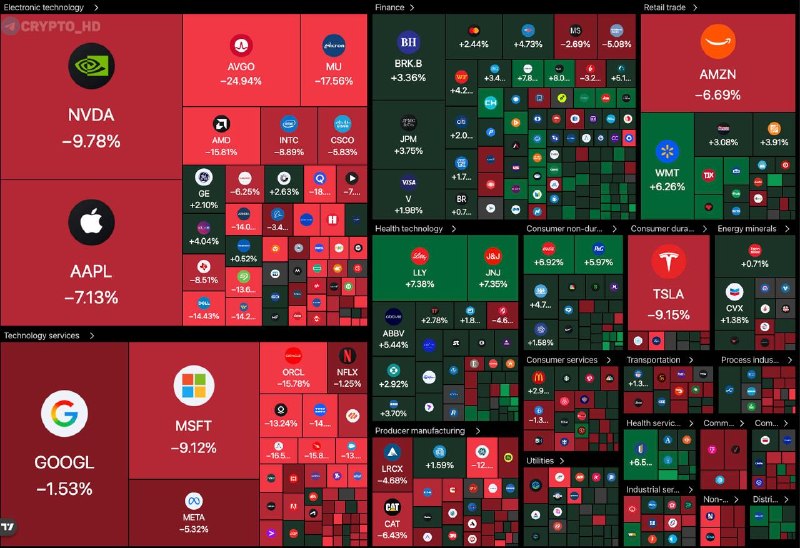
The number is ugly: $3.3 trillion erased from the S&P 500 in a little over two weeks. Not routine. Not clean. It looks more like forced selling, risk reduction, margin pressure, and managers cutting exposure before conditions get worse. Most guides say crypto benefits when confidence in equities fades. That is only half right. Sometimes Bitcoin gets treated like a hedge. Sometimes it gets sold with everything else. That split is the whole problem.
This S&P 500 drop feeds directly into the macro flow setup for crypto. When stocks fall hard, capital either moves into safer assets or gets pulled from speculative trades to cover losses elsewhere. We saw something like this in early 2020 during the first COVID-19 panic: BTC fell with equities first, then broke away for a while. It also gained 8% during the Jan-2020 Soleimani strike, which gave the safe haven argument some support. I’ll be honest: I would not lean too hard on that comparison. This is not 2020. Rates are still high, inflation worries are still around, and investors are not rushing back into risk assets just because prices dropped. Why does this matter? Because the $3.3 trillion equity loss can either push capital toward BTC as a hedge or drag crypto lower with the rest of the risk book. BTC has already had trouble around $61.4K, so the first reaction still looks like correlation, not escape.
The size of the S&P 500 decline also matters for the adoption signal from institutions. Companies and funds that added BTC to balance sheets, launched crypto products, built trading desks, or pitched token exposure to clients are now dealing with a colder market. Cash matters. Balance sheets matter. Risk committees get louder. MicroStrategy (MSTR), one of the largest corporate BTC holders, is the cleanest named example here because its stock often moves with both Bitcoin and broader market sentiment. Counter to the usual advice, weak equities do not automatically make BTC accumulation easier. If equities stay weak, raising more capital for BTC buys could get harder. That does not mean adoption stops. It means the tone changes, and easy enthusiasm gives way to slower decisions.
What this means
The $3.3 trillion S&P 500 market cap loss points to a clear move away from risk. Investors seem to be preparing for tougher economic conditions, which could mean more selling across stocks, crypto majors like Bitcoin and ETH, and crowded speculative trades. For crypto, volatility likely stays high. It also puts Bitcoin’s non-correlated asset story back on trial. Is this overkill? For a market already struggling around $61.4K, no. If the S&P 500 keeps slipping, BTC may struggle to reclaim $61.4K and hold it. ETH could have an even harder time in the short run because it often trades like a higher beta bet on crypto liquidity.
Watch the next batch of macro data closely. The July 31 FOMC meeting matters because Fed rate guidance can change risk appetite fast. CME Bitcoin futures open interest and funding rates matter too. A sharp drop there would suggest institutions are stepping back, not adding exposure. Yes, this sounds like it contradicts the hedge argument above. It does, a little. But that is the point: in stressed markets, BTC can behave like protection one week and leverage the next. The S&P 500’s technical levels also matter. If it cannot reclaim support, crypto may get pulled down with it.
FAQ
What is the S&P 500 market cap loss?
The S&P 500 market cap loss is the drop in the combined value of the companies in the index. Market data shows the S&P 500 has lost $3.3 trillion in market capitalization since June 2. Big number. Bigger signal.
How does the S&P 500 market cap loss affect crypto’s macro flow?
It affects crypto’s macro flow because a large equity selloff usually means investors are cutting risk. That can pull money out of speculative assets, including cryptocurrencies, and make Bitcoin’s role harder to read. Is it a risk asset or a hedge? In markets like this, the answer can change fast.
What is the “adoption signal” in the context of S&P 500 losses and crypto?
The “adoption signal” is the pace at which institutions and corporations add crypto to their products, operations, or balance sheets. A large S&P 500 downturn can slow that pace because firms often shift toward protecting capital when markets get unstable. My read: adoption does not vanish, but the approval process gets heavier.
Has BTC historically acted as a safe haven during S&P 500 downturns?
BTC has been mixed during S&P 500 downturns. During the early 2020 COVID-19 panic, it first fell with equities and then separated for a period. It also gained 8% during the Jan-2020 Soleimani strike, which supported the safe haven case, at least briefly. Briefly matters.
What key indicators should investors watch to navigate the current market conditions?
Investors should watch upcoming macro data, the July 31 FOMC meeting for rate guidance, CME Bitcoin futures open interest, funding rates, and whether the S&P 500 can reclaim major technical support levels. I would put CME Bitcoin futures open interest near the top of that list because it gives a cleaner read on institutional positioning than social sentiment.