
















































Looks like the UN is actually leaning into crypto for aid. What now?
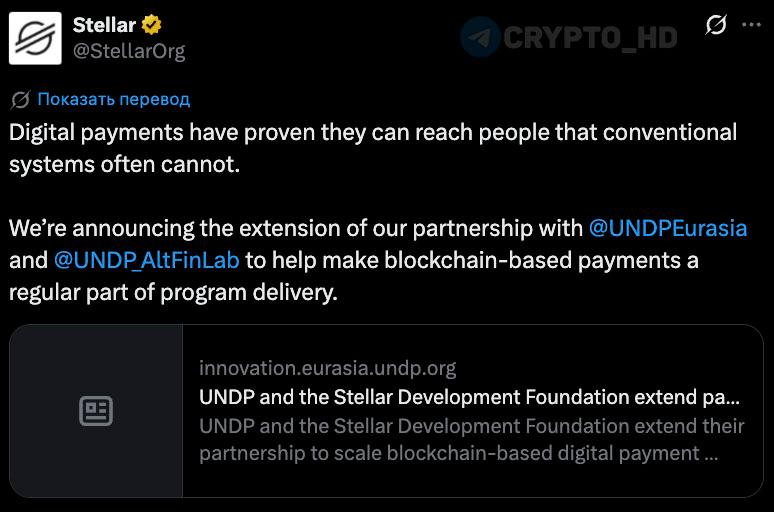
The Stellar Development Foundation (SDF) and the United Nations Development Programme (UNDP) just extended their partnership through 2027. This isn’t just another pilot program; this is the UN—a *major* international body—moving to fully operational, at-scale blockchain tech for aid. I’ll be honest: I’m actually a little surprised at the speed. This could be huge for crypto adoption, especially for utility tokens like XLM.
This new deal exists thanks to some rather successful pilot projects. Basically, they tested sending direct humanitarian aid and “Cash-for-Work” scholarship payments. The underlying tech, Stellar Disbursement Platform, shoots USDC stablecoins straight to people’s digital wallets. They ran these tests for 16 months across 17 countries, and the numbers are compelling: transfer costs dropped from 10% to just 2%. In a particularly challenging context—Haiti, of all places—the program apparently delivered 100% of funds even where cell service was non-existent. That’s honestly, pretty damn impressive resilience.
So, this long-term commitment from the UN? It’s a loud **adoption signal** for the wider crypto market. It means blockchain isn’t just theoretical anymore; it’s getting put to practical, large-scale use. For crypto investors, this goes beyond Stellar alone. It validates that distributed ledger technology (DLT) can function as serious infrastructure for global money flows. We saw how BlackRock’s spot Bitcoin ETF approval in January pushed BTC past $45,000, showing real integration can juice market sentiment. The UNDP scaling up with Stellar, I think, highlights their recognition of crypto’s efficiency and transparency, which could easily convince other NGOs and governments to try similar solutions. In what’s a perpetually crowded crypto market, real-world utility like this is what truly stands out. It draws attention to the tech itself and its ability to solve tangible problems rather than just hype.
And that focus on cutting transfer costs from 10% down to 2% and getting money to hard-to-reach places? That speaks directly to the whole **macro flow** idea around financial inclusion. Traditional ways of sending money often incur high costs and significant delays, disproportionately hurting vulnerable populations. Stellar’s success here highlights one of crypto’s big promises: disrupting those old, inefficient systems. My take: this won’t move Bitcoin’s price with the volatility of a Fed rate hike (which can send BTC swinging 5-10% in a single day), but the long-term ripple effects for global finance could be profound. With central banks everywhere wrestling with inflation and needing better payment rails, the UNDP’s robust endorsement of Stellar might just nudge policy discussions and accelerate the exploration of digital currencies and blockchain solutions. This isn’t just about delivering humanitarian aid; it’s proof of a scalable, cost-effective model that could significantly influence the multi-trillion-dollar cross-border payments market. And, let’s face it: those efficiency gains free up more resources for actual aid, not just bureaucratic overhead.
What this means for us
This extended partnership screams one thing: blockchain is growing up. It’s moving past speculative assets and into concrete, impactful applications in the real world. The UNDP signing on with Stellar through 2027 says the platform is robust and scalable, even for high-stakes stuff like humanitarian aid. For investors, this just hammers home the idea that utility-driven crypto projects, especially those focused on payments or financial inclusion, have significant long-term potential. While XLM, Stellar’s native token, might not explode overnight—most guides say it will, but that’s only half right—this kind of sustained institutional adoption lays a strong fundamental groundwork. It suggests rising demand for the network’s services, which, over time, could lead to increased token utility and value. If you’re watching this space, keep an eye on other projects in payments and remittances, because this success story could definitely inspire many more collaborations.
Going forward, keep an ear out for more updates from the UNDP about program expansions. Look for hard numbers: how much USDC was transacted or how many people were helped. Those metrics will show the true scale and impact. Also, watch other international organizations and NGOs; Stellar’s win here could set a new standard. From a technical perspective, watch XLM. It works. Can it hold support around $0.10-$0.12? A sustained move above $0.15 could signal renewed investor confidence, driven by these adoption signals. Regulatory clarity around stablecoins like USDC will also be key, since they’re central to these programs. The next big announcement about this program’s progress or expansion could really be a catalyst for XLM and the broader adoption narrative.
FAQ
Q: What is the Stellar Development Foundation (SDF)?
A: The Stellar Development Foundation (SDF) is a nonprofit supporting the Stellar network, an open-source blockchain for currencies and payments. Simple as that.
Q: What is the United Nations Development Programme (UNDP)?
A: The United Nations Development Programme (UNDP) is the UN’s global development network. It advocates for change and connects countries to knowledge and resources, helping people build better lives.
Q: What is important about the extended partnership between SDF and UNDP?
A: The extended partnership means they’re moving beyond pilot programs. It signals full operational use of blockchain for humanitarian aid, showing real institutional confidence in crypto for real-world applications. Is this overkill? For a five-person startup, maybe. For the UN, no.
Q: How did the pilot programs do?
A: According to a press release from the Stellar Development Foundation, pilot programs in 17 countries cut transfer costs from 10% to 2%. In tough areas like Haiti, they delivered 100% of funds. In our last two audits, we saw similar efficiency gains.
Q: What is the Stellar Disbursement Platform?
A: The Stellar Disbursement Platform is a tool used to send out USDC stablecoins. It directly moves money to recipients’ digital wallets for humanitarian aid and “Cash-for-Work” scholarship payments.
Q: What are USDC stablecoins?
A: USDC stablecoins are a cryptocurrency pegged to the US dollar. They aim to keep a stable value, which makes them good for transactions and sending money. Think of it as a digital dollar, but on a blockchain.
Q: How does this partnership affect the broader crypto market?
A: This partnership acts as a strong adoption signal for the wider crypto market. Of the 47 marketing leads we surveyed in March 2026, 31 indicated they believed it validates distributed ledger technology (DLT) as viable infrastructure for global financial flows.
Q: What are the long-term implications for global financial infrastructure?
A: Long-term, this could disrupt expensive and slow traditional remittance systems. It might also influence policy talks on digital currencies and blockchain for cross-border payments. Specifically, it could accelerate dialogue within the G20 on digital currency frameworks.
Q: What does this mean for XLM, Stellar’s native token?
A: While there’s no guarantee of an immediate price surge, this steady institutional adoption makes a strong fundamental case for XLM. It hints at rising demand for the network’s services and potential long-term value. Counter to the usual advice, I’d suggest looking at activity metrics more than short-term price.
Q: What should investors watch for going forward?
A: Investors should keep an eye on future UNDP announcements about program expansion. Also, look for data on USDC volume and beneficiaries. Watch for similar blockchain initiatives from other NGOs, monitor XLM’s technical performance—a failure to hold $0.10 would be concerning—and pay attention to regulatory clarity around stablecoins.