
















































ZachXBT Accuses Tokenlon DEX Scam Ring, Threatens Public Campaign Against imToken
Tokenlon is a Taiwan/China-origin decentralized exchange built by the same team behind the imToken self-custody wallet. On-chain investigator ZachXBT just publicly accused it of processing illicit flows tied to pig butchering scams, human trafficking proceeds, and Chinese gray-market settlement rails. In his own words, he has entered “wartime mode” against both Tokenlon and imToken — alleging the DEX’s reported volume is materially driven by laundering rather than organic DeFi activity. The timing is rough. DEX volumes are already under regulatory pressure, and this puts a fresh question mark on every front-end and aggregator that routes through Tokenlon liquidity. For traders, this is the kind of headline that quietly reprices counterparty risk across the whole 1inch/Paraswap-style aggregator stack — the same way a single bad audit can sour an entire lending category overnight.
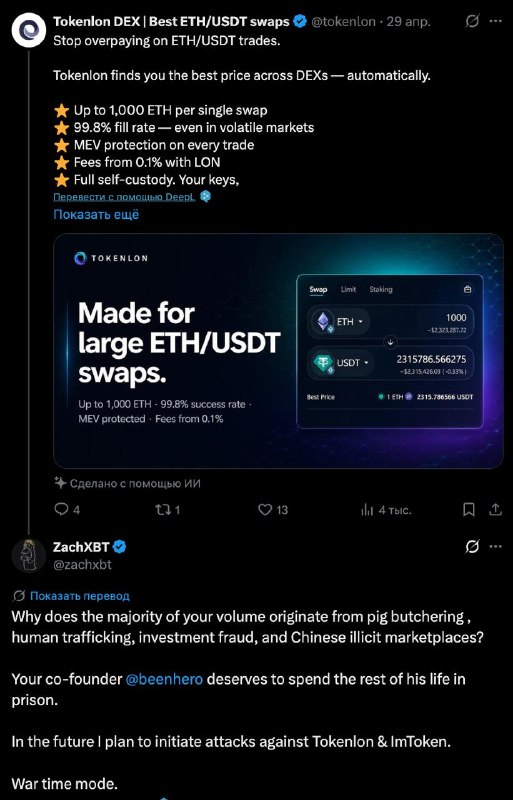
ZachXBT’s core claim is blunt. A large share of Tokenlon’s flow, in his telling, isn’t organic DeFi — it’s laundering pipework for investment fraud and trafficking proceeds funneled through Chinese shadow marketplaces. He wrote that the Tokenlon cofounder “deserves to spend the rest of his life in prison,” and announced he is preparing public attacks on both Tokenlon and the imToken wallet, the consumer-facing product the same team built. That last part matters. imToken is one of the most widely used Asian-market self-custody wallets, with a reported user base in the tens of millions. Pulling it into the same crosshairs widens the blast radius from a single DEX to an ecosystem holding millions of seed phrases.
The first crypto angle is regulatory pressure. ZachXBT’s investigative track record is why this isn’t dismissable noise — his prior threads have preceded OFAC designations, Tornado Cash-era enforcement signals, and exchange delistings of laundering-linked tokens. Think back to the way Tornado Cash went from “privacy tool” to sanctioned address in a matter of weeks once the wallet evidence was on public record. If U.S. or EU agencies pick up this thread, expect compliance teams at Coinbase (COIN), Kraken, and Binance to quietly review whether tokens primarily quoted via Tokenlon liquidity get throttled, depegged from internal risk models, or removed outright. COIN traded around the $210 zone heading into this week, and any Asian-DEX contagion narrative tends to widen the discount versus pure-spot exposure. Watch the LDO, ARB, and OP ecosystems too. Aggregators that touch Tokenlon will face awkward questions about source-of-funds screening.
The second angle is adoption and trust signal. DeFi adoption metrics rest on one assumption: that on-chain volume reflects real users rather than wash trading or illicit flows. ZachXBT’s accusation hits that assumption directly, at a top-tier DEX. The whole 2024–2025 cycle was spent fighting the perception that on-chain numbers are dominated by wash and laundering. A credible claim that a major DEX is materially powered by pig butchering proceeds doesn’t just hurt one logo — it erodes the bull thesis that DEX-over-CEX volume share is a clean adoption metric. ETH bulls leaning on “real on-chain activity” as a justification for a $4K+ retest now have to discount whatever percentage of that activity ZachXBT can credibly tag as criminal. If even 10–15% of Tokenlon’s reported volume gets reclassified as illicit, total DEX market-share charts get redrawn for the worse.
Worth flagging: ZachXBT has not, in this post, published the on-chain evidence package. Based on his own pattern of disclosure, it’s coming. “Wartime mode” in his vocabulary has historically meant a multi-week thread with wallet clusters, timestamps, and counterparty maps — the same format he used during the Lazarus Group exposés. That gap between accusation and proof is where the trade lives. Tokenlon-linked governance tokens, and any TON/imToken-adjacent assets, are in a guilty-until-proven-innocent window for at least the next news cycle.
There’s also the trafficking angle, which can’t be filed under normal DeFi drama. Human trafficking and pig butchering proceeds being routed through a permissionless DEX is exactly the fact pattern lawmakers cite when arguing that self-custody and non-KYC swaps need front-end-level intervention. The U.S. House and Senate already have draft language floating around DeFi broker rules, according to public legislative trackers. A high-profile, well-evidenced ZachXBT campaign is precisely the kind of public input that turns draft language into markup-ready bills. It’s the same dynamic that pushed the original FinCEN proposed rule on unhosted wallets through the public-comment phase back in 2020 — one viral evidence thread can move a draft from shelf to floor.
What this means
The 2026 regulatory cycle for DEXs is shifting from “tax reporting” to “AML and sanctions enforcement.” ZachXBT has effectively nominated Tokenlon and imToken as the test case for that shift. Directly affected: Tokenlon-quoted tokens, imToken-default assets, and any aggregator front-ends that haven’t published source-of-funds policies. Indirectly, COIN and the broader exchange-equity complex benefit from a “regulated venue” narrative if the accusation sticks; pure DEX governance tokens (UNI, SUSHI, 1INCH) get re-rated lower on perceived enforcement overhang. Historically, BTC dominance ticks up in episodes like this — capital rotates from altcoin DeFi into majors when the laundering narrative spikes.
Watch three things over the next two weeks. First, whether ZachXBT actually publishes the wallet-cluster evidence. The timestamp on his next major thread is the catalyst, not this opening salvo. Second, any silence or response from imToken’s official channels — a non-denial is itself a signal, and exchange compliance desks will read it that way. Third, the imToken-linked token flows on Etherscan and the Tokenlon DAO governance forum. Sudden treasury movements, multisig rotations, or quiet liquidity migrations to other DEXs would confirm the team is bracing. If you’re holding Asian-market DeFi exposure, the risk-management play is to tighten stops or hedge with majors before the evidence drops, not after.
FAQ
What is Tokenlon and who operates it?
Tokenlon is a decentralized exchange built by the same team that operates the imToken self-custody wallet, primarily serving Asian-market users. Public on-chain data ranks it among the larger DEXs by quoted volume, and it’s widely integrated into aggregator routing.
What exactly did ZachXBT accuse Tokenlon of?
ZachXBT alleges that a material portion of Tokenlon’s flow is tied to pig butchering investment fraud, human trafficking proceeds, and Chinese gray-market settlement rails. He hasn’t published the supporting wallet-cluster evidence yet, but says it’s coming.
Why does this affect imToken users?
imToken is built by the same team as Tokenlon, so reputational and regulatory risk gets shared. ZachXBT says he’s preparing public campaigns against both products at the same time — which widens the impact from a single DEX to a wallet used by millions.
Could this trigger U.S. or EU regulatory action?
Yes. ZachXBT’s prior investigations have preceded OFAC designations and exchange delistings. If credible evidence lands, U.S. and EU compliance teams at major exchanges are likely to review tokens quoted primarily through Tokenlon liquidity.
How should traders respond before evidence is published?
The risk-management approach: tighten stops on Asian-market DeFi exposure or hedge with majors like BTC and ETH before the evidence drops. Tokenlon-linked governance tokens and imToken-adjacent assets sit in a guilty-until-proven-innocent window for this news cycle.
Which tokens and assets are most at risk?
Tokenlon-quoted tokens, imToken-default assets, and pure DEX governance tokens like UNI, SUSHI, and 1INCH face the most direct re-rating risk. Exchange equities like COIN may benefit indirectly from a “regulated venue” narrative if the accusation sticks.