















































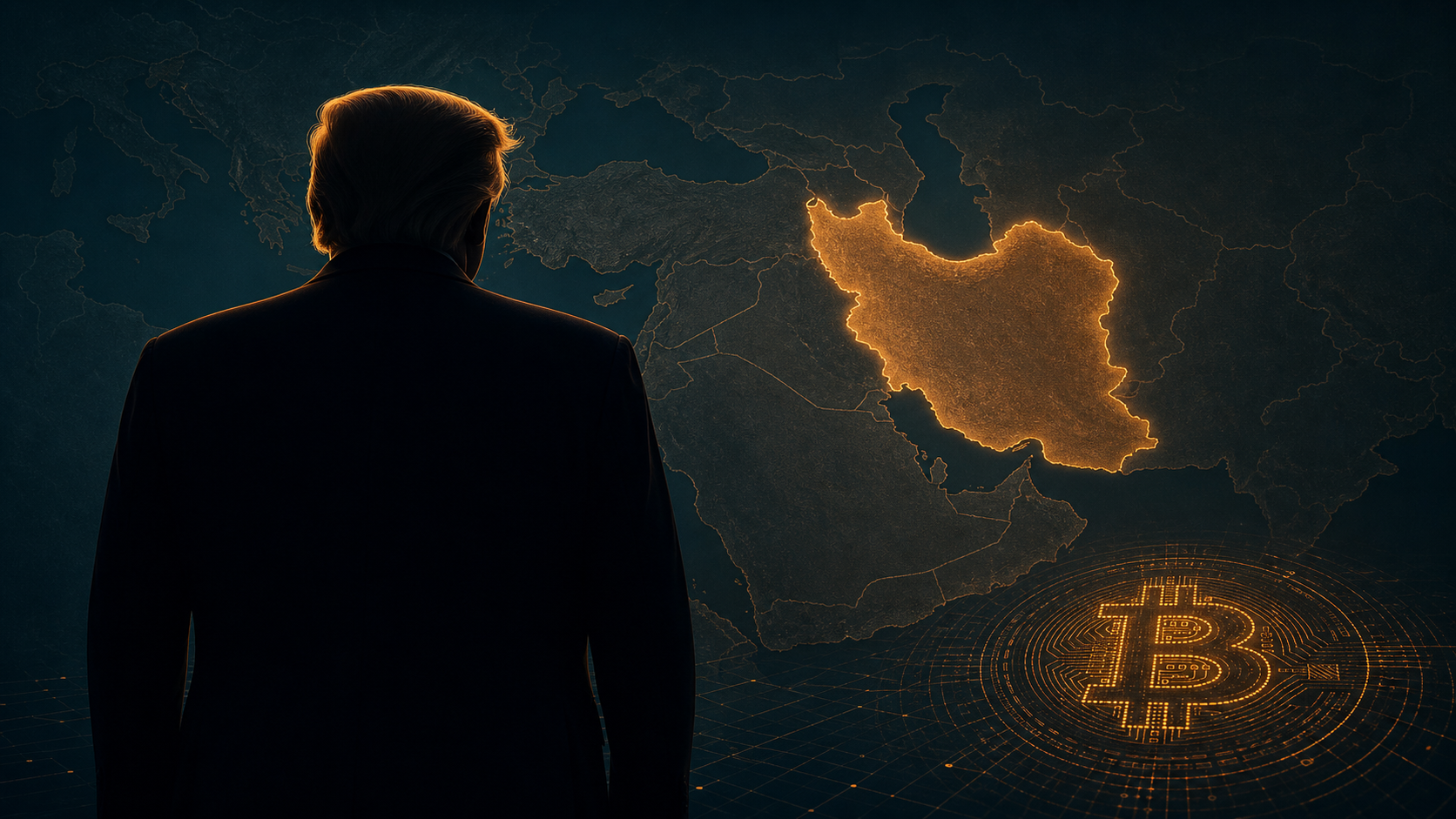
Trump’s Iran threat: Will Bitcoin’s safe-haven story hold up?
Donald Trump’s warning that the U.S. will inflict a “serious blow” on Iran has shoved geopolitical risk back onto crypto traders’ screens. This is a rough test for Bitcoin’s safe-haven reputation, particularly after BTC’s mixed response to earlier conflicts in the Middle East. My take: the Trump-Iran trade is back. Markets rarely shrug off language this blunt.
The former president gave no details about what the “blow” would involve or when it might happen, according to the wire report. No timetable. No clear scenario to price. It may be political posturing. It may not. I’ll be honest: that ambiguity is the problem. Anyone holding volatile assets such as Bitcoin or Ether still has to account for the chance of military action.
Most safe-haven narratives imply that conflict automatically sends money toward perceived safety. That’s only half right. After the U.S. killed Iranian general Qassem Soleimani in January 2020, Bitcoin rose about 8% within 72 hours; gold climbed as well. BTC is now near $61,400, but the setup has changed because markets are already wrestling with uncertainty over Federal Reserve rates. Why does this matter? Because a rate-sensitive market can overwhelm the geopolitical trade, at least initially. I suspect Bitcoin would fall with stocks if panic sets in. Buyers looking for shelter might arrive later—if they arrive at all.
Bitcoin’s fixed supply and independence from government control underpin the claim that it can protect wealth during financial stress. Yet crypto has become more closely connected to traditional finance over the past four years, with institutions holding more Bitcoin and BTC often behaving like a risk asset. Counter to the usual advice, the first market reaction may tell us very little about the safe-haven thesis. Investors could dump BTC and ETH alongside stocks before bargain hunters appear. What happens afterward matters more. I keep coming back to one comparison: Bitcoin versus major stock indices. If BTC breaks away while tensions rise, its safe-haven case improves. If it continues tracking equities, the argument becomes harder to defend.
What this means
Trump’s latest threat against Iran raises the odds of sudden price swings across global markets. The test is blunt. Will Bitcoin trade like digital gold or like a speculative asset? BTC and ETH may fall during a stock selloff, then recover if investors move money outside traditional markets. Yes, that sounds contradictory—bear with me. A selloff followed by a decoupling would be more revealing than an instant spike. For now, $60,000 is the number I would watch. Staying above it after further Iran news would suggest buyers are holding their nerve. A break below it could trigger more selling.
Oil and gold may show first how seriously markets are taking the threat. Crypto traders should then compare Bitcoin with the S&P 500 over the next 48 to 72 hours. Is that window too short? No—it is long enough to capture the immediate repricing, though not to settle Bitcoin’s safe-haven case for good. If stocks fall while BTC rises, the argument gains fresh evidence. If they keep moving together, interest rates and market positioning are probably doing more of the work. I would keep the levels simple: a sustained move above $61,400 may indicate demand for shelter. Below $60,000, Bitcoin would look like part of a wider retreat from risk.