
















































Claude Anthropic Outage: Government Access Raises Crypto Surveillance Concerns
A large global outage knocked many users out of Anthropic’s Claude AI services. The part that stuck was the reported exception: some government users may have still had access. I’ll be honest: that is the detail people remember, not the downtime itself. If true, it raises basic questions about who gets priority when major AI systems break, who controls access behind the scenes, and why Bitcoin (BTC) keeps showing up in arguments about decentralization.
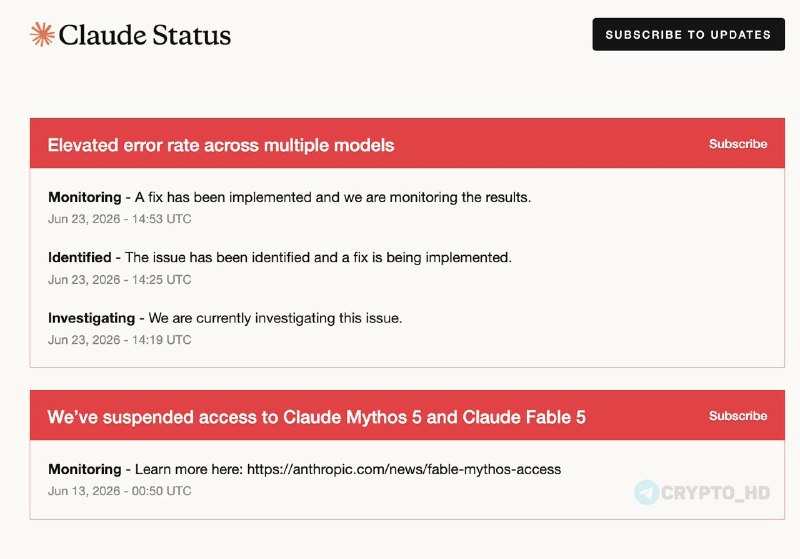
The outage left users in several regions unable to reach Claude. For a company in Anthropic’s position, that is not just a rough afternoon. It is a serious service failure. The reported split made it worse: public users were locked out, while some state-linked users apparently kept access. That lands badly. People who already distrust centralized platforms do not need much help connecting those dots.
The episode also hits the “safe haven” argument around Bitcoin (BTC). Crypto tends to gain attention when centralized systems look too powerful or too brittle: banking restrictions, sanctions fights, surveillance concerns, internet shutdowns. Those are the moments when Bitcoin’s pitch gets easier to understand. Most guides frame this as a price story. That is only half right. This Claude outage did not send BTC soaring. It did not. Markets almost never move that neatly. Why does this matter? Because access rules can shape narratives long before they show up on a chart. If major digital tools can stay open for governments while regular users sit outside, decentralized networks start to look less like ideology and more like backup infrastructure. My take: if similar access gaps show up in AI, cloud services, payments, or identity systems, the Bitcoin argument could get stronger over the next few months, especially if AI privacy rules become a political fight.
It also adds pressure to the crypto regulation debate, which was already tense. The idea that a powerful AI service might remain available to state actors during a wider failure is exactly the kind of thing that pushes people toward blockchains and self-custody. DeFi gets pulled into that conversation too. Not because every crypto project deserves trust. Plenty do not. The appeal is simpler than that: fewer gatekeepers and fewer choke points. Less room for quiet access arrangements. Counter to the usual advice, this is not mainly about chasing the next token headline. If governments appear to get special treatment inside major digital services, privacy-focused protocols and censorship-resistant systems could get renewed attention. This is not a crackdown on one token. It is a reminder that centralized digital power comes with politics. Exchanges, staking services, custodians, and other crypto middlemen may face more questions too if users start asking how exposed they are to state pressure.
What this means
The reported selective access during the Claude Anthropic outage points to a blunt problem: powerful AI tools may not fail the same way for everyone. Public users can lose access while state-linked users keep working. Crypto investors notice that kind of detail. We have seen this reaction before in debates around payments, identity systems, and platform moderation. It backs the basic case for decentralized networks, especially systems built around censorship resistance and self-custody. User control matters here. No single ticker appears to have moved because of this outage. Still, the story may strengthen the longer-term pitch for Ethereum (ETH), DeFi protocols, and other networks that ask users to rely less on centralized operators.
Investors should watch Anthropic’s explanation next. Was this a routing issue, a contract issue, a separate deployment, or something else? The answer matters. AI governance and data sovereignty debates in the United States and the European Union are worth watching too, along with government access fights in other major markets. Yes, this sounds broader than one outage. It is. Stronger transparency rules could cool the issue down. More state access to private systems would probably inflame it. Privacy coins and decentralized identity projects also deserve attention. Is this overkill for one Claude outage? By itself, yes. But if the surveillance narrative keeps building, those smaller sectors could come back into focus. I would also watch for official statements from Anthropic or public agencies, because right now the reported access gap is carrying more weight than the confirmed facts.
FAQ: Claude Anthropic Outage and Government Access
What caused the Claude Anthropic outage?
Reports have not identified a public technical cause. Anthropic has not publicly explained what failed.
Did government entities truly have access during the outage?
Reports say regular users were locked out while some government entities still had access to Claude AI services. Anthropic needs to explain that clearly.
How does this affect data privacy?
If government users kept access while the public lost it, users will ask whether state actors get different treatment inside major AI systems.
What are the implications for cryptocurrency?
The incident gives crypto advocates another example to use when arguing for decentralized systems that do not depend on one company or one access policy.
Could this lead to increased crypto adoption?
One outage will not change adoption by itself. A pattern of selective access across major digital services could push more people toward decentralized networks.
Are there any official statements from Anthropic?
Anthropic has not released a public statement specifically explaining the reported government access during the outage.
What should investors watch for next?
Investors should watch Anthropic’s explanation, AI governance debates, and any regulatory response tied to government access to private digital services.
Does this impact specific cryptocurrencies like Bitcoin or Ethereum?
No immediate price impact has been tied directly to the outage. The larger effect, if there is one, is narrative support for Bitcoin (BTC), Ethereum (ETH), and DeFi networks.
Is this an isolated incident?
That is not clear yet. If the reports are accurate, the outage may become part of a wider debate about how AI companies handle state access.
How does this relate to censorship resistance?
Selective access makes censorship resistance feel less abstract. It shows why some protocols are designed so one operator cannot decide who gets in and who gets cut off.