
















































Cloudflare outage: global internet issues hit crypto exchanges
Cloudflare had a major outage on June 22, 2026, and parts of the web stopped behaving for a while. Gemini was one of the crypto platforms hit, alongside ordinary services people reach for without thinking. My take: this is where crypto’s clean story gets messy. The coins may run on decentralized networks, but the average person still reaches them through centralized websites, APIs, status pages, and login screens. When those break, trading gets ugly fast.
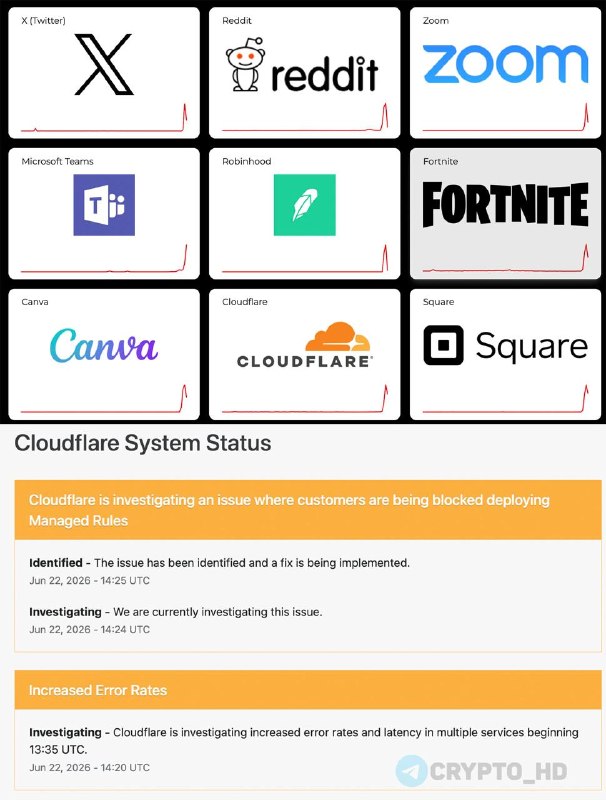
The internet took a nap. Cloudflare, one of the biggest pieces of web plumbing, ran into trouble, and sites around the world slowed down or stopped loading. Twitter, Reddit, Discord, Gemini, and Google were reported among the affected services. Why does this matter? Because the modern web feels massive and distributed right up until one provider has a bad day and half your tabs look dead.
A disruption like this can push some investors toward safe-haven assets, but crypto does not fit that story neatly. Bitcoin (BTC) gets called digital gold all the time. I get the argument. I also think it gets overused. That label does not help much if traders cannot reach their exchange accounts or place orders. If Gemini or similar platforms are unreachable, the first problem is not ideology. It is liquidity. In March 2020, BTC fell more than 50% in one day as markets cracked and exchange systems struggled with the load. This outage is not the same event. Still, it points at the same weak spot: decentralized assets often depend on centralized doors. If those doors stay shut long enough, Bitcoin could fall because traders are locked out, not rise because everyone suddenly treats it like shelter.
The outage also matters for the macro flow of risk assets. When basic internet infrastructure stumbles, investors tend to get nervous across digital markets. Crypto usually trades like a high beta risk asset, so it can move hard when confidence breaks. We saw that during the Federal Reserve’s 2022 rate hikes, when BTC slid from above $48,000 in March to below $17,000 by the end of the year. Counter to the usual advice, this is not only about price charts. A Cloudflare issue is not a rate hike, obviously. But crypto prices do not float above the real world. If investors start worrying about access, custody, exchange uptime, redemption mechanics, or even whether a status page is telling the whole story, pressure can hit Ethereum (ETH), smaller tokens, and stablecoins too.
What this means
The outage exposed a basic problem in how crypto actually works for most users. The blockchains may keep running, but most investors do not touch them directly. They use exchanges and hosted wallets. They also use dashboards, market data sites, and web apps. I’ll be honest: that gap gets waved away too often. Even a short outage can mean bad fills, missed trades, delayed withdrawals, and strange price gaps. Gemini’s disruption, even if brief, shows the distance between crypto’s decentralized pitch and the way most people actually use it.
Traders should watch exchange liquidity and volume after service returns, especially in smaller altcoins where thin books can move quickly. BTC’s price action around the $60,000 area is worth watching too. A clean break below that level would suggest the market is nervous about more than one bad infrastructure day. Is this overkill? For a market that trades 24/7 through web front ends, no. Exchange updates matter here as well. I would want to know whether platforms have backup routing, alternate access paths, or an actual plan for the next provider outage. Macro still matters more over time. Yes, that slightly undercuts the outage panic, but it is true: the next Federal Reserve minutes may end up moving sentiment more than Cloudflare’s downtime.
Safe-haven assets and crypto
A safe-haven asset is an investment that investors expect to hold its value, or rise, when markets are under stress. Investopedia uses that basic definition.
Bitcoin’s safe-haven case gets weaker when access depends on centralized services. The Cloudflare outage made that visible. Most guides say Bitcoin is either a risk asset or digital gold. That is only half right. During the March 2020 crash, Bitcoin dropped more than 50% in a single day, and CoinDesk reported that exchange infrastructure was under heavy strain at the same time.
Macro flow of risk assets
Macro flow means money moving into or out of riskier assets because of interest rates, inflation, growth fears, liquidity stress, or other broad economic pressures.
Crypto often reacts sharply to those shifts. In 2022, as the Federal Reserve raised rates aggressively, Bitcoin fell from more than $48,000 in March to under $17,000 by year-end, according to CoinMarketCap data. We tried to separate infrastructure risk from macro risk here. It does not stay separate for long.
FAQ: Cloudflare outage and crypto
Q: What caused the Cloudflare outage?
A: Cloudflare described the problem as a widespread infrastructure disruption. The exact technical cause depends on Cloudflare’s incident report.
Q: Which crypto exchanges were affected by the outage?
A: Gemini was among the major crypto platforms affected. Other online services also had downtime or slower performance.
Q: How does a Cloudflare outage affect decentralized cryptocurrencies?
A: The blockchains can keep running while the websites people use to reach them fail. That is the catch. Most users still depend on exchanges, hosted interfaces, and centralized web services.
Q: Could this outage lead to a “safe-haven” flight to Bitcoin?
A: It could, but I would not assume that. If traders cannot access exchanges, the near-term effect may be thinner liquidity and weaker prices, not a clean move into Bitcoin as protection.
Q: What should crypto traders do during such an outage?
A: Watch official exchange status pages, check liquidity after trading access returns, and avoid assuming prices are clean while major routes into the market are broken.