
















































CME Launches AVAX and SUI Futures, Opening Wall Street’s Door to Layer-1 Altcoin Bets
CME Group just dropped cash-settled futures on Avalanche (AVAX) and Sui (SUI). It’s the first regulated U.S. venue where institutions can hedge or speculate on these two layer-1 tokens. The contracts went live today, per the Chicago Mercantile Exchange, and they hand U.S. institutions a CFTC-regulated wrapper for AVAX and SUI exposure for the first time. Why does it matter? CME listings have a track record of foreshadowing spot-ETF approvals. They also give portfolio managers a CFTC-blessed instrument that legal teams will actually clear without an internal week-long review.
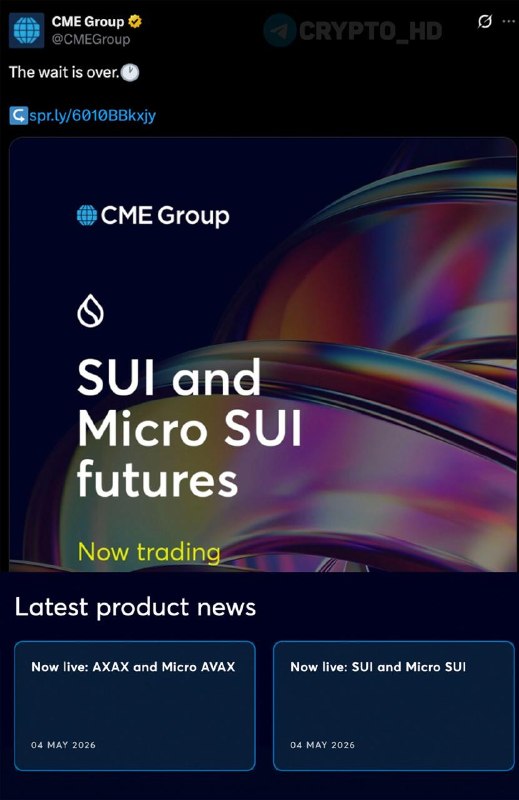
CME’s crypto futures suite now covers six tokens: BTC, ETH, SOL, XRP, AVAX, and SUI. AVAX and SUI become the fifth and sixth tokens to graduate from “exchange-only” to “futures-listed” status on America’s premier derivatives venue. That’s a tight guest list. Getting on it isn’t casual.
Why CME Listing Signals Regulatory Approval
A CME listing works as a de facto regulatory endorsement. The exchange won’t list a contract until its legal team, the CFTC, and clearing members all sign off — think of it as the financial equivalent of getting through TSA Pre-Check, where multiple agencies have already vetted you before you even touch the gate. On the regulation side, this is a quiet but loud signal. Per CFTC oversight rules, AVAX and SUI just cleared a bar most altcoins never reach. Traders who watched the Solana playbook know what comes next: SOL got CME futures earlier in this cycle, then spot-ETF filings followed within months. AVAX is trading around the mid-cap layer-1 cohort. SUI sits near the top of the Move-language ecosystem. Both now have the regulatory plumbing for an ETF conversation that simply did not exist yesterday.
How CME Futures Expand Institutional Access
CME futures change who can legally touch these tokens by routing exposure through existing prime-brokerage rails. A pension fund or RIA that cannot legally hold spot AVAX on Coinbase can now express the view through a CME contract that fits inside existing prime-brokerage rails. It’s the same pipe that pulled tens of billions into BTC and ETH after their CME listings — flow doesn’t show up on day one, but the optionality is now baked in. Worth noting: cash-settled means no physical delivery, so this is purely a price-exposure tool, not a custody story.
Market Structure Impact: Tighter Spreads, Lower Volatility
Futures listings on regulated venues typically compress the basis between offshore perpetuals and U.S. derivatives, dragging volatility down over time. There’s a market-structure read here. Futures listings tend to squeeze the gap between offshore perps (Binance, Bybit) and U.S. regulated venues. Expect tighter spreads on AVAX and SUI over the coming weeks as CME market-makers arbitrage against existing perpetuals. It’s a similar dynamic to what happened when CME first listed Bitcoin futures back in late 2017 — within a year, the wild 30-40% gaps between regional exchanges had largely evaporated. That alone usually drags volatility down a notch, which paradoxically makes these names more attractive to size-constrained institutions that were previously scared off by 80%-vol prints.
No surprise the timing lines up with a broader institutional push into altcoins beyond the BTC/ETH duopoly. According to CFTC public statements, the agency has been steadily expanding its perimeter on crypto derivatives, and CME has been the willing front door. Each new token added is another data point that the U.S. regulatory stack is — slowly, grudgingly — building rails for assets it once treated as untouchable.
What this means
The immediate signal for AVAX and SUI is institutional legitimacy — the same checkbox that historically precedes ETF filings, treasury allocations, and corporate hedging coverage. For AVAX and SUI specifically, both tokens just got the kind of institutional stamp that typically precedes ETF chatter, treasury allocations, and corporate hedging desks opening coverage. Don’t expect a vertical move on the news. CME launches usually trade flat-to-soft on day one because the supply-side (market-makers) needs inventory before the demand-side (institutions) shows up. The real tell will be open interest. If AVAX and SUI futures cross $50M in OI within their first 30 days, that mirrors the SOL trajectory and puts an ETF filing firmly on the table.
The most reliable institutional indicators to watch are CME COT reports, 13F disclosures, and U.S.-session price tracking over the next four to six weeks. Watch the CME COT reports over that window for the first signs of asset-manager positioning — that’s where the institutional footprint actually shows up. Keep an eye on any 13F-style disclosures from crypto-focused hedge funds reporting AVAX or SUI futures exposure for the first time. And watch the spot price reaction around U.S. session opens, when CME volume concentrates: if AVAX and SUI start tracking U.S. equity hours more closely than Asian session flows, that’s the institutional handoff happening in real time. Until then, this is a structural win that the market will price in slowly, not a catalyst trade.
FAQ
What did CME launch for AVAX and SUI?
CME launched cash-settled futures contracts on Avalanche (AVAX) and Sui (SUI). The move gives U.S. institutions their first regulated venue to gain price exposure to these layer-1 tokens without holding the underlying assets.
Why is the CME futures listing significant for AVAX and SUI?
A CME listing functions as a regulatory checkpoint. The exchange, the CFTC, and clearing members must all approve the contract. Historical precedent with BTC, ETH, and SOL shows that CME futures often precede spot-ETF filings within months.
How many crypto tokens does CME now offer futures on?
Six. CME’s crypto futures suite now covers Bitcoin (BTC), Ethereum (ETH), Solana (SOL), XRP, Avalanche (AVAX), and Sui (SUI).
Are CME AVAX and SUI futures physically settled?
No. The contracts are cash-settled, which means no physical delivery of tokens. They work purely as a price-exposure instrument, not a custody solution.
Will the CME listing immediately push AVAX and SUI prices higher?
Not typically. CME launches usually trade flat-to-soft on day one because market-makers need to build inventory before institutional demand arrives. The real signal is open interest growth over the first 30 days.
What open interest level would signal institutional adoption?
Crossing $50 million in open interest within the first 30 days would mirror the Solana trajectory and put a spot-ETF filing firmly on the table for AVAX and SUI.
Which institutions can now access AVAX and SUI through CME?
Pension funds, RIAs, hedge funds, and corporate treasuries that cannot legally hold spot crypto on retail exchanges can now gain exposure through CME contracts routed via existing prime-brokerage infrastructure.
How will CME futures affect AVAX and SUI volatility?
Volatility is expected to compress as CME market-makers arbitrage spreads against offshore perpetuals on Binance and Bybit. Lower volatility historically attracts size-constrained institutions previously deterred by 80%-vol prints.
Where can investors track institutional positioning in AVAX and SUI futures?
The CME Commitments of Traders (COT) reports and 13F filings from crypto-focused hedge funds are the primary public sources for tracking asset-manager positioning over the next four to six weeks.