
















































US-UK stablecoin regulation principles: a practical map for stablecoins in finance
The US and UK have released a joint statement with 10 principles for stablecoin regulation. The basic point is not subtle: both governments want stablecoins to fit inside regular finance without making every cross border payment or market settlement feel like a legal coin toss. My take: that is less glamorous than a bull-market headline, but more important. Not “crypto changes everything by Friday.” Slower. Duller. More regulator-shaped.
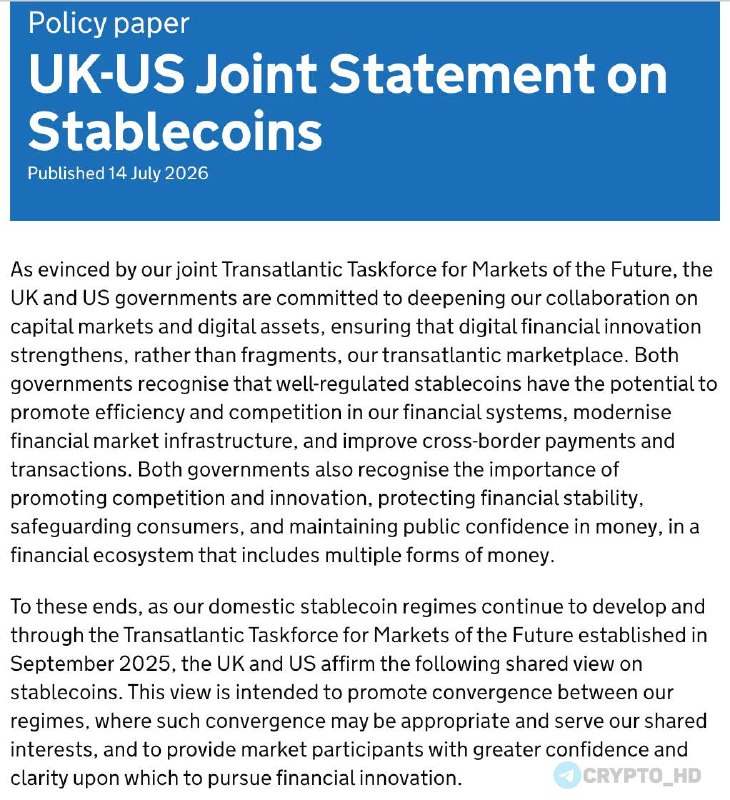
The statement focuses on making stablecoins safer and easier to use across borders. It covers payments and settlements. It also reaches into capital markets, tokenized deposits, and similar privately issued instruments. The goal is to make the US and UK rulebooks compatible enough that stablecoins can be used without each market building its own closed system. Why does this matter? Because anyone holding or trading USDT or USDC is already exposed to the plumbing. Those two coins carry a huge share of on-chain liquidity, so changes to their regulation can show up quickly in trading, DeFi, and exchange flows.
One principle is simple: similar risks should get similar rules. Regulators do not seem interested in treating stablecoins as a strange side category forever. They want to pull them closer to existing financial rules when the risk looks familiar. Counter to the usual crypto argument, that is not automatically bad. I get why some traders hate it. Regulatory arbitrage has been useful for parts of the industry, even when it made the market messier. But clearer rules can also bring in institutions that will not touch a market if the legal treatment changes every quarter. The SEC’s fights with crypto projects have shown how quickly uncertainty can hit token prices. Nobody enjoys trading around a lawsuit headline.
The reserve rules are more concrete. Stablecoins should be 100% backed by high quality, liquid assets. Several major issuers already say they do this, but putting it into a shared US-UK framework raises the bar. Most guides stop there. That is only half right. The statement also says reserve and liquidity requirements should reduce risk without forcing issuers to trap too much capital in every country. That part matters because crypto is global by default. Too many local reserve silos would make stablecoins slower and probably more expensive to use. For traders, the hope is fewer peg scares. Terra’s UST collapse in May 2022 is the obvious memory here: the depeg helped wipe out billions and pushed BTC from around $30,000 to below $20,000 within weeks. Nobody wants that movie again.
The statement also says regulation should not make stablecoin businesses commercially useless, block competition, or shut out new entrants without a good reason. Good. Watch that sentence. Regulated stablecoins could be used in payments, settlements, tokenized markets, securities, and commodities transactions. In plain English, governments are leaving room for stablecoins to become more than a crypto exchange tool. A company could pay suppliers overseas with a regulated dollar stablecoin instead of waiting on bank rails. Is that overkill for normal corporate payments? Not if the alternative is slow settlement and unclear legal treatment. PayPal has already moved into stablecoins with PYUSD. If these principles turn into workable rules, more firms may try the same path. ETH could benefit too, especially if tokenized assets keep settling on Ethereum or Ethereum-linked infrastructure.
Reserve protection and redemption rights get direct attention. Backing assets should be kept separate from the issuer’s own money, and holders should have clear rights to redeem stablecoins for fiat. I’ll be honest: this is the paragraph people skip, and it is probably the one that matters most when something breaks. If an issuer fails, the statement says stablecoin holders should have priority claims on reserves, with authorities coordinating cross border insolvency procedures. That reduces counterparty risk. It also makes stablecoins easier to explain to a compliance team, which is half the battle for institutional use. The US SEC approved spot Bitcoin ETFs in January 2024, and BTC moved past $45,000 around that period. Stablecoin clarity could have a similar effect in other markets, though probably more slowly and with less drama.
The US and UK also plan to look at how stablecoins issued in one jurisdiction can enter the other market under local law. This is the liquidity piece. If stablecoins can move between markets without a wall of duplicated approvals, they become more useful for trade and investment. Add exchange settlement. Add treasury management. That could help platforms like Coinbase, which depend on stablecoin trading and fiat on-ramps. More stablecoin use can mean more volume. More volume can mean more revenue. Simple as that. Yes, this sounds almost too neat, and it is: the market will still care about fees, licensing costs, and how strict the final rules become.
What this means
The US and UK are no longer just watching stablecoins from the sidelines. They are trying to make room for them inside regulated finance while keeping the obvious risks under control. That is a shift from “is this allowed?” to “how do we allow this without blowing something up?” I think that is the more interesting story here. Not hype. Plumbing.
For crypto markets, the main signal is adoption. If stablecoins become a cleaner on-ramp and off-ramp for large pools of money, BTC and ETH could see deeper liquidity and less friction around institutional flows. Does that mean prices automatically rip? No. It means the market gets easier for serious money to enter, exit, settle, and report. Those boring functions matter more than people like to admit.
Investors should watch how the principles turn into actual rules in the US and UK. The useful updates will come from places like the US Treasury Department and the UK’s Financial Conduct Authority. Licensing rules and operating requirements matter first. Reserve standards matter just as much. Cross border access will show whether this is real progress or just another polished statement. Stablecoin market cap is another tell. If USDC and USDT keep growing, and if banks or payment companies announce serious integrations, the trend has teeth. A major regulatory update or bank partnership could help ETH, especially because of its role in DeFi and tokenized assets. A move toward $4,000 in the coming months is possible if the broader market cooperates, but regulation alone will not carry it there. My view: treat regulation as fuel quality, not the engine.
FAQ: US-UK stablecoin regulation principles
- What is the main goal of the US-UK stablecoin regulation principles?
- The goal is to make stablecoins safer and easier to use across borders, especially for payments, settlements, and capital markets.
- How do the principles handle stablecoin reserves?
- They say stablecoins should be 100% backed by high quality, liquid assets. Reserve rules should reduce risk without forcing issuers to lock up unnecessary capital in every country where they operate.
- Will these rules hurt crypto innovation?
- The statement says the rules should not make stablecoin businesses commercially unworkable, restrict competition, or create unreasonable barriers for new entrants. Whether that holds up depends on the final regulations.
- What does “similar rules to similar risks” mean?
- It means regulators want stablecoins with risks similar to traditional financial products to face similar standards. The aim is to avoid loopholes and uneven competition.
- How do the principles protect investors?
- They require backing assets to be kept separate from issuer funds and give holders clearer rights to redeem stablecoins for fiat. If an issuer fails, holders should have priority claims on reserves.
- Why does cross border access matter?
- Cross border access would let stablecoins move more easily between the US and UK under each country’s laws. That could make them more useful for trade, settlement, and global liquidity.
- Which government bodies should investors watch?
- Investors should watch the US Treasury Department and the UK’s Financial Conduct Authority for licensing rules, reserve requirements, and operating standards.
- How could this affect the wider crypto market?
- Clearer stablecoin rules could bring more institutional money into crypto by making on-ramps, off-ramps, and settlement cleaner. That would matter most for stablecoins, BTC, ETH, exchanges, and tokenized asset platforms.