
















































Trump Iran Strike Crypto Market Risks Return This Week
A possible Trump Iran military operation is a real market scenario, but it is still conditional. Renewed U.S.-Iran military action could hit crypto through liquidity, oil, inflation expectations, and demand for hedges. Axios reported that Donald Trump may resume a military operation against Iran this week if the “diplomatic deadlock” continues, citing sources in American and Israeli leadership. My take: the Trump Iran strike crypto market trade is not complicated at first. A geopolitical shock usually hits liquidity before it helps anyone’s Bitcoin thesis. Only after that does BTC get a chance to prove, or fail to prove, its safe-haven case. BTC, ETH, and COIN traders should treat this as a headline-risk week, not a normal macro week.
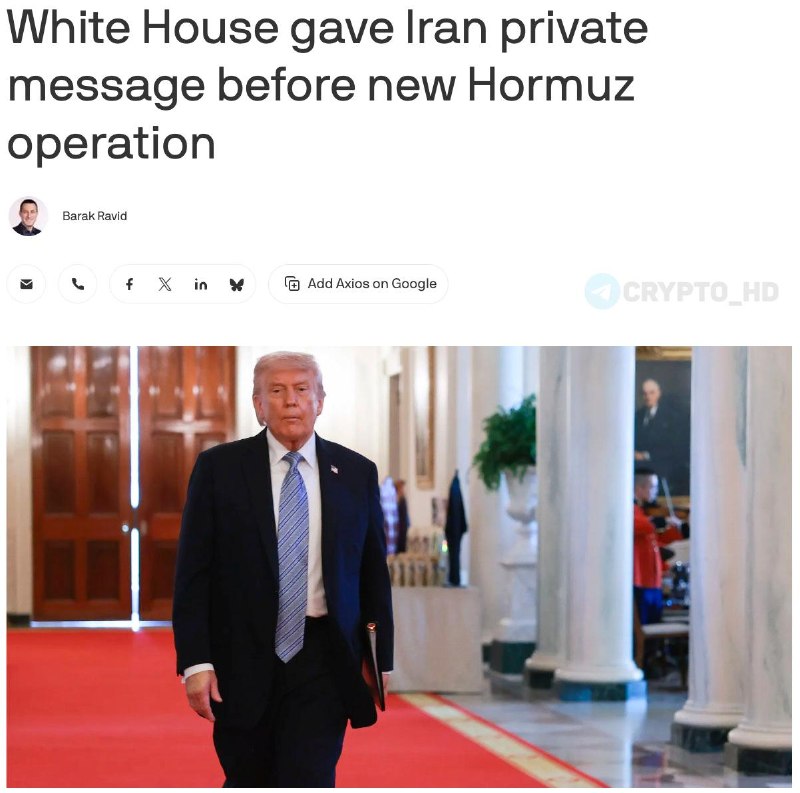
The Axios report is narrow. That matters. Axios says Trump may restart a military operation against Iran this week if diplomacy stays stuck. It does not say an operation has started. It does not name a target, date, market reaction, or official quote. Still, put “Iran,” “military operation,” and “this week” in the same report and crypto desks will pay attention. Why does this matter? Because Middle East risk can move oil first, inflation expectations second, the dollar third, and BTC liquidity right after. This can move quickly.
The first crypto angle is macro flow, not the war headline itself. A renewed Trump Iran military operation Bitcoin trade would be about energy and rates as much as politics. If an Iran conflict raises the energy-risk premium, traders may price in a tougher rate path. That usually hurts risk assets like ETH and COIN before Bitcoin gets a real hedge bid. The January 3, 2020 Soleimani strike is the clean comparison everyone reaches for, and for once it is useful: BTC rose about 8% soon after. That showed geopolitical panic can sometimes help Bitcoin when investors want something outside equities.
Bitcoin does not always behave like gold. I’ll be honest: this is where the lazy safe-haven takes usually break. In a clean hedge trade, BTC can rise with gold as investors worry about politics, sanctions, payment routes, and sovereign risk. In a bad liquidity trade, BTC can fall with Nasdaq-linked assets because funds are cutting leverage wherever they can. Most guides say Bitcoin is either a hedge or a risk asset. That’s only half right. Around big levels like $60,000 and $70,000, the move can quickly become less about Iran and more about CME futures, offshore positioning, ETF flows, stops, and liquidations.
The second angle is the safe-haven story. Iran war crypto market impact is not only a BTC spot-price question. It tests whether investors still see Bitcoin as something outside the sovereign-risk system. Sanctions, military escalation, and payment-route stress all touch the old Bitcoin thesis. ETH has a rougher setup in moments like this because it often trades like a high-beta tech asset. COIN has its own two-sided problem: crypto volume might rise, but equity-market risk aversion can still pull the stock lower. The split is real.
There is also a regulation-pressure shadow, even though Axios did not mention regulators. If U.S.-Iran tensions rise this week, Washington can quickly shift toward sanctions compliance and exchange monitoring. Stablecoin flows get dragged into that conversation too. Counter to the usual advice, I would not treat this as a pure price-chart story. National-security events in financial markets rarely stay inside one ticker. COIN, USDT, USDC, and ETH staking infrastructure all matter here because enforcement risk tends to rise when national-security language enters the market.
For Bitcoin price Iran conflict trading, one candle will not tell the story. I would watch the sequence. Headline first. Oil and the dollar next. Then BTC either holds a major level or loses it as leverage comes out. January 2020 showed Bitcoin can rally after a sudden U.S.-Iran shock. March 2020 showed crypto can still collapse when liquidity disappears. Same asset. Different regime. Yes, that sounds like it contradicts the safe-haven argument above. It does not. It means regime matters more than the slogan, and mixing those up is how traders get chopped up.
The Axios report includes no direct reaction quote from Trump, Iran, Axios sources, American leadership, or Israeli leadership beyond the reported condition of a continuing “diplomatic deadlock.” So there is no official quote to trade from here. The cleaner read is that this is a conditional escalation report. Crypto usually prices that kind of risk unevenly until there is confirmation, denial, or an official clarification. Skip certainty here.
What this means
Geopolitical risk is back in the crypto trade while markets are still dealing with inflation, rates, and ETF demand. BTC is the main ticker because it carries the hedge narrative. ETH and COIN may give the faster warning if this turns into a risk-off move. Is this overkill for one Axios report? No, not when the report includes Iran, a possible military operation, and this week. Big levels like $60,000 and $70,000 also matter because options positioning, stops, liquidation flows, and ETF hedging can build up around them during a headline window.
Watch for a confirmed Trump decision this week, another Axios update, official U.S. or Iranian statements, and the next FOMC date on the calendar. For market signals, track CME Bitcoin futures basis, BTC ETF daily flows, ETH/BTC, and open interest after the first confirmed military headline. My take: ETH/BTC may be the cleaner tell than BTC alone. If BTC rises while ETH and COIN lag, the market is buying the safe-haven argument. If all three sell off together, this is not a Bitcoin hedge trade. It is a liquidity event.
FAQ
What is the Trump Iran strike crypto market risk?
The Trump Iran strike crypto market risk is the chance that renewed U.S.-Iran military action could move Bitcoin, Ethereum, Coinbase stock, and crypto liquidity through oil prices, inflation expectations, sanctions risk, and safe-haven demand.
Did Trump confirm a new Iran military operation?
No. Axios described the scenario as conditional. It depends on whether the “diplomatic deadlock” continues.
Why would an Iran conflict affect Bitcoin?
An Iran conflict could move Bitcoin by changing energy prices, inflation expectations, dollar demand, and investor appetite for assets seen as outside the sovereign-risk system.
Is Bitcoin guaranteed to rise during geopolitical conflict?
No. Bitcoin can rise when traders want a hedge, but it can also fall if funds cut leverage and sell risk assets to raise cash.
Which crypto assets are most exposed to this headline risk?
BTC is exposed through the safe-haven story. ETH is exposed through risk-asset pressure. COIN is exposed to crypto trading activity and broader equity-market sentiment.
What should traders watch next?
Traders should watch official U.S. or Iranian statements, Axios follow-up reporting, oil, the dollar, CME Bitcoin futures basis, BTC ETF flows, ETH/BTC, and open interest.