
















































Raoul Pal at Consensus 2026 Bets on Solana Over Bitcoin for the AI Economy
Raoul Pal’s Consensus 2026 thesis: Solana beats Bitcoin as the settlement layer for an AI-driven crypto economy, with autonomous AI agents projected to outnumber human DeFi users 3:2 by 2031. The Real Vision founder used the Miami stage to make a call that should make crypto investors revisit their portfolio map. My take: the interesting part is not that Pal likes SOL. It is that he is treating machine demand as a real buyer class. AI, in his view, drives the next crypto cycle, and within five years DeFi has three AI agents for every two human users. Asked to choose between the two majors, Pal picked SOL as the better settlement layer for an AI-native economy. That matters. For traders, the SOL/BTC ratio stops looking like a plain altcoin rotation and starts looking like a directional bet on machine-driven on-chain demand.
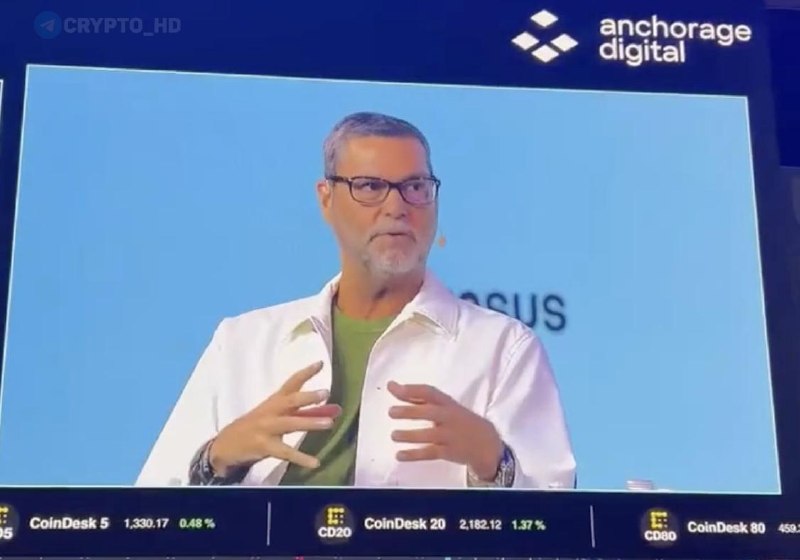
Pal made the comments during a keynote at Consensus 2026, the industry’s flagship gathering, where this year’s main conversation moved away from ETF flows and toward autonomous agents transacting on-chain. His argument comes down to two big claims, then one network call. AI pulls capital into crypto over the coming years. The agent-to-user ratio in DeFi reaches 3:2 by 2031. Solana’s high throughput and low fees make it the natural home for that activity, while Bitcoin’s role tightens around the job it already owns: store value.
The pick of SOL over BTC is the headline, but the framing matters more. Pal is not writing Bitcoin off. I would not read it that way. He explicitly kept BTC in the portfolio as a store-of-value anchor, which fits his long-running “Banana Zone” thesis: Bitcoin sets the macro tone, then altcoins pull more of the upside when risk appetite expands. What changed is which altcoin he is willing to name on the record as the structural winner. In Pal’s framework, Solana is no longer just a high-beta BTC proxy. It becomes infrastructure for a category of demand that Ethereum, Bitcoin, and most L1s are not built to absorb at scale.
AI agents are a different class of on-chain user: non-cyclical, latency-sensitive, fee-intolerant. This is the technical core. AI agents are not retail traders. They do not sleep. They do not panic-sell on CPI prints. They execute at fee tolerances that make Ethereum L1 economically unusable for many automated workflows. Why does this matter? Because a network that processes transactions in under a second at fractions of a cent, which is Solana’s actual operating profile, starts with an obvious advantage. If Pal’s 3:2 ratio even partially lands, the result is sustained, programmatic transaction demand on the chains that can handle it. SOL has historically traded as a high-beta risk asset, rallying harder than BTC in risk-on phases and bleeding faster in drawdowns. The AI-agent thesis, if it materializes, could weaken that pattern by giving Solana a non-cyclical demand floor that does not exist today.
The institutional adoption signal is the underappreciated dimension of Pal’s call. The adoption signal here is quieter than the SOL/BTC headline, but it may be more important. When a macro investor of Pal’s profile names a specific Layer 1 from the Consensus mainstage, allocators notice. He is not a Solana maximalist, which is the point. His audience includes the family-office and macro-fund crowd that has historically treated anything beyond Bitcoin as a speculative side bet. Most guides would frame this as a retail narrative pump. That’s only half right. Putting SOL in the same sentence as BTC at a tier-one industry conference normalizes Solana exposure for investors who, until recently, would have expressed an AI trade through Nvidia equity rather than on-chain assets. That kind of adoption does not first appear in TVL. It appears in mandate language inside allocation memos.
“Universal Basic Equity” is Pal’s framework for crypto as the retail claim on AI productivity gains. His Universal Basic Equity framing deserves its own lane. Pal floated the idea that crypto could become the UBE of the AI era, the mechanism by which ordinary people hold a claim on productivity gains generated by autonomous systems. I’ll be honest: the phrase is a little too clean. Strip away the conference polish, though, and the substance is clear enough. Token ownership becomes the retail entry point into AI’s economic surplus, in a world where much of that surplus accrues to model builders and infrastructure operators. Whether that survives contact with reality is a separate question. As a narrative engine for the next cycle, it is exactly the kind of line that gets pulled into pitch decks for the next eighteen months.
Pal delivered a structural forecast, not a tactical trade. Worth noting what Pal did not say. He did not give a price target for SOL. He did not predict BTC’s top. He did not name a specific AI-agent protocol, token, or DeFi venue as the prime beneficiary. No ticker basket. No magic level. The forecast is structural, not tactical. That distinction matters because keynote calls like this usually get a short-term sentiment bid, then mean reversion, unless the underlying flow story starts showing up in on-chain data. Is this overkill for one conference quote? No, because the 3:2 ratio is specific enough to be tested. It is either directionally right and gradually visible in transaction counts, or it gets quietly forgotten by 2028.
Timing deserves a harder look. Pal made these comments alongside his earlier “altcoin supercycle” thesis, which has been a recurring theme in his commentary cycle. The Consensus statement is best read as a refinement of that broader call rather than a clean pivot. In Pal’s supercycle framework, capital rotates down the risk curve from BTC into ETH, then into higher-beta L1s as the cycle matures. Naming Solana specifically, and tying it to the AI thesis, gives that rotation a fundamental anchor it previously lacked. Counter to the usual advice, though, a better narrative does not automatically mean better timing. Supercycle calls have a long history of being right in direction and wrong in magnitude.
What this means
The Consensus 2026 call re-rates the SOL/BTC trade from cyclical altcoin exposure to a structural bet on AI-economy infrastructure. The signal here is a re-rating of the SOL/BTC trade from cyclical altcoin exposure to a structural bet on AI-economy infrastructure. For traders running pair trades, the live question is whether the agent-flow narrative gets pricing power before the next BTC dominance peak. SOL’s chart already reflects significant cycle-driven outperformance against BTC, and a high-profile macro endorsement at Consensus can compress the positioning timeline. We have seen this pattern before in crypto: the narrative arrives first, the data arrives later, and the trade gets crowded in between. The risk to the thesis is familiar. Throughput advantage at the protocol level does not automatically become the application-layer activity that moves token prices. Bitcoin’s role, by contrast, is reaffirmed rather than challenged. Pal’s own framing keeps BTC as the store-of-value reserve asset, which is exactly the position institutional buyers were already comfortable with.
What to watch next: agent-share of Solana transaction flow, the SOL/BTC ratio at narrative checkpoints, and whether “Universal Basic Equity” enters mainstream allocator vocabulary. Track on-chain activity metrics on Solana over the coming quarters, especially the share of transactions originating from automated or programmatic wallets versus human-initiated swaps. If Pal’s 3:2 agent-to-user forecast shows up anywhere first, it should appear inside DeFi protocols on Solana and competing high-throughput chains. Watch the SOL/BTC ratio at major narrative checkpoints: the next ETF approval window, Consensus follow-on conferences, post-cycle dominance shifts, and any visible jump in automated wallet activity. Also watch how the “Universal Basic Equity” framing gets picked up or rejected by other macro voices over the next two quarters. If it stays a Pal-only line, it remains a marketing slogan. If it migrates into mainstream allocator language, it becomes a narrative with cycle-defining potential. For now, the trade is easy to describe and hard to time: long the chains that AI agents will actually use, hedged with the asset that can hold value regardless of which narrative wins.