
















































Iran Suspends US Talks, Hormuz Strait Threat Tests Bitcoin Haven Trade
“Iran has suspended indirect negotiations with the United States, according to Tasnim, after alleged ceasefire violations in Lebanon and Gaza.” For crypto traders on June 1, 2026, Iran suspending U.S. talks and the Hormuz Strait threat matter because oil risk can move rates, rates can move liquidity, and liquidity can smack Bitcoin before most people have even parsed the headline. My take: BTC, ETH, and COIN do not need a direct Iran link to react. They need volatility, dollar stress, and crowded leverage repriced fast.
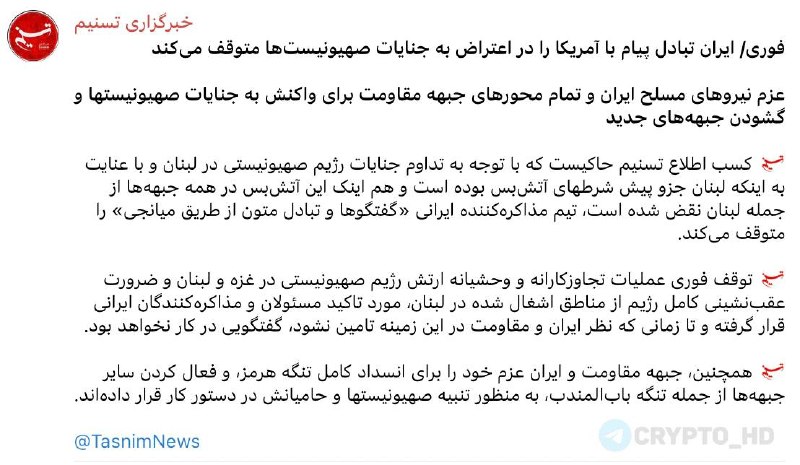
“According to Tasnim, Iran’s negotiating delegation stopped dialogue and message exchanges through intermediaries.” Iranian officials want Israeli operations in Gaza and Lebanon to stop immediately. They also want Israeli troops out of occupied areas of Lebanon before talks resume. The same report says the IRGC decided to fully block the Strait of Hormuz. It says other fronts, including the Bab el-Mandeb Strait, could be activated as well. It also says Israel has increased attacks on Lebanon. That is the reported frame. Everything after that is market analysis, and should be read that way. Seriously.
“The Strait of Hormuz is a serious volatility trigger for global markets.” If traders start pricing in an energy supply shock, inflation expectations can rise. Rate cut bets can fade. Risk assets can lose support quickly. Why does this matter? Because crypto is wired into that chain even when the headline is not about crypto. BTC sometimes trades like a monetary hedge. During forced deleveraging, though, it can behave like high beta tech with a 24/7 ticker. ETH usually carries more beta because it depends on risk appetite, staking flows, on chain liquidity, and the health of leverage across perps.
“Bitcoin’s safe-haven record is messy.” BTC rose about 8% around the January 2020 Soleimani strike period, which gave the “digital gold” crowd something clean to cite. Then came April 13, 2024. After Iran attacked Israel, BTC fell from around $67,000 to about $61,625, an 8.4% drop in minutes by widely reported market data at the time. Same region. Same asset. Very different tape. Most guides say geopolitics proves Bitcoin is digital gold. That’s only half right. Positioning mattered. So did leverage, weekend liquidity, and the market’s tolerance for surprise.
“The market’s reaction to a Hormuz scare depends on whether investors treat Bitcoin as a non-sovereign hedge or sell it because oil risk means inflation and higher real yields.” This is where crypto traders can kid themselves. The story and the trade are not the same thing. A Hormuz scare can help BTC if investors want a hedge against war risk or sanctions risk. It can also help if fiat credibility suddenly feels shakier. But it can hurt BTC if oil pushes inflation fears higher and real yields move up. On June 1, 2026, both paths are possible. I’ll be honest: the first bid probably goes to gold, dollars, and short dated Treasuries. BTC has to earn the haven bid. It does not get one automatically.
“Higher oil prices from geopolitical stress would pressure inflation expectations and could affect Federal Reserve expectations.” The macro link is blunt. Higher oil can lift inflation expectations, and inflation pressure can make traders rethink the next Federal Reserve move. The next scheduled FOMC meeting is June 16-17, 2026, so any Middle East escalation before then lands directly in the rates debate. If the market prices fewer cuts or a more cautious Fed, long duration assets usually get hit first. BTC and ETH are not bonds, obviously. Still, liquidity sensitive crypto often behaves like duration when the dollar and real yields rise together. We have seen that tape before.
“Ethereum (ETH) often underperforms Bitcoin (BTC) during geopolitical stress as traders cut leverage and move toward cleaner collateral.” For ETH, this is tactical. ETH often lags BTC when geopolitical stress pushes traders to cut leverage and reach for the most liquid collateral. Not always. Markets do not owe anyone a pattern. But this one is worth respecting. Counter to the usual advice, the first altcoin bounce is often not the trade; it is the trap. If the Hormuz headline becomes a sustained macro shock, BTC dominance can rise as capital leaves altcoins and moves into the largest crypto asset. If the shock fades, ETH can snap back faster because beta returns fast. One reference still matters: on April 13, 2024, ETH traded near the $3,000 area while BTC sat near $62,000 in the same risk off move.
“Coinbase (COIN) stock reflects crypto sentiment through trading volume, retail activity, institutional flows, and the Nasdaq backdrop.” COIN is the equity version of this trade. Coinbase does not need direct exposure to Iran, Lebanon, Gaza, Israel, the Strait of Hormuz, or Bab el-Mandeb to move. It reacts through spot volume and retail activity. It also reacts through institutional flows and Nasdaq risk appetite. A sharp BTC selloff can lift exchange activity for a moment. But if the move becomes a wider de-risking cycle, COIN can trade more like a high beta fintech stock than a clean volume winner. That matters for anyone hedging spot crypto with listed equities in June 2026. Simple, but easy to miss.
“The market’s first concern is whether the reported IRGC decision on the Strait of Hormuz becomes operational.” The question is whether the reported IRGC decision stays rhetorical or turns into action. A reported full blockade of the Strait of Hormuz is not the same risk as stalled messages through intermediaries. One hits diplomacy. The other can hit oil, shipping, inflation, and military escalation assumptions. Tasnim also mentioned possible activation of other fronts, including Bab el-Mandeb. That widens the trade from one chokepoint to regional maritime risk. Is this overkill for crypto traders? No, because crypto trades all weekend and all night, when U.S. market liquidity is often thin and mistakes get expensive.
“Frozen U.S.-Iran talks and higher regional tension could raise sanctions-enforcement risk for crypto.” The sanctions angle belongs here, although the source does not report new sanctions. This is analysis, not a reported fact. If U.S.-Iran indirect talks stay frozen and regional tension rises, sanctions enforcement usually gets louder in markets and politics. Crypto can feel that in two places: stricter exchange compliance for flows tied to high risk jurisdictions, plus more scrutiny of stablecoins, mixers, cross border settlement rails, and custodial risk controls. BTC may attract haven demand. The industry around it can still face a harsher regulatory tone if policymakers describe digital assets as sanctions sensitive infrastructure. Yes, that can coexist.
“Stablecoins are one of the clearest gauges of crypto liquidity during stress.” Stablecoins deserve attention because that is where crypto liquidity often waits when traders get nervous. Traders may sell BTC and ETH into USDT or USDC before deciding whether to cash out or buy the dip. Some rotate into perps. Others just wait. If Middle East headlines escalate around June 1, 2026, watch stablecoin dominance and exchange balances, not just spot candles. A rising stablecoin share can mean dry powder. It can also mean fear. The difference shows up later, when BTC either reclaims lost levels quickly or stalls below resistance after the first liquidation flush. Watch the lag.
“The source gives no direct market reaction, official quote, or crypto-specific statement from the parties involved.” That absence matters. Traders should not dress this up as a confirmed crypto catalyst. It is a geopolitical catalyst with crypto transmission channels. The cleaner read is this: suspended Iran-U.S. indirect talks reduce diplomatic flexibility, the reported Hormuz threat lifts the energy risk premium, and crypto becomes a 24/7 price discovery venue before traditional markets fully reopen or fully reprice. I would not overstate it beyond that.
“For Bitcoin (BTC), volatility comes before direction.” The first job is not to guess up or down. It is to watch whether the move looks like forced liquidation or a hedge bid. If traders see a repeat of April 13, 2024, BTC could drop quickly, especially if perpetual funding is crowded and liquidity looks thin. If traders see a January 2020 style hedge bid, BTC could split from high beta assets and trade more like gold for a short stretch. Yes, this contradicts the usual “Bitcoin always sells off in risk-off” shorthand; bear with me. I would still want confirmation: spot ETF flow, CME futures positioning, funding rates, and whether BTC holds major round number zones after the first headline wave.
“For Ethereum (ETH) and altcoins, a sustained rally has a higher bar during geopolitical oil shocks.” A geopolitical oil shock rarely starts with a broad altcoin bid. Usually, liquidity leaves the tail first. Traders should watch ETH/BTC before getting excited about small cap breakouts. If ETH/BTC weakens while BTC dominance rises, the market is treating this as a defensive crypto move, not a risk on rotation. If ETH/BTC steadies and funding stays contained, traders may be treating the Iran headline as a short shock instead of a bigger macro reset. Could ETH still rip? Sure. But it needs cleaner evidence than one green candle.
What this means
“The tickers to watch are BTC, ETH/BTC, and COIN.” BTC is the main signal. ETH/BTC shows whether crypto is playing defense or willing to take risk. COIN shows how listed equities are pricing the same stress. If BTC holds above the April 2024 stress reference near $61,625 during fresh Middle East headlines, the haven case gets stronger. If it cuts through that zone on rising liquidations, the market is treating the shock as risk off first. That is the tell.
“The next scheduled FOMC meeting is June 16-17, 2026, and any oil-driven inflation scare before then could change the rates setup for BTC, ETH, and crypto equities.” Until then, watch CME BTC futures basis, perpetual funding rates, spot ETF flow, and whether BTC can defend or reclaim the $62,000-$67,000 stress band from the April 13, 2024 Iran-Israel selloff. The next real signal is not a slogan about digital gold. It is whether crypto can absorb the Hormuz headline without forced selling. We will know fast.