
















































Bitcoin Price Drop Strategy Sale Tests Corporate Treasury Trade
A “bitcoin price drop strategy sale” means Bitcoin fell hard after traders connected the move to a reported BTC sale by Strategy. Bitcoin slipped below $72,000 after a wire/TG alert blamed the move on Strategy selling BTC, which is why bitcoin price drop strategy sale became the phrase traders were passing around on June 1, 2026. The price matters. So does the name. When a large corporate holder gets linked to selling right near the round number everyone has circled, traders do not shrug it off.
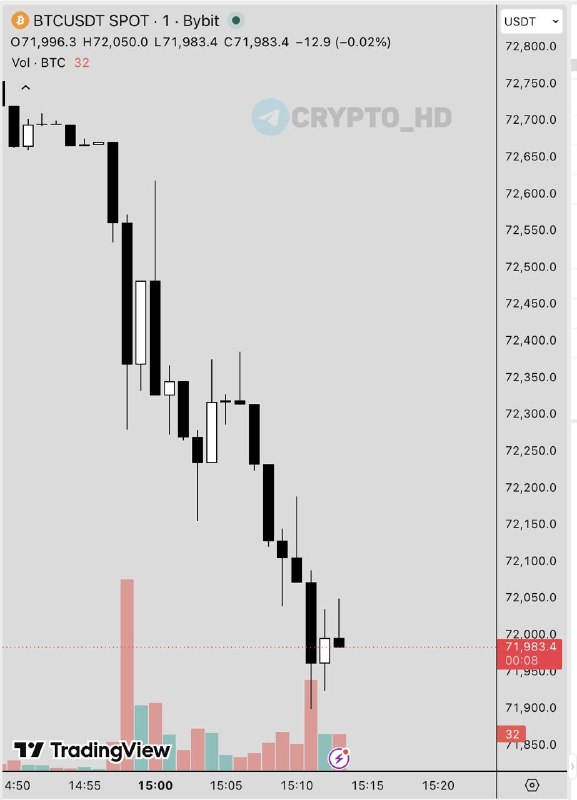
The first Bitcoin price drop alert did not give traders much to work with. The post was thin: Bitcoin was under $72,000, and the move was tied to Strategy selling BTC. That was basically it. No sale size. No transaction date. No wallet trail. No executive comment. I’ll be honest: I would not build a whole theory from that. The confirmed facts are narrow: BTC was below $72,000, and Strategy was named as the trigger.
Strategy matters because it has been one of the most visible corporate Bitcoin buyers since 2020. Strategy is not a random public company with a small crypto line item. Since 2020, public company balance sheets have been part of the Bitcoin story, with Strategy close to the middle of it. A sale headline from that name, even without a BTC amount, pokes at one comfortable assumption: corporate holders only buy and hold forever. Most Bitcoin treasury commentary leans that way. That is only half right.
A Strategy sale can make traders question corporate Bitcoin demand. That is the adoption issue in plain terms. If BTC drops below $72,000 on a Strategy-linked sale headline, traders will ask whether corporate balance sheet demand is still a floor or whether it can flip into supply. My take: that is not a small distinction. It is not a new detail from the alert, either. But crypto often trades the story first. The paperwork, if it exists, usually comes later.
A corporate Bitcoin sale can also push leveraged traders to cut risk. The macro backdrop matters on June 1, 2026. Bitcoin still behaves like a high beta risk asset when traders worry about tighter money or a stronger dollar. Rate repricing sits in the same bucket. Add a corporate-sale headline near $72,000, and some leveraged accounts will treat it as permission to get smaller before the next inflation print, Fed signal, or CME futures positioning update. Why does this matter? Because forced de-risking can turn a headline into a faster move.
Bitcoin has had this kind of story collision before. In March 2020, during the COVID liquidity shock, Bitcoin fell more than 30% in one day before recovering with other risk assets. In January 2024, spot Bitcoin ETF approvals made institutional demand a real trading variable. Those are useful markers, not proof. I keep coming back to that distinction because the source alert itself is narrow.
Bitcoin can act like digital gold, but this move looks more like supply anxiety. Counter to the usual advice, do not force the safe-haven story onto every red candle. BTC can trade like a hedge during bank stress or sanctions headlines. It can also trade like a tech stock when liquidity gets tight. A drop below $72,000 after a Strategy BTC-sale headline points first to supply nerves, not a rush into Bitcoin for safety.
The $72,000 level is now the obvious stress point. Below $72,000, traders will watch whether buyers step in quickly or whether the headline gives sellers a reason to hunt for lower liquidity. The alert does not include a percentage move, so any clean drop estimate would be fake precision. Skip that step. The better read is simple: Strategy, BTC sale, sub-$72,000. That is enough for a confidence check.
What this means
Corporate Bitcoin adoption still matters, but it is not a one-way trade. If a Strategy-linked sale can push BTC below $72,000 on June 1, 2026, then treasury behavior is still part of price discovery. It is not just background belief. It is not just conference-stage talk, either. The ticker is BTC. The level is $72,000. That is the line traders will judge first.
For the next move, watch whether BTC gets back above $72,000. The first test is whether Bitcoin reclaims that level or spends the next CME session on June 2, 2026 trading below it. Is this overkill for one thin alert? No, because the named seller is the point. CME Bitcoin futures positioning matters too. So do spot ETF flows, if fresh data is available, and the next FOMC calendar event for risk appetite. For now, the message is blunt: Strategy selling BTC is enough to make $72,000 feel shaky.