















































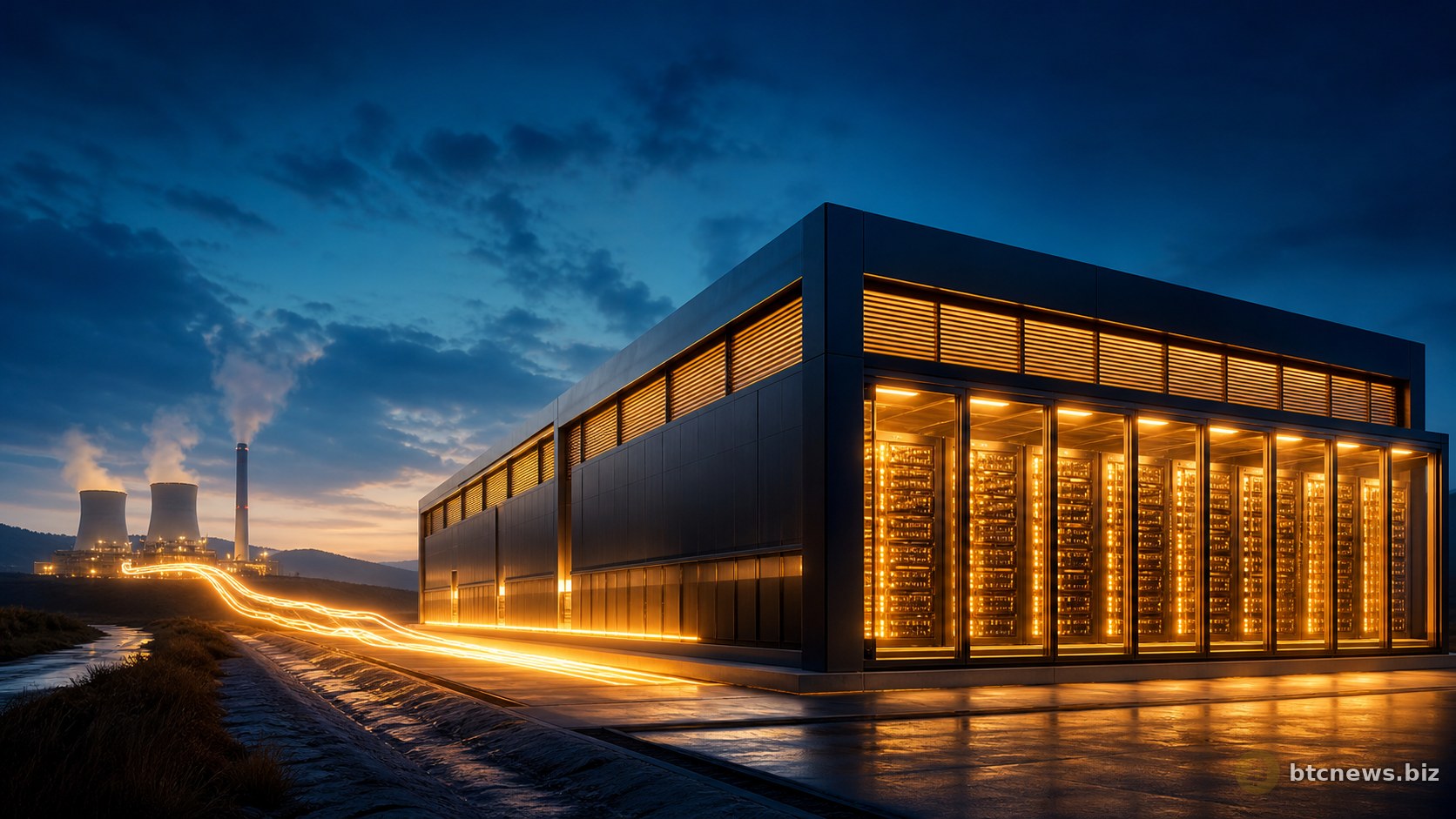
TeraWulf CEO Shifts to AI, Ditching Bitcoin for Predictable Returns
TeraWulf CEO Paul Prager says “not all megawatts are created equally,” which gets to the point of the company’s move from Bitcoin mining into AI data centers. The clearest sign is a $19 billion lease with Anthropic that runs for 20 years. That number changes the tone of the story. This is not a side project or a branding exercise. TeraWulf is choosing steadier infrastructure revenue over the rougher economics of mining Bitcoin.

Prager says the plan is mostly about capital allocation and control. TeraWulf is selling assets it no longer views as core, including its interest in the Abernathy project, and putting that money into AI data centers it owns outright. In an interview with Jennifer Sanasie on CoinDesk’s Public Keys at the New York Stock Exchange, Prager described the shift as less of an overnight AI conversion and more of a cleanup of the company’s priorities. My read: that distinction matters. Own the site. Own the power setup. Keep the customer relationship close. The company is also looking at additional sites in eastern Kentucky. That Kentucky project is expected to start coming online in 2028. Anthropic came through a competitive bidding process, helped by TeraWulf’s existing work with Anthropic and Google at its Lake Mariner campus in New York.
The plain read: TeraWulf likes AI data center contracts more than Bitcoin mining revenue. Fair enough. Bitcoin mining depends on BTC prices, network difficulty, energy costs, treasury timing, and whether the market gives miners any breathing room. AI infrastructure, at least with a 20-year lease from a company like Anthropic, is easier to model. Prager said Bitcoin’s commodity-style revenue did not give TeraWulf the stable returns it wants. Most crypto-market summaries frame this as an AI pivot. That’s only half right. It is also a retreat from revenue that can look great for three months and ugly the next quarter. Why does this matter? Because investors looking at crypto-adjacent companies may start separating “owns scarce power” from “mines Bitcoin.” Some may prefer power and compute infrastructure with contracted revenue over mining businesses tied to a volatile asset. Bitcoin itself has held up at times, including its move above $40,000 during the inflation worries of late 2023, but miners still had to deal with margin pressure. The coin can rally while the mining business still feels squeezed. That part gets missed too often.
TeraWulf’s move says something useful about the digital infrastructure market. The company is not walking away from power assets. It is finding a different customer for them. Prager said TeraWulf first entered Bitcoin mining because it already had power assets, and mining was a flexible buyer of electricity. AI data centers need reliable power too, but the customer profile is different and the contracts can run much longer. That is the appeal. I’ll be honest: this is less romantic than Bitcoin mining, but it is probably easier to underwrite. When BTC fell below $25,000 in mid-2023, miners were under real pressure. AI compute has its own risks, yes. Counter to the usual advice, though, the main question here is not whether AI demand stays hot forever. The sharper question is whether a long lease from a major AI firm beats hoping Bitcoin prices and mining difficulty break your way.
Prager argues that owning the site, the power supply, and the operations gives TeraWulf more control over customers and returns. He also said labor may be the harder problem. Not chips. Not equipment. Skilled workers and contractors. That line stuck with me because it cuts against the usual hardware-shortage story. Hyperscale AI facilities are getting more specialized, and the U.S. power shortage makes location even more important. When Prager says not all megawatts are equal, he means raw capacity is not enough. AI campuses need reliable generation, backup transmission, workable regulation, local support, and a labor base that can actually build the thing. TeraWulf is trying to build that mix by redeveloping former industrial sites and adding new power generation that can serve both AI facilities and the grid.
What this means
TeraWulf gives investors a clean case study in what some infrastructure providers now want: long contracts instead of Bitcoin-linked revenue swings. It works. That could put more pressure on public Bitcoin miners, especially those sitting on valuable power assets. If investors start valuing those assets as possible AI infrastructure rather than mining capacity, valuations could get weird. Yes, that slightly contradicts the simple “Bitcoin miners are Bitcoin proxies” framing. Bear with it. Bitcoin may still draw buyers as digital gold, but some of the companies that helped secure the network are looking for other ways to make money from electricity, land, interconnection rights, and industrial redevelopment.
Investors should watch whether other miners make the same trade. One more deal would be interesting. Three or four would start to look like a pattern. A few more announcements about selling mining assets or signing AI compute deals would make this look less like one company’s pivot and more like a sector-wide change. Q3 and Q4 earnings reports from large mining firms should be worth reading closely. Is this overkill? Not if power assets become the real story behind listed miners. I would also watch how new AI data centers buy power, because that demand will shape the market for energy infrastructure that Bitcoin miners once thought they mostly had to themselves.
FAQ
Q: What is TeraWulf’s new strategic focus?
A: TeraWulf is moving from Bitcoin mining toward AI data centers, with a focus on steadier returns from long contracts.
Q: Why is TeraWulf moving away from Bitcoin mining?
A: Prager says Bitcoin mining revenue is too tied to commodity-style swings. AI infrastructure gives the company a more predictable model.
Q: Why does the $19 billion lease with Anthropic matter?
A: The 20-year lease gives TeraWulf a large AI customer and a clearer revenue base than Bitcoin mining usually offers.
Q: What does “not all megawatts are created equally” mean in this context?
A: Prager means AI campuses need more than raw power. They need reliable generation, backup transmission, workable regulation, and local support.
Q: How does this pivot affect the wider crypto market?
A: It may push investors to rethink crypto-adjacent businesses. Mining operations look riskier when the same power assets can support contracted AI infrastructure.
Q: What problems does TeraWulf face in building hyperscale AI facilities?
A: Prager says finding skilled labor and contractors is harder than getting equipment for these facilities.
Q: Where is TeraWulf developing its new AI infrastructure?
A: TeraWulf is putting money into AI infrastructure it owns outright, including additional eastern Kentucky sites expected to begin coming online in 2028.
Q: How does TeraWulf’s strategy address the U.S. electricity shortage?
A: TeraWulf is redeveloping former industrial sites and adding power generation that can support its AI facilities and the wider grid.
Q: What should investors watch next?
A: Watch for other public Bitcoin miners selling mining assets, signing AI data center deals, or changing how they talk about power procurement.
Q: Is Bitcoin still a viable investment by TeraWulf’s view?
A: The company is moving away from Bitcoin mining, but the article notes that Bitcoin has still shown resilience during inflation fears.