
















































Zerion Zero Network shutdown shows ETH L2 fatigue
The zerion zero network shutdown is another step back in Ethereum’s L2 race. Zero Network, Zerion’s ETH L2 project, is shutting down as the team turns back to the Zerion API and wallet. One day earlier, on May 21, 2026, Syndicate Labs also said it would stop operating after 5 years building custom Ethereum rollups and launching its own ETH L2, Commons Chain. I’ll be honest: for ETH traders, this does not read like routine housekeeping. It reads like a warning that L2 supply may have run ahead of real demand.
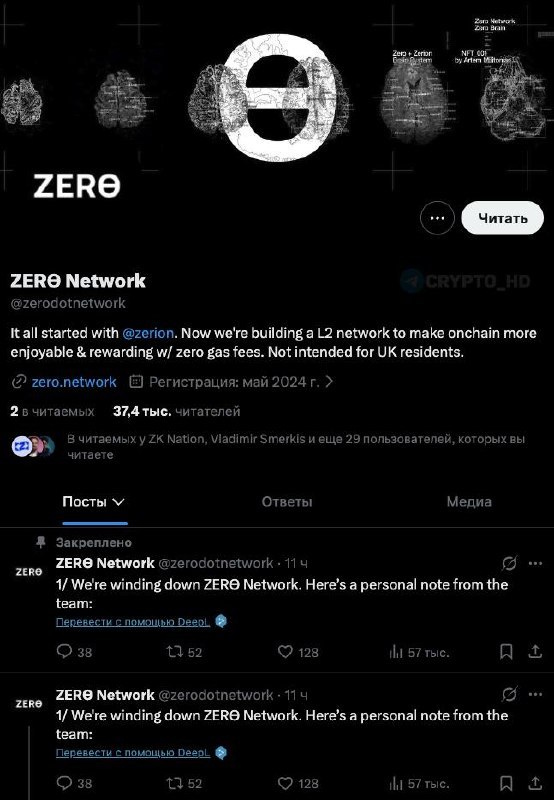
A small detail matters here. The source post does not include a token price, user count, TVL, funding number, or shutdown schedule for Zero Network. The facts are narrow: Zero Network is stopping operations, Zerion is focusing on its API and wallet, and Syndicate Labs announced its shutdown on May 21, 2026 after 5 years of custom Ethereum rollup work and the launch of Commons Chain. Two L2-linked exits in 24 hours do not prove a crisis. Not yet. They do make the long tail of Ethereum infrastructure look tired.
The market angle starts with ETH, not BTC. Ethereum’s Dencun upgrade went live on March 13, 2024 and cut L2 data costs through blobs. After that, the scaling pitch leaned hard on cheaper rollups and app-specific execution. Most guides frame that as an obvious win. That’s only half right. Cheaper blockspace helped ETH’s story for a while, but it also crowded the field quickly. If dozens of ETH L2 networks are selling cheap blockspace, traders eventually ask the dull but necessary question: who is using it? Zero Network’s exit on May 22, 2026 does not hurt Ethereum much on its own. It does weaken the easy “more L2s means more ETH upside” trade. ETH needs paid activity, not more empty lanes.
There is a macro flow issue too. In a high-rate or tight-liquidity market, investors usually move toward cleaner crypto exposure: BTC first, ETH next, then the more liquid majors. Smaller infrastructure bets tend to lose air first. That is context, not a new fact from the source. The source says only that Zero Network is shutting down and Syndicate Labs is stopping after 5 years. Still, for anyone watching ETH beta on May 22, 2026, the read is familiar. Why does this matter? Because marginal L2s and rollup service businesses usually feel pressure before ETH itself does when capital gets choosier. COIN, ETH, and BTC can still trade on ETF flows and macro liquidity. Custom rollup shops need paying customers now. A story is not enough.
The second angle is adoption. Zerion choosing its API and wallet over its ETH L2 says something plain about where value may be easier to capture in 2026. My take: wallets and APIs are closer to the money than another small chain. Wallets own the user relationship. APIs have customers who need infrastructure. Smaller L2s have to fight every day for developers and liquidity. Then come bridges, security trust, and attention. That is a lot of work for a chain few people may need. So Zerion appears to be keeping the parts of the stack that sit closer to users and integrations. For ETH, the read is mixed. Wallet adoption can still support Ethereum activity. But Zero Network’s shutdown is a reminder that every app does not need its own rollup to matter.
Syndicate Labs points to the same problem from the other side. The company spent 5 years building custom Ethereum rollups and launched Commons Chain, according to the source post. Five years is a long run in crypto infrastructure. Its decision to stop operating one day before the Zero Network news adds pressure to the rollup-as-a-business model. Counter to the usual advice, traders should not bundle every L2 headline into one Ethereum verdict. Ethereum scaling can keep improving. Individual L2s can still go nowhere.
Worth noting: there is no source quote to parse here. There is also no claim in the source about insolvency, hacks, legal pressure, token losses, or user funds. That matters. The cleaner read is strategic retreat, not panic. Zerion is focusing on its API and wallet. Syndicate Labs is ending after 5 years of custom Ethereum rollup work. My read is simple: Ethereum’s modular roadmap is entering a sorting phase. Distribution and revenue matter more than launching one more chain with ETH branding.
What this means
The May 22, 2026 signal is consolidation across the ETH L2 stack. Zero Network’s shutdown and Syndicate Labs’ May 21, 2026 announcement suggest the market is moving away from “every project gets a rollup” and toward fewer networks with real liquidity and users. Developer pull matters too. The affected ticker is ETH, because L2 health feeds into Ethereum’s scaling story. The affected protocol category is smaller ETH L2 networks, especially those without clear app demand or deep liquidity. Is this overkill to watch? For ETH traders, no. Watch whether traders keep rewarding larger ETH scaling names while marking down smaller rollup infrastructure after this news cycle.
Next, watch the weekly ETH close after May 22, 2026. Also watch L2 fee and activity data from major Ethereum rollups over the next 7 days. If ETH holds up while smaller L2 stories fade, the market is treating this as cleanup. If ETH sells off with rollup-linked tokens and infrastructure names, traders may be repricing the modular stack more broadly. Yes, this sounds like it contradicts the point that Zero Network is small. It doesn’t. Small exits can still change the story when they cluster. The practical level here is narrative support, not a quoted price from the source. ETH bulls need proof that real users are moving through wallets, APIs, and durable L2s. Another thin chain will not do much.