
















































Warsh’s Fed Talk: Inflation Fight, AI, and Crypto’s Macro Headwinds
Former Fed Governor Kevin Warsh says the inflation fight is not over. That is bad news for risk assets, crypto included. Kevin Warsh was blunt today: the Fed is still fighting inflation, and markets should not count on a rescue if prices roll over. Crypto should pay attention. June CPI came in better than expected. Still, Warsh’s tone points to pressure on Bitcoin, Ethereum, and the rest of the market that runs best on cheap money. Easy liquidity, too. My take: this was not a victory-lap macro interview.
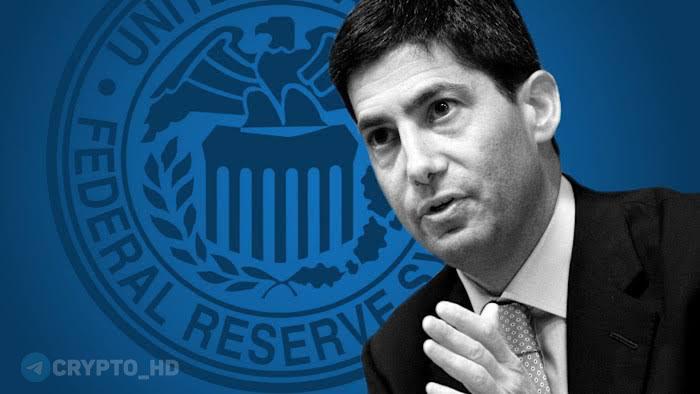
Warsh described a Fed that cares more about price stability than protecting investors from losses. Speaking after the latest macro data, Warsh said the Fed’s thinking has changed a lot in just six weeks. One line stood out: “We do not want to be in the business of bailing out market participants. We want to be in a situation where we don’t have to bail anyone out, including the crypto industry.” That is not soft central banker fog. It is a warning. He said reforms are coming to Fed operations, including supervision and regulation. Payments, too. The target, as he put it, is the “tax called inflation.”
When the Fed keeps pushing against inflation, crypto usually has a harder time. Why does this matter? Because tighter monetary policy changes the basic trade. Higher rates give investors a cleaner reason to sit in cash, Treasuries, or other yield bearing assets instead of chasing volatile tokens. We have seen this before. During the Fed’s 2022 rate hike cycle, Bitcoin fell from more than $48,000 in March to below $17,000 by year end, a drop of more than 64%. Ethereum fell from about $3,400 to under $1,200 over the same stretch. That was not a little wobble. Warsh also called for a “more restrained approach to communication” and said policy should follow macro data even when politicians complain. After today’s data, he said, “I would not say that the mission is accomplished.” He also pushed back on the idea that “everything is fine” after the latest CPI report. Most crypto commentary treats a soft CPI print like a green light. That is only half right. My read: the Fed still thinks there is work left, and crypto does not get a special pass.
Warsh sees AI helping productivity later, not saving the economy now. He also talked about AI, saying it could bring “significant productivity growth in the long term,” but that this future is “still far away.” In the near term, he expects labor market disruption along with new jobs. For crypto, that cuts both ways. AI linked blockchain projects can rally when traders get excited about the theme. Render (RNDR) and Fetch.ai (FET) are the clean examples here, with RNDR up more than 300% year to date. But when people get nervous, uncertainty still pulls money away from speculative assets. Simple as that. Warsh’s point was direct: AI is not about to give the Fed a quick inflation fix. He also repeated his “even stronger commitment to the 2% inflation target” and said he prefers policy that avoids “sharp market ups and downs.” Yes, this partly clashes with the market’s hope for a smoother Fed path. Bear with me. That does not mean the Fed avoids tightening. He said the Fed “cannot directly and immediately influence short-term price changes,” but expects a “serious discussion soon within the Fed about the scope and timing of tools to achieve price stability.” Rate hikes or more quantitative tightening are still on the table. Either one would hit liquidity, and crypto usually feels that quickly.
The Fed has tools for dollar liquidity, but Warsh does not sound eager to rescue traders. Warsh said “currency swap lines for providing dollar liquidity are part of monetary policy,” while the Treasury can use the Exchange Stabilization Fund for non monetary policy swap lines. Technical? Yes. Important? Also yes. Dollar liquidity tools can keep stress from spreading through the financial system, and crypto can benefit indirectly when the plumbing holds. Still, Warsh’s bailout comments were clear. These tools are not meant to prop up weak crypto firms or rescue bad trades. He also said the Fed probably cannot return to its 2006 balance sheet size, though it can find “other sustainable levels.” So the balance sheet may stay larger than it was before the financial crisis. That does not make this a loose money regime. He added, “I do not consider quantitative easing (QE) to be inflationary in itself, especially during a crisis.” Fair enough. But this is not a crisis policy moment. Right now, the Fed is focused on inflation control.
What this means
Warsh’s comments point to a Fed still committed to 2% inflation, which keeps pressure on crypto and other risk assets. The Fed is not calling victory because one CPI print looked better. Counter to the usual advice, the key signal here is not just the data release. It is the Fed reaction after the data release. Warsh’s language suggests tighter policy can last, which makes life harder for assets that need deep liquidity. Crypto investors should expect macro pressure to stay front and center. Funding costs are higher. Liquidity is thinner. The Fed is also saying plainly enough that it will not bail out market participants, including crypto. That could expose weaker projects and firms built for a cheap money world. Bitcoin and Ethereum may keep trading like risk assets as long as this macro backdrop holds.
Traders should watch the next inflation prints, FOMC minutes, and the major crypto support levels. Is this overkill? For a market still trading off Fed expectations, no. The next CPI reports and FOMC meeting minutes matter more than the usual social media noise. The July 26-27 FOMC meeting will be important for clues on rates. Quantitative tightening deserves its own watch. Watch for any change in language around the “scope and timing of tools to achieve price stability.” On the charts, Bitcoin support around $28,000 and $25,000 matters. A break below those levels could lead to more downside. For Ethereum, I would keep $1,800 and $1,600 on screen. Geopolitical shocks can still move prices in the short run. Crypto regulation headlines can, too. But the larger story is still the Fed’s inflation fight.