















































Iran Attacks Ships, Oil License Revoked: BTC’s Safe Haven Story Gets a Hard Test
Tensions in the Strait of Hormuz escalated quickly after Iran attacked three commercial vessels in 24 hours and the US revoked an Iranian oil license. Bitcoin is getting the kind of test people argue about in theory and then suddenly have to price at 2 a.m. My take: this is where the “safe haven” label either earns a little respect or loses some gloss. If traders really see BTC as a crisis hedge, it should show up here. If they treat it like another risk trade, that will show up too.
The details landed fast. Axios, citing two American officials, reported that Iran attacked three commercial vessels in the Strait of Hormuz within a 24-hour stretch. Iranian military forces fired at least two missiles at commercial vessels overnight Monday, then the IRGC carried out a third attack Tuesday morning. US officials called Iran’s actions in the Strait of Hormuz “completely unacceptable” and warned of “consequences.” The US Treasury Department also revoked a license issued on June 21 that had allowed the production, delivery, and sale of Iranian oil, petrochemicals, and petroleum products until August 21. That window is now mostly shut. Companies can wind down already approved operations until July 17, but new deals are banned, including purchases or loading of Iranian oil after July 7. Saudi Arabia’s Foreign Ministry said Iran attacked a Saudi tanker moving through the strait and held Iran “fully responsible” for the attacks and the fallout. Iran’s Foreign Ministry said vessels using routes not agreed with Iran, or interfering with tracking systems, face risks and make it harder for Iran to keep passage through the strait safe.
This is the awkward part. People have called BTC “digital gold” for years, sometimes too eagerly, because it sits outside central banks and national payment rails. Most safe-haven takes stop there. That’s only half right. The January 2020 Soleimani strike is the comparison traders will reach for first: BTC rose 8% within 72 hours. Fair enough. But one 72-hour rally is not a law of nature. The current situation, with three ships attacked, at least two missiles fired, and oil permissions pulled back from August 21 to a July 17 wind-down, gives the market another cleaner read. If BTC pushes through the $61.4K resistance area and stays there, the hedge argument gets stronger. If it sells off with equities and other risk trades, the “digital gold” label will look more like a slogan than a market fact.
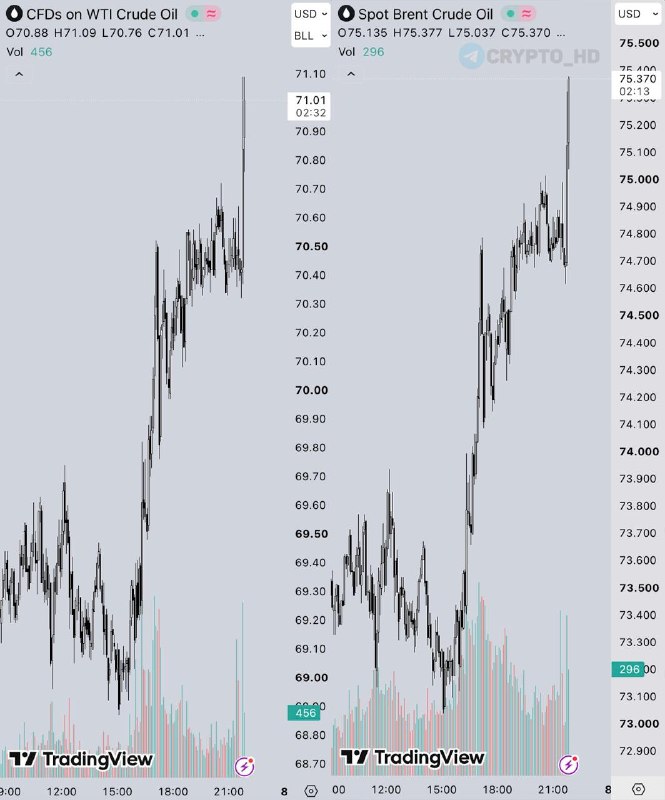
The bigger issue is oil. I’ll be honest: Bitcoin is not the first chart I would check if Hormuz risk starts moving crude. The Treasury’s move tightens sanctions and could squeeze energy supply if the market starts pricing in disruption around Hormuz. Higher oil prices would add inflation pressure at exactly the wrong time. Why does this matter? Because that feeds straight into the Fed debate. If inflation looks sticky again, rate cut hopes can fade quickly, and crypto usually does not love that setup. ETH and smaller altcoins would probably feel it first because traders tend to dump the higher beta stuff when the macro picture gets ugly. BTC may be different. Buyers have to prove it. Rate expectations have already pushed BTC and ETH around this year, and another inflation scare from the Middle East would make that trade harder to read.
What this means
Iran’s attacks in the Strait of Hormuz and the US oil license reversal raise geopolitical risk in a way crypto cannot ignore. This is a live test of whether Bitcoin can split away from regular risk assets during a crisis. I would not assume the answer. Counter to the usual crypto-bullish instinct, a scary headline alone is not automatically good for BTC. A steady move above $61.4K would help the case that BTC is maturing as a hedge. A break lower would suggest capital still prefers gold, dollars, or cash when the news gets ugly.
Watch BTC and ETH over the next 72 hours. That window mattered during the January 2020 Soleimani shock, and traders will probably use it again as a rough guide. Is that overkill? For this kind of macro headline, no. Oil prices matter just as much, maybe more. A sharp move higher would point to fresh inflation pressure and could change how the market reads the Fed. The next FOMC minutes will also matter because traders will look for any sign that central bankers are taking the oil shock seriously. July 7 is another date to watch, since new Iranian oil deals are prohibited after that deadline. If the market shrugs, the sanctions may already be priced in. If it reacts hard, crypto will not be sitting off to the side.
FAQ
What is the Strait of Hormuz?
The Strait of Hormuz is a narrow waterway between the Persian Gulf and the Arabian Sea. A large share of global oil shipments passes through it. Small place, huge consequence.
Why is Iran attacking ships?
Axios reported that Iran attacked three commercial vessels in the Strait of Hormuz within 24 hours. Iran’s Foreign Ministry said vessels using routes not agreed with Iran, or interfering with tracking systems, face risks. That is the stated frame; markets will price the risk, not the wording.
What did the US Treasury do on Iranian oil?
The US Treasury revoked a license that had allowed the production, delivery, and sale of Iranian oil, petrochemicals, and petroleum products. New deals are prohibited after July 7.
How does this affect Bitcoin’s safe haven story?
It gives the market a direct test. Yes, this contradicts the easy “Bitcoin loves chaos” line, but bear with me: crisis demand has to beat risk-off selling. If BTC rises and stays strong during the crisis, the “digital gold” argument looks better. If it drops with risk assets, traders may question that story.
What are the wider economic effects?
Reduced Iranian supply could push oil prices higher. That could add inflation pressure and make central banks more cautious about cutting rates. Simple chain. Big market impact.
What should investors monitor?
Watch BTC and ETH prices, oil prices, the next FOMC minutes, and the market reaction after the July 7 deadline for new Iranian oil deals. My read: the first clean signal probably comes from whether BTC can hold above $61.4K while oil reacts.