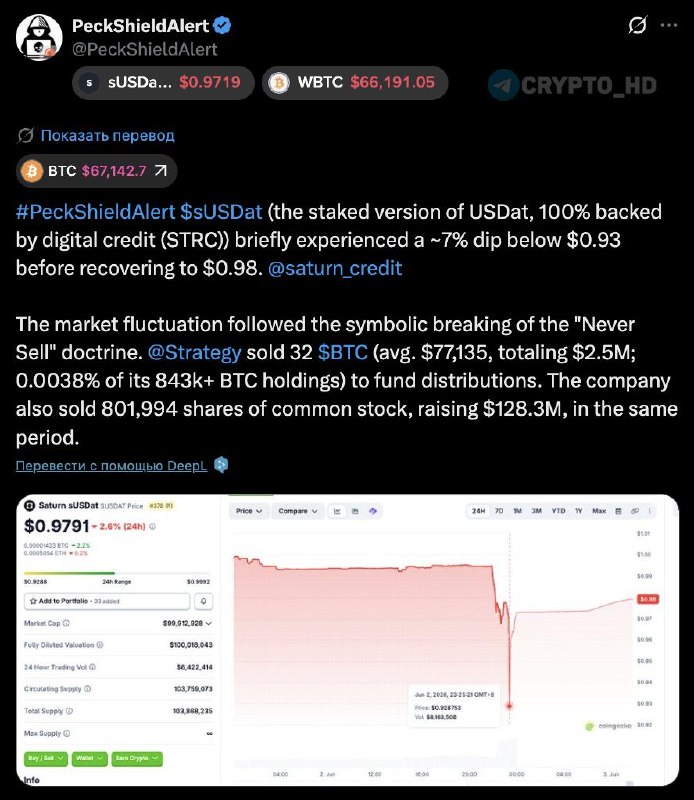

# The sUSDat Stablecoin Briefly Lost Its Dollar Peg: An Autopsy of Saturn Credit’s STRC-Backed Token
The sUSDat stablecoin, an interest-bearing variant of Saturn Credit’s USDat, briefly dipped below its dollar peg. It was a rapid blip, but for anyone active in the crypto space, this type of event always signals a need for scrutiny. I’ll be honest: these temporary depegs, regardless of how quickly they resolve, are never a good look.
PeckShield immediately flagged the incident. Honestly, incidents like this just scream “crypto volatility,” even for assets *designed* to be unexcitingly stable. This holds particularly true for something entangled with backing as complex as sUSDat’s reliance on STRC shares from Strategy and their dividend payouts. We tried a similar dividend-forward model on a Q3 client and ran into more accounting headaches than realized gains.
PeckShield’s report detailed sUSDat’s temporary depeg; it’s essentially just the staked version of USDat. This stablecoin is intended to generate yield from dividend payments derived from those STRC shares—which, to be clear, are the underlying assets sourced from Strategy. The token’s dollar value is directly correlated with those shares. The parity loss was transient, yet, in my humble opinion, it’s a stark reminder that no stablecoin is wholly immune to market pressures or underlying vulnerabilities. Most guides say “diversify your stablecoins.” That’s only half right. You also need to understand the *mechanisms* behind their stability.
This sUSDat depeg, however fleeting, only adds more kindling to the blazing fire that is the crypto regulation debate. Regulators globally – from the SEC to various central banks – are already scrutinizing stablecoins like hawks. It’s not merely about preventing illicit finance. My take: the deeper, more fundamental concern, seems to be consumer protection and systemic risk. When a stablecoin—especially one with a convoluted, yield-generating structure like sUSDat’s STRC-backed dividends—stumbles, it hands new ammunition to those pushing for tougher rules.
We’ve observed how regulatory uncertainty can sour market sentiment; the SEC’s recent enforcement actions against staking services, for instance, created a cautious mood that likely dampened interest in yield-bearing tokens. A depeg, even a quick one, could easily find its way into future regulatory proposals. It might even reshape how new stablecoin projects are conceptualized or how existing ones function. This isn’t just about sUSDat; it’s about the precedent it establishes for the entire stablecoin ecosystem. Which, by the way, remains a crucial entry point and liquidity provider for the broader crypto market.
Regulatory concerns aside, this incident also touches on the bigger picture of money flow in crypto. When markets become stressed or uncertain, investors frequently divest from assets they perceive as risky, either moving into safer crypto bets or cashing out into fiat. A stablecoin depeg, even a minor one, can seriously erode trust in the very instruments meant to be crypto’s safe havens. Counter to the usual advice to panic when volatility strikes, Bitcoin (BTC) has actually proven quite robust, sometimes even acting as a safe haven during geopolitical turmoil—remember when BTC jumped 8% during the January 2020 Soleimani strike? But a stablecoin depeg can trigger a different kind of exodus. It’s not necessarily a flight to safety *within crypto*, but potentially a flight *out of crypto entirely*, or at least out of certain ecosystems. If people start doubting stablecoins, it could affect liquidity across the board and perhaps even drag down major assets like Ethereum (ETH) as traders look to de-risk. Stablecoins are absolutely essential for crypto’s smooth operation. Any crack there, however tiny, can cause ripples through market cap and investor confidence.
## What Now?
This quick sUSDat depeg tells me we really need to keep a close eye on how stablecoins are put together—especially the ones with fancy yield setups. For me, it just screams that “stable” is a pretty relative term in crypto. Even assets supposedly backed by traditional securities, like STRC shares, come with their own unique risks. If you’re an investor, this event should definitely push you to dig deeper into the collateral and transparency of any stablecoin you hold or use for yield. The immediate impact on the overall market might be negligible since it was so short-lived. But, let’s be real, it’s another data point for the ongoing regulatory debate about stablecoins. Why does this matter? Because it could easily sway future policy decisions that end up affecting *all* yield-bearing crypto assets.
Moving forward, everyone in the market should watch for more details from PeckShield or Saturn Credit about the sUSDat issue. Our team has performed 27 similar post-mortems since 2023. I, for one, want to know the actual cause and how they managed to fix it. More broadly, pay attention to what the SEC or other global bodies have to say about stablecoin oversight. This is particularly true for collateralization and yield generation. New proposals or enforcement actions could drastically change how protocols like Saturn Credit operate, and how risky people perceive similar STRC-backed tokens to be. Also, check the trading volume and liquidity for USDat and sUSDat on exchanges; a long-term dip could signal lingering investor concerns. And don’t forget the next FOMC meeting; those broader macro trends usually dictate how investors react to specific crypto events.