
















































Kaliningrad crypto scam victim shows Bitcoin’s trust problem
A Kaliningrad crypto scam victim is a local retail user who reportedly lost money after a fake crypto investment pitch. As of May 12, 2026, the facts are grim, ordinary, and hard to dress up: a 50-year-old woman from Kaliningrad sent scammers almost 7,000,000 rubles after they promised crypto profits. That is a lot of money. My take: this is exactly where BTC and ETH adoption still looks fragile. Are ordinary users getting safer ways into crypto? Or is their first contact still some stranger promising easy returns? Too often, it is the second one.
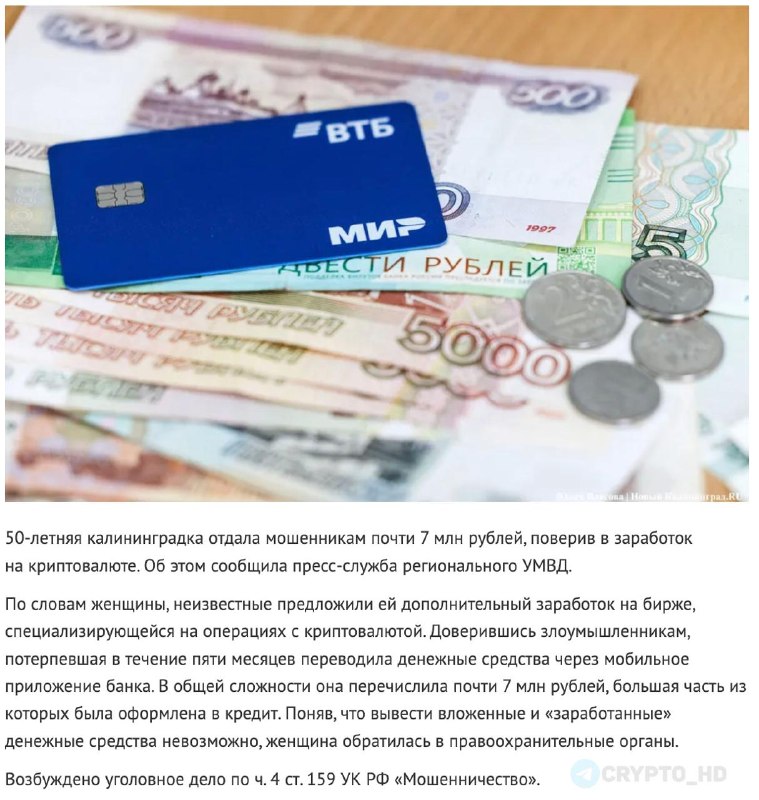
A fake crypto broker scam usually follows a simple script. Scammers copy the look of an investment platform, show fake gains in an account, then block withdrawals once the victim has sent enough money. The source post does not give an exact incident date, platform name, or police quote, so the facts should stay tight. A 50-year-old woman from Kaliningrad was pulled into what the post calls an old scheme: promises of “profitable investments” in crypto, money sent to scammers or a fake platform, fake profit shown in a personal account, then blocked access when she tried to withdraw. Same trick. New dashboard.
The Kaliningrad crypto scam victim case matters to the market because fraud can damage Bitcoin trust even when Bitcoin’s price did nothing wrong. In the 2021 cycle, Bitcoin traded near $69,000 on November 10, 2021, then fell below $16,000 in November 2022. Retail investors remember both numbers. Why does this matter? Because scammers do not need to move BTC itself. They only need to borrow the mood of a bull market and delete the one part that makes markets real: the ability to sell.
The regulation angle is messier than it first looks. Most clean crypto narratives say regulated access pushes fraud to the margins. That’s only half right. Real crypto access and fake crypto solicitation can grow at the same time. According to the U.S. Securities and Exchange Commission, the Commission approved the listing and trading of several spot bitcoin exchange traded product shares on January 10, 2024. After that, BTC became easier to buy through regulated products. At the same time, offshore fraud pages and clone broker sites kept selling the older fantasy of guaranteed crypto income. Regulators can approve ETFs. They cannot wipe fake brokers out of Telegram, cold calls, search ads, or cloned websites by Tuesday morning.
The public market point is blunt: crypto companies trade on growth, but they also trade on trust. That matters for COIN, BTC, and ETH. Coinbase, which trades under COIN, is not mentioned in the source and is not tied to this Kaliningrad cryptocurrency scam. I’ll be honest: investors sometimes underprice this kind of reputational drag because it looks too small next to global volume. But when retail users cannot tell a regulated exchange from a fake dashboard, legitimate venues still carry some of the damage through higher compliance costs, slower onboarding, more political heat, and uglier headlines after every 7,000,000-ruble loss.
Crypto rallies can make scams easier to sell. That is the macro-flow read here, even though the victim story is local. Strong BTC moves tend to pull in late retail money. Scammers know what to do with that attention. In November 2021, $69,000 BTC made “easy crypto income” sound believable to people arriving late. In November 2022, sub-$16,000 BTC reminded everyone that real markets can hurt. Fake platforms hide that pain until the withdrawal button suddenly stops working. We have seen this pattern before; the wrapper changes, the pitch barely does.
The adoption signal from the Kaliningrad crypto scam victim case is not flattering. Wider crypto awareness can bring in legitimate users, but it also gives scammers a longer target list. Counter to the usual advice, education alone is not enough. Spot ETFs, corporate treasuries, exchange infrastructure, and better custody can make BTC look institutional. A crypto investment scam in Kaliningrad shows the other side. The woman did not need DeFi knowledge or leverage to lose almost 7,000,000 rubles. She only had to trust the wrong screen.
What this means

The Kaliningrad crypto scam victim story means Bitcoin adoption will be judged by safety, not just price, liquidity, or institutional access. BTC price still matters. ETF flows matter. ETH upgrades matter. But normal users also need to know the difference between a market and a trap. Is this overkill for one local case? No, because one local case is how retail trust usually breaks. For BTC, the pressure is psychological as much as technical. Every move back toward big round numbers such as $60,000 brings retail attention, and fake “guaranteed yield” pitches tend to arrive right behind it.
The market takeaway is that BTC, ETH, and COIN sentiment should be read alongside macro policy, futures positioning, retail attention, and scam visibility. According to the Federal Reserve’s FOMC calendar, the next June 2026 FOMC meeting is scheduled for June 16-17, 2026. That meeting matters because easier rate expectations can lift risk appetite in BTC, ETH, and crypto equities like COIN. My bias is simple: watch the boring plumbing before the headline price. Watch CME Bitcoin futures positioning and the $60,000 BTC area too. If leverage rises while retail search interest jumps, scams will probably follow the money. The Kaliningrad case is tiny next to global crypto volume. Almost 7,000,000 rubles is not tiny to one victim.
FAQ
What is the Kaliningrad crypto scam victim story?
The Kaliningrad crypto scam victim story refers to a reported case in which a 50-year-old woman from Kaliningrad lost almost 7,000,000 rubles after scammers promised her crypto investment profits.
Was Bitcoin itself responsible for the victim’s loss?
No. The reported loss appears to involve a fake crypto investment or broker scheme, not a failure of the Bitcoin network.
Why does this case matter for BTC and ETH?
It matters because fraud can weaken retail trust in crypto markets, even when assets such as BTC and ETH are not directly involved in the scam.
How do fake crypto broker scams usually work?
A fake crypto broker scam usually shows victims fake profits on a dashboard, pushes them to deposit more money, and blocks withdrawals when they try to cash out.
Is Coinbase connected to this Kaliningrad cryptocurrency scam?
No. Coinbase, which trades under the ticker COIN, is not mentioned in the source and is not tied to this reported Kaliningrad case.
Why are spot Bitcoin ETFs relevant to this story?
According to the U.S. Securities and Exchange Commission, spot bitcoin exchange traded products were approved on January 10, 2024. That approval expanded regulated access to bitcoin, while fake crypto broker scams kept targeting retail users outside regulated channels.
What should investors watch next?
Investors should watch BTC price levels, CME Bitcoin futures positioning, retail search interest, and the Federal Reserve’s June 16-17, 2026 FOMC meeting because these can affect crypto risk appetite.