
















































Zcash Ironwood Update: Orchard Patch Puts Privacy Coin Security to the Test
The Zcash Ironwood update is live on mainnet, but the reason for it is grim: developers discovered a serious vulnerability in the Orchard pool. The bug had been present since 2022 and could, in theory, have allowed someone to create unlimited fake ZEC. That is catastrophic territory. I’ll be honest: cryptocurrency flaws do not get much worse than that. For investors, the episode is an uncomfortable reminder that even an established privacy coin can face a threat to its price and reputation. Survival, too.
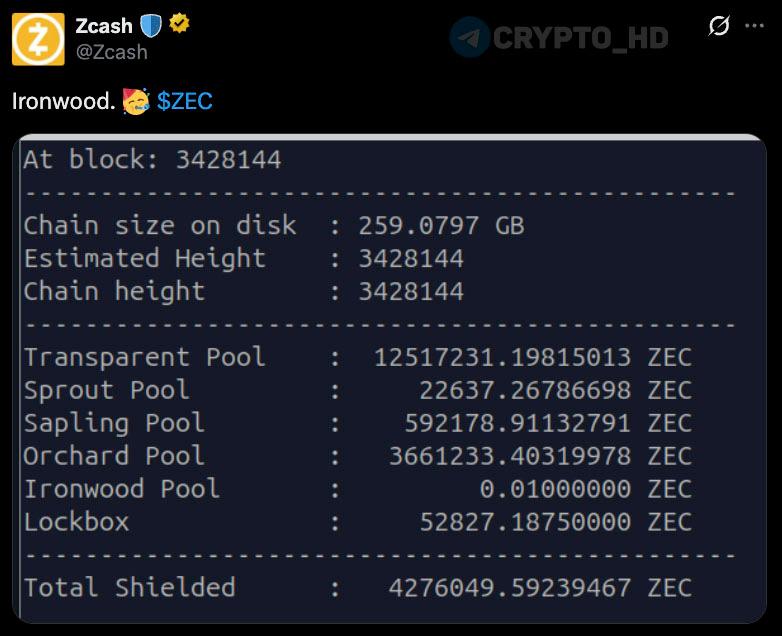
It is hard to shrug off the damage to Zcash’s credibility. For nearly two years, someone may have been able to exploit Orchard and mint ZEC without anyone noticing. Why does this matter? Because a large-scale attack could have flooded the market, crushed the coin’s price, and wrecked confidence in the project. Ironwood replaces Orchard with a formally verified private pool. It closes the old pool. Users can also check the total coin supply. Most patch announcements invite a victory lap. This one does not. My take: Zcash now has to repair the trust lost to a flaw in the cryptography that users were supposed to trust.
The timing is rough because regulatory pressure already hangs over privacy coins. Regulators such as the SEC and CFTC have stepped up their scrutiny of digital assets with privacy features; officials often say these coins make illegal transactions harder to trace. A bug that could create undetectable ZEC hands them an ugly talking point. The headline, had someone exploited it widely, would have written itself: “Privacy Coin Enables Infinite Counterfeiting.” Calls for bans or strict trading limits might have followed. Legal uncertainty has moved cryptocurrency prices before: XRP’s long court fight weighed on its price and kept it from fully joining market rallies, even when Bitcoin crossed $70,000 in March 2024. Counter to the bleakest reading, though, Ironwood gives Zcash a specific answer for regulators. Users can audit the supply, and the compromised pool is closed.
Ironwood also matters for the flow of money through crypto when investors get jumpy. A supply bug in a major privacy coin could hurt ZEC first. Then traders may turn wary of other altcoins, with nervous holders swapping ZEC for Bitcoin or stablecoins. We have seen the basic flight-to-safety pattern before: during the March 2023 banking crisis, Bitcoin drew inflows and briefly reached $28,000. Some investors liked its fixed supply and decentralized structure. But let’s not overstate the comparison. The Zcash bug is not a comparable economic shock.
Could one project still trigger its own smaller flight to safety? Yes. Traders may avoid a coin as volatile as ZEC while doubts about its supply linger. Ethereum traded near $3,500 to $4,000 in early Q2 2024, yet ZEC may struggle to recover even after Ironwood. I’ll put it bluntly: traders remember scares like this. A working patch does not instantly erase a nearly two-year exposure window.
What this means
Privacy coins have reached the point where good intentions are not enough. Zcash found and patched a severe bug, but the process took close to two years. Formal verification of the new pool tackles the financial risk head-on; so does the ability to check supply. If both work, they could steady ZEC’s price and win back some of the confidence lost during the Orchard episode. The delay still bothers me, though. Most security guidance treats disclosure and repair as the finish line. That is only half right. Cryptographic systems are difficult to build, and anonymity makes supply bugs particularly nasty because suspicious coins may be much harder to identify after someone creates them.
Watch the price range closely. Investors should watch whether ZEC holds between $25 and $30. A drop below that range, or another wave of FUD (Fear, Uncertainty, Doubt), could suggest that traders remain unconvinced by the patch or the network’s security. New privacy-coin laws or enforcement actions could also hit ZEC directly. Is moving users enough? No. Users need to move to the Ironwood pool, while researchers keep testing the code for more bugs. Zcash does not need another sweeping promise. In my view, it needs several quiet months and a stable network. Above all, it needs solid evidence that nobody can mint unlimited fake ZEC.