
















































Franklin Crypto CIO: institutional inflows expose crypto price disconnect
Franklin Crypto CIO Ginns put it plainly: crypto prices do not match the fundamentals he sees underneath. My take: that is the whole story here, not the noise around it. Traditional finance and crypto are starting to overlap in ways that are harder to wave off as experiments. Maybe prices catch up. Maybe the market keeps sulking. Watch the gap.
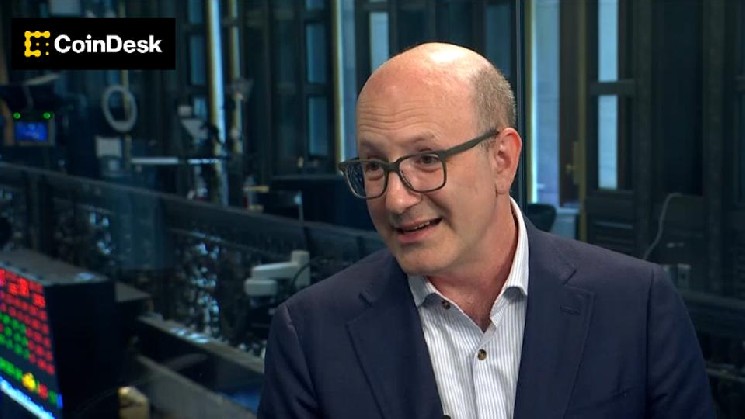
In a recent Public Keys interview with CoinDesk’s Jennifer Sanasie, Ginns said liquid crypto is starting to look more interesting to institutions, even after a long slump. Franklin Crypto, formed after Franklin Templeton acquired 250 Digital, is building a fundamentals focused crypto investment platform. Venture capital still makes sense for many institutional allocators, he said, but public crypto markets now offer cleaner entry points. “There’s a big disconnect between where prices are and real fundamentals,” Ginns said, tying that gap directly to stronger institutional interest.
I would not treat that as a neat price forecast. Most crypto commentary wants to turn every institutional quote into a timing call. That’s only half right. Markets can ignore fundamentals for an annoyingly long time, and crypto is especially good at doing exactly that. Still, the setup is familiar: central banks have spent the past few years dealing with inflation and higher rates, while big investors have been reviewing risk across their portfolios. If retail traders are exhausted and institutions are still underwriting the asset class, pricing can get weird. In stocks, heavy institutional buying has often appeared before the wider market notices. Crypto may be getting its own version now.
Ginns also pointed to adoption outside the usual crypto crowd. Robinhood’s blockchain plans, in his view, show traditional financial distribution moving onto crypto rails. That is not just one company testing a shiny feature. It suggests finance apps are starting to treat blockchains as plumbing. I’ll be honest: that part matters more than the headline makes it sound. Ginns also mentioned tokenized money market funds, which could let investors earn yield while keeping assets portable on-chain. Tokenized equities and stablecoins fit the same pattern, as does the broader financial infrastructure around them. The interesting part is not the branding. It is liquidity. If firms like Franklin Templeton keep building this way, the gap between price and fundamentals may not stay open forever.
Regulation is another piece. Ginns mentioned an upcoming Senate vote on the CLARITY Act, which could give institutions a better sense of how digital assets will be treated under U.S. law. Why does this matter? Because big funds can live with volatility, but they hate legal fog. A clearer rulebook would make it easier for compliance teams, boards, portfolio managers, and outside counsel to say yes. Ginns also expects more crypto projects to change how value flows back to token holders. He cited Hyperliquid, where revenue driven token buybacks have helped both fundamentals and price performance. That is the kind of thing fundamental investors can analyze, instead of arguing about vibes on a chart.
Ginns thinks older crypto projects could win back investor attention if they fix their token models. He named Uniswap, Aave, and Chainlink as examples that could benefit from better value capture for token holders. Yes, this sounds like a contradiction of the old crypto growth story: build usage first, worry about value later. Bear with me. He also mentioned Stellar’s work to build deeper institutional ties among infrastructure projects. That points to a market that may start caring less about the newest meme coin and more about whether a protocol has users, revenue, defensible distribution, and a believable way for token holders to benefit. Boring? Maybe. Useful? Definitely.
What this means
Ginns is basically saying the market is mispricing some of crypto’s more mature projects. Institutional money is not flooding in all at once, but it is moving closer. Prices may not reflect that yet. For investors, the practical takeaway is simple: look past the daily candles and pay attention to token economics, regulatory progress, real institutional use, and whether value actually reaches holders. If UNI, AAVE, LINK, or similar assets improve that last piece, they could attract capital that ignored them during the last hype cycle. Is this overkill for casual traders? Probably. For allocators, no.
The next thing to watch is the CLARITY Act in the Senate. Any real movement there could make crypto easier for institutions to touch. After that, watch for tokenomics changes from established DeFi and infrastructure projects. Counter to the usual advice, the next signal may not be a new product launch at all. It may be fee sharing, buybacks, or another value accrual model that makes an old token easier to underwrite. Large TradFi firms copying moves like Robinhood’s blockchain push are worth watching too. One announcement will not change the market by itself. Several in a row would be harder to dismiss.