















































Jupiter Launches Onchain Pokemon, One Piece Collectibles as RWA Test
Jupiter, the Solana decentralized exchange aggregator, has opened a beta for trading tokenized physical Pokemon and One Piece collectibles onchain. Small experiment. Strange too. But the idea underneath is not as silly as it first sounds: RWAs do not have to stop at Treasury bills or private credit.
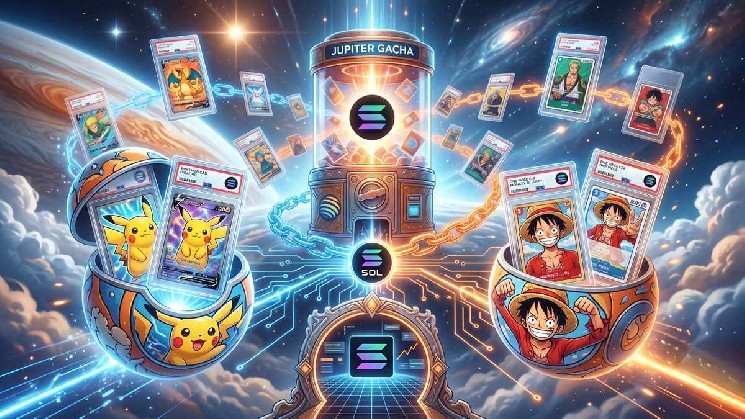
Jupiter announced the project, Jupiter Gacha, on Monday, July 13, 2026. The setup is plain enough. A graded physical card sits inside a plastic slab. That slab gets tied to a digital token. The token can then move on Jupiter without the usual auction-house wait or marketplace listing grind. Buy it, sell it, or redeem the actual card through the platform.
This did not appear out of thin air. Collector Crypt and Courtyard have already been working in onchain collectibles, and tokenized Pokemon cards reportedly saw more trading activity in May around the franchise’s thirtieth anniversary. My take: Jupiter is not inventing the category here, but it is giving it louder Solana distribution. If the beta works, “liquid asset” starts to mean something wider than coins or JPEGs. Maybe even something sitting in a binder at home.
The appeal is obvious, almost annoyingly so. Pokemon and One Piece are two giant collector worlds, and plenty of those buyers have no interest in DeFi. Jupiter is meeting them through an object they already understand. A card is graded. A custodian holds it. A token represents the claim. The owner trades that claim or requests physical delivery. Once the card ships, the token is burned or invalidated so the same card cannot be sold twice. Why does this matter? Because the whole product lives or dies on that custody-and-redemption loop. Without it, this becomes another trust-me crypto wrapper. Serious collectors will not hang around for that.
The timing is odd in a useful way. Crypto still has regulatory pressure on one side and macro uncertainty on the other. NFT volumes are far below the 2021 and 2022 highs. So yes, a gacha-style card product can sound gimmicky. It is gimmicky. Most guides would stop there and dismiss it. That is only half right. Gimmicks sometimes expose demand before the cleaner, more institutional version arrives. Jupiter says it wants to bring secondary collectible market users into decentralized finance, and some analysts think onchain collectibles could help bring attention back to parts of the NFT market.
Introducing Jupiter Gacha
Real graded Pokemon & One Piece cards, fully onchain.
Every pull is an authenticated slab, the same cards you chased as a kid, now tradeable on Jupiter.
You can pull cards worth multiples of what you paid AND earn up to $100,000 rewards while you do… pic.twitter.com/Yyrsif62Fv
Jupiter (@JupiterExchange) July 13, 2026
Jupiter has also been moving into more formal asset markets on Solana. In a recent announcement, digital securities issuer Securitize selected Jupiter’s infrastructure for tokenized equities built under existing regulatory frameworks. Next to Jupiter Gacha, the strategy is not subtle. Jupiter wants to be a venue for assets beyond crypto-native tokens: regulated equities at one end, collectible cards at the other. Weird pairing, yes. Random? No.
The collectibles beta gives Jupiter a live test for physical asset trading, custody records, redemption flows, and order-book behavior from users who may not behave like typical DeFi traders. I’ll be honest: that is the part I would watch before the headline rewards or the nostalgia angle. The team says it will watch stability and user response during the beta. Sounds dull. It is not. If the rails fail, the concept does not matter.
What this means
Jupiter Gacha shows how far the RWA category has moved from its finance-first origins. Tokenized Treasury bills and private credit remain the serious side of the market. Consumer goods are easier for normal people to understand. A graded Charizard is not a bond. That is exactly why this is interesting.
For investors, this opens another route into markets that have usually been clunky and slow to trade. Scattered too. It also adds a risk stack with more than one failure point: custody problems, strange pricing, thin liquidity, grading disputes, and the chance that people lose interest once the launch buzz fades. Counter to the usual onchain-everything pitch, I would not treat this as proof that every collectible belongs onchain. It is a live trial with real money attached.
If Jupiter Gacha catches on, other platforms will likely try the same model with sports cards, luxury watches, art, and other expensive collectibles. Is this overkill for a card product? For a small beta, maybe. For testing whether physical assets can trade cleanly on Solana, no. More transactions could come to Solana, and in theory that could mean more demand for SOL through fees and network use. The chain does not need another story as much as it needs products people actually use. This one at least has a real object behind the token.
The next things to watch are basic: adoption and liquidity first. Then trading volume. Then how fast the beta turns into a full release. Partnerships with grading agencies or major collectible brands would matter. Repeat users after the first wave of curiosity would matter even more. Yes, this slightly contradicts the “gimmick” point above; bear with me. A gimmick can still become infrastructure if people come back after the novelty wears off. The broader NFT market is another signal. If tokenized physical collectibles pull attention back into NFT trading across chains, Jupiter will have found something bigger than a card-flipping trend. If not, it may still become a useful niche product. That would still count for something.