















































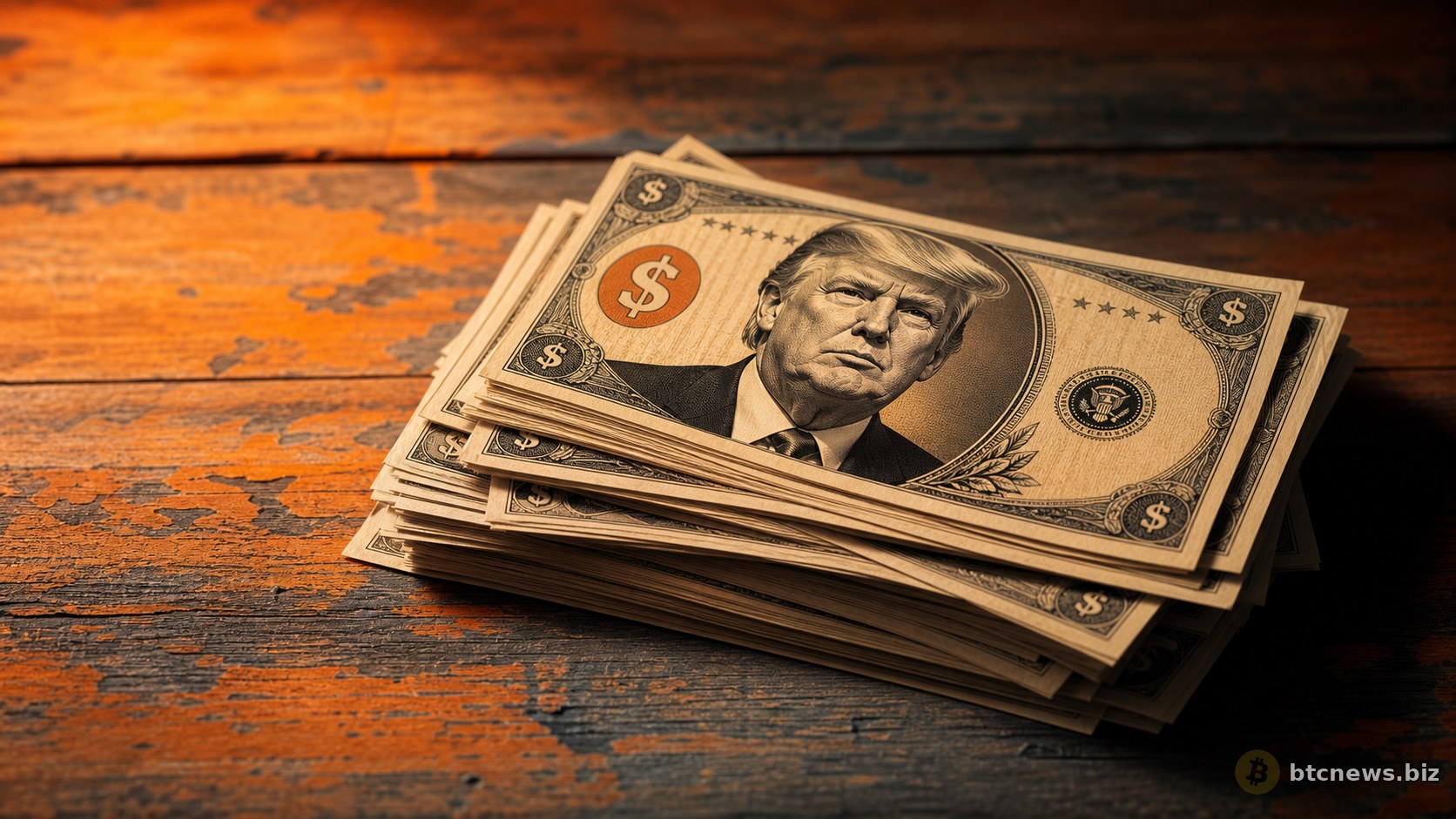
Two foreign nationals charged in Trump Bucks fraud scheme that targeted elderly supporters
Two foreign nationals were indicted over an alleged “Trump Bucks” fraud that prosecutors say targeted elderly Trump supporters. This is not a crypto case. Read it anyway. The Southern District of New York charged North Macedonian nationals Stamenko Stankovic and Stojan Stankovic over an alleged scheme that prosecutors say took hundreds of thousands of dollars from US victims. My take: the market read is less about collectibles and more about a repeatable sales machine. Political branding, fake upside, and overseas sellers are pressing the same retail buttons that helped power the $TRUMP memecoin launch in January 2025.
Prosecutors say the defendants sold “Trump Bucks” as if they were tied to Donald Trump and could later be redeemed for money. According to the indictment, the Stankovic defendants marketed physical “Trump Bucks” collectibles to US consumers as products linked to former President Donald Trump. Buyers were allegedly told, or at least left with the impression, that the items could later be exchanged for large payouts. They could not. That sentence matters. Prosecutors say the products were worthless and that the operation used references to major banks to make the offer look credible.
The alleged scheme was not blockchain based, but the sales pattern will look familiar to anyone who has watched retail crypto blowups. This was not a token. No smart contract. No decentralized anything. The source record says there was no blockchain component. Most crypto commentary would stop there and call it irrelevant. That is only half right. The pitch used a nasty little formula that turns up around token promotions all the time: sell identity, suggest future value, add a familiar public figure, then let the buyer complete the fantasy. Why does this matter? Because trust does not stay politely fenced inside BTC, ETH, $TRUMP, or paper collectibles.
The wire fraud charges show that prosecutors do not need a token address to pursue financial deception tied to US victims. The Department of Justice brought the case in the Southern District of New York. Wire fraud convictions can carry up to 20 years in federal prison per count. For crypto investors, the point is blunt: if prosecutors will pursue two North Macedonian nationals over physical collectibles sold to Americans, offshore crypto promoters should not assume geography gives them much cover. I’ll be honest: that assumption has always looked weak.
Real Trump branded products make it easier for scammers to copy the look and feel without much technical skill. This is where the adoption story gets murkier. Official Trump affiliated ventures have included digital trading cards, and the $TRUMP memecoin launched in January 2025. Those products are real. They also create noise. Once a major political figure has digital merchandise and a named memecoin in the market, a scammer does not need advanced tech. A familiar logo style can do a lot. So can a redemption story. So can a loyal audience.
For traders, the lesson is to check the structure before buying the story. The point is not that $TRUMP caused Trump Bucks. The source does not say that. Counter to the usual advice, “do your own research” is not enough when the pitch is built to make verification feel disloyal or boring. The sharper point is that brand adjacent finance moves faster than ordinary people can verify it. BTC and ETH still have transparent on chain settlement going for them. Memecoins and political tokens have a different problem: buyers often trade the narrative first and inspect the plumbing later. I would not build a risk model around hope.
Prosecutors say the alleged victims were mostly elderly Trump supporters, which says a lot about how this kind of fraud works. Fraud does not only target greed. It targets loyalty. That part is easy to miss until you see it written out in an indictment. Crypto has seen the same emotional pull around celebrity coins and influencer launches. Political tokens add another layer. When a buyer thinks a product represents a leader, party, or movement, skepticism can start to feel like betrayal. We should say the quiet part plainly: that is exactly the pressure point scammers want.
The case also complicates the usual safe haven pitch around BTC. BTC is often framed as protection against weak institutions, political instability, or fiat risk. Fair enough. But Trump Bucks is a reminder that distrust itself can be packaged and sold. Yes, this slightly contradicts the clean “BTC as escape hatch” story. Bear with me. When political identity becomes the funnel, people do not automatically move toward the most transparent system. Some move toward whatever feels closest to their side. Uncomfortable, but probably true.
The indictment gives traders another way to read whether enforcement headlines help major crypto assets or hurt retail speculation more broadly. The macro angle is indirect, but it is there. In risk on markets, traders tolerate narrative risk around memecoins and political tokens. They also tolerate speculative collectibles until they suddenly do not. In risk off markets, that patience can vanish quickly. Is this overreading one indictment? For a BTC tick-by-tick trade, yes. For mapping retail appetite after January 2025, no. The cleaner question is whether cases like this push money toward deeper, more liquid crypto markets or away from retail speculation altogether.
The alleged operation relied on political branding, implied endorsements, bank references, and future payout claims. It did not need complicated financial machinery. Prosecutors describe supposed Trump ties, implied bank credibility, and promises of later redemption. That is the same basic pitch behind plenty of token scams, even when the wrapper changes from paper collectibles to Telegram presales. Fake airdrops use it too. The tools change. The sales script barely does.
What this means
The Trump Bucks case shows that US prosecutors are willing to pursue overseas fraud tied to American retail victims, even when the product is physical and off chain. For crypto, the nearest readthrough is $TRUMP, because the January 2025 launch turned Trump linked digital speculation into a live market category. BTC and ETH sit in a different bucket, but they are not untouched by the trust problem. My take: this case draws a cleaner line between transparent assets and brand driven promises than most investor warnings do. Traders should watch whether future political token launches add clearer disclosures, redemption terms, affiliation checks, and public verification steps after the Stankovic indictment.
Future filings may show how the alleged marketing worked, and that could matter for crypto promotion. The next useful item is any public filing in the Southern District of New York case against Stamenko Stankovic and Stojan Stankovic that details sales channels, scripts, or audience targeting. Telegram style crypto promotion lives in the same neighborhood. Do not expect one clean BTC price reaction from this case. That would be too neat. Watch liquidity and open interest around political tokens after January 2025. If $TRUMP risk appetite weakens while BTC and ETH stay firm, that would suggest enforcement pressure is splitting meme exposure from core crypto exposure.