
















































Ethereum presale investor profit tests ETH supply patience
An Ethereum presale investor profit story surfaced on May 15, 2026: a wallet reportedly turned $120 into $900,000, then moved funds for the first time since buying ETH in 2015.
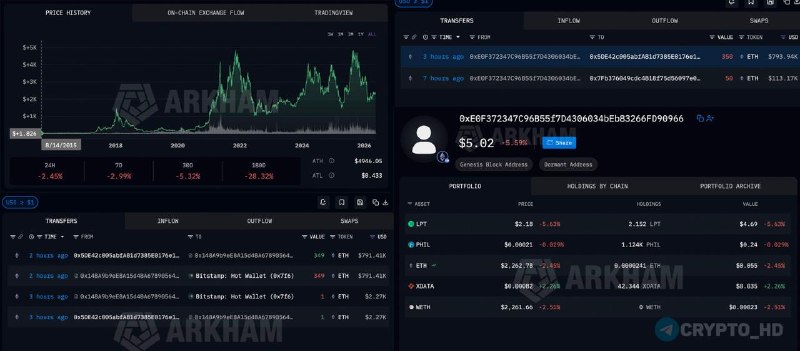
Old supply gets noticed fast. I’ll be honest: 350 ETH is not enough to bully the whole Ethereum market by itself. It cannot. But 350 ETH going to Bitstamp, plus another 50 ETH shifting to a new wallet, is exactly the kind of move traders screenshot before they know what it means. A crypto analytics firm said the transfer came from a long-dormant wallet and could affect market mood.
The numbers are absurd in the specific, old-crypto way: $120 in the 2015 presale, held until May 15, 2026, then a reported 7500x gain worth $900,000. The wallet sent 50 ETH to a new wallet and moved 350 ETH to Bitstamp, an exchange traders often treat as a possible stop before selling. Does that confirm a sale? No. That is the first trap here. A Bitstamp deposit can mean selling, hedging, or just liquidity management, and the source does not say which one this was.
The important part is simple: ETH traders do not just trade price. They trade holder behavior. A 350 ETH transfer to Bitstamp on May 15, 2026 is tiny beside the full Ethereum market, but this one carries narrative force because the original cost was $120 and the reported value is $900,000. My take: the story is less about the size of the transfer and more about the age of the coins. When a 2015 holder finally touches coins after a 7500x run, traders start asking whether other early Ethereum wallets are next.
This is an adoption signal, though not the clean one people like in pitch decks. Most guides treat long-term holding as pure conviction. That is only half right. Ethereum’s long term case has always depended on ETH becoming a useful, widely held crypto asset, not a quick presale flip. A $120 buy growing to $900,000 between 2015 and May 15, 2026 shows why early ETH returns still dominate trader memory. But the same history has a harder edge: the more Ethereum rose, the more unrealized profit piled up inside old wallets.
For ETH, the market link is not complicated. The ticker is ETH. The venue is Bitstamp. The sensitive number is 350 ETH. The two wallet moves read differently: 50 ETH to a new wallet looks like custody cleanup, while 350 ETH to Bitstamp is more exposed because exchange inflows can precede sales or hedges. Counter to the usual advice, the exchange label matters more here than the raw ETH amount. Price action gets to answer next.
The macro point is mostly about time. Holding ETH from 2015 to May 15, 2026 is an extreme version of the risk-asset patience trade: network risk first, multiple crypto cycles after that, ugly volatility throughout, then a reported 7500x outcome. Fair enough. But macro still matters when old supply starts moving. Why does this matter? Because if traders are already reducing risk, a visible ETH inflow to Bitstamp can feel larger than 350 ETH.
There is a safe haven contrast here too, even though ETH is not BTC and the source is not about war, sanctions, or politics. Bitcoin often gets framed as the hard money hedge. ETH is usually judged more like a network asset. I would not stretch this into a grand safe-haven argument. The 2015 to 2026 wallet move shows something narrower: Ethereum’s “store of value” case depends less on slogans and more on whether long term holders still treat ETH as strategic inventory after life changing gains.
One thing is missing from the source: human context. No reaction quote. No named analyst. No wallet label beyond the wallet reference. That matters more than it sounds. The clean read is not “early investor dumps ETH.” The narrower read is this: an early Ethereum buyer moved 50 ETH to a new wallet and 350 ETH to Bitstamp on May 15, 2026 after a reported $120 to $900,000 gain. Everything else is interpretation.
For traders, the near term question is whether Bitstamp absorbs the 350 ETH without changing ETH’s tone. If the market ignores it, this becomes another long-holder rotation story. If ETH weakens around the transfer, the story can travel fast: old presale wallets, exchange inflows, realized gains, late-cycle profit taking. Yes, that sounds like more drama than one wallet deserves. But crypto often turns one visible flow into a positioning debate before the actual flow earns it.
What this means

This event says Ethereum’s earliest holders still matter in 2026 market structure, even when the visible move is only 350 ETH to Bitstamp and 50 ETH to a new wallet. The ticker is ETH. The thing to watch is not price alone, but whether traders treat 350 ETH as normal liquidity or as a message from 2015-era supply. A $120 entry becoming $900,000 is not just a good screenshot. It is profit someone can sell.
Watch ETH after May 15, 2026, especially Bitstamp order book depth around the 350 ETH transfer and any further movement from the same wallet. Is this overkill? For a wallet with a reported 7500x gain, no. The next useful checks are ETH exchange flows over the next 24 to 72 hours and CME ETH futures positioning when the next update comes out. If ETH holds steady despite the Bitstamp inflow, bulls can argue the market absorbed early supply. If it slips, traders will start hunting for the next 2015 wallet.
FAQ
- What happened on May 15, 2026, regarding an Ethereum presale investor?
- On May 15, 2026, a wallet that reportedly turned $120 into $900,000 after buying into the Ethereum presale in 2015 moved funds for the first time.
- How much ETH was moved and where?
- The wallet sent 50 ETH to a new wallet and transferred 350 ETH to Bitstamp.
- Why does this matter for the crypto market?
- It matters because the move came from an early ETH holder with a huge reported gain. Traders may read that as a sign that more dormant ETH supply could start moving.
- Does the transfer to Bitstamp confirm a sale?
- No. A transfer to Bitstamp does not prove a sale. Traders watch exchange deposits because they can come before selling, hedging, or liquidity management.
- What is the reported profit multiple for this investor?
- The reported profit multiple is 7500x, turning an initial $120 investment into $900,000.
- How should traders read the 50 ETH transfer versus the 350 ETH transfer?
- The 50 ETH sent to a new wallet looks more like custody reshuffling. The 350 ETH sent to Bitstamp matters more for the market because exchange inflows can affect supply expectations.
- What is the macro angle of this event?
- The macro angle is the length of the hold. Keeping ETH from 2015 to May 15, 2026 took unusual patience, and risk conditions can change how traders react when old supply moves.
- Is Ethereum considered a “safe-haven” asset like Bitcoin in this context?
- Not really. Bitcoin is often framed as a hard money hedge, while Ethereum is usually judged as a network asset. This move tests whether long term holders still treat ETH as worth holding after massive gains.
- What information is missing from the source regarding this event?
- The source does not provide a reaction quote, a named analyst, or a specific wallet label beyond the wallet reference. That makes it important to separate the transfers from market guesswork.
- What should traders watch for after May 15, 2026?
- Traders should watch ETH’s reaction, Bitstamp order book depth, any follow-on movement from the wallet, ETH exchange flow data, and CME ETH futures positioning.