
















































Tether Gold Cashback Visa Card: A New Adoption Signal for Crypto
The Tether Gold Cashback Visa Card gives users up to 6% cashback in XAUT on Visa purchases. Spend normally. Get tokenized gold back. That is the pitch, and it is more practical than it sounds. Built with Fasset, the card gives Tether a cleaner route to put XAUT in front of users instead of leaving it as something people mostly notice on exchanges.
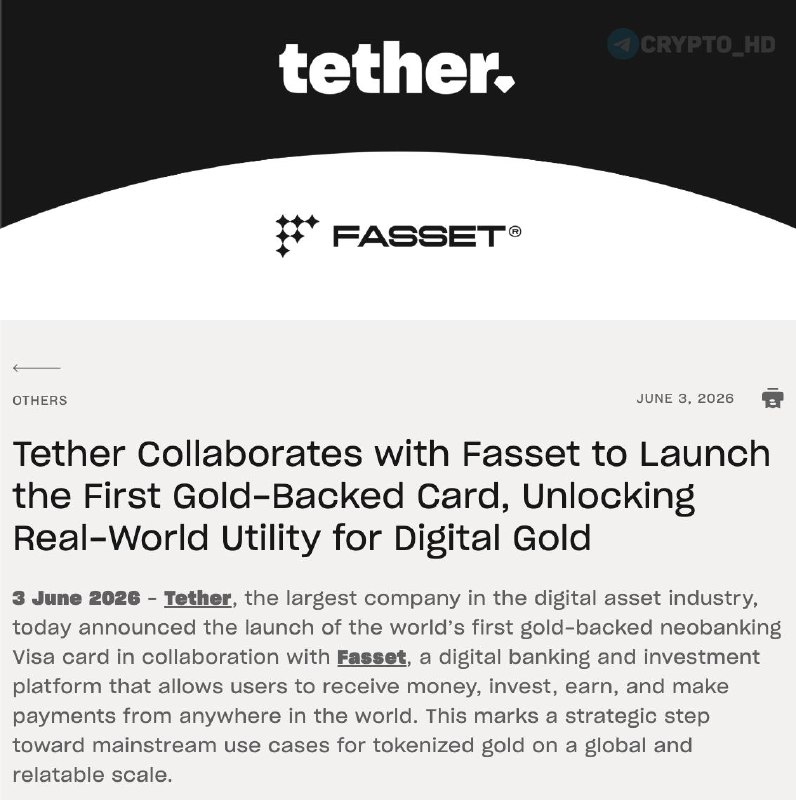
The card works globally and pays cashback in XAUT, Tether’s gold-backed token. Tether also says it can round up purchases and put the spare change into tokenized gold automatically. I’ll be honest: that feature interests me more than the up to 6% cashback headline. Why? Because round-ups turn XAUT into something accumulated in small, boring increments instead of a separate investment choice every time. Tether has already pushed stablecoin projects in places like Georgia, so the playbook is not mysterious. Put the token inside payment rails. Then watch whether people actually use it.
This is a crypto adoption signal, but not the loud kind. My take: another exchange listing would matter less. Tether is trying to move tokenized gold into everyday spending, and that is the sharper signal. The point is not only to buy XAUT and sit on it. Users can earn it through regular card activity. If enough people start receiving XAUT rewards from Visa purchases, demand for XAUT could rise. USDT could benefit too if it stays the main on-ramp. Does that mean Bitcoin moves today? Probably not. Payment integrations usually work slowly. In October 2020, when PayPal announced crypto support, BTC moved from about $12,000 to more than $13,000 within days, according to CoinDesk archives. Different product, different market. Still, the lesson holds: easy access can matter.
The card also drags the old gold story into crypto. Gold has long been used as a hedge during inflation scares, banking stress, and geopolitical shocks. XAUT tries to make that exposure easier to buy, move, hold, and track as a digital balance. Most guides frame this as “gold versus Bitcoin.” That is only half right. Cashback in XAUT and spare-change purchases could pull some users away from physical gold products, especially people who do not want storage, delivery, or vaulting problems. I would not frame this as XAUT versus Bitcoin. Too tidy. During the March 2020 crash, both gold and Bitcoin sold off at first, then recovered, with Bitcoin later running much harder. XAUT may appeal to a different buyer: someone who wants gold exposure, but does not want a bar sitting in a vault somewhere.
What this means
The Tether Gold Cashback Visa Card shows crypto moving a bit further into ordinary financial products. Visa supplies the familiar payment network. Tether and Fasset supply the tokenized asset layer. Counter to the usual advice, I would not judge this launch by the announcement itself. The useful part comes later. Does XAUT liquidity improve? Do trading volumes rise? Do tokenized real-world assets get more attention because this model looks easy to copy? Cashback and round-up investing could make XAUT easier for new users to try, especially someone who would never open an exchange account just to buy tokenized gold.
The numbers to watch are simple: transaction volume and active card users first. Then XAUT market cap. Then activity in XAUT trading pairs. If those metrics grow, the card may be doing more than making headlines. It would suggest some consumers are willing to earn and hold tokenized assets through normal purchases. I keep coming back to one thing here: copycats matter. If other stablecoin issuers and real-world asset projects copy the model, this could turn into a small but real category of crypto consumer product. Is this proven yet? No. The next useful evidence should come from Tether or Fasset usage data over the next few quarters. Until then, the card is interesting, but still unproven.