
















































Catholic Church Opposition Puts CLARITY Act, Crypto Rules at Risk
The CLARITY Act has picked up an opponent crypto lobbyists probably did not pencil into their whip counts: Catholic leaders. I’ll be honest: that changes the feel of the fight. This is no longer just another Washington argument about token markets or agency turf. It is now a moral-risk fight over who gets protected when decentralized software is used badly.
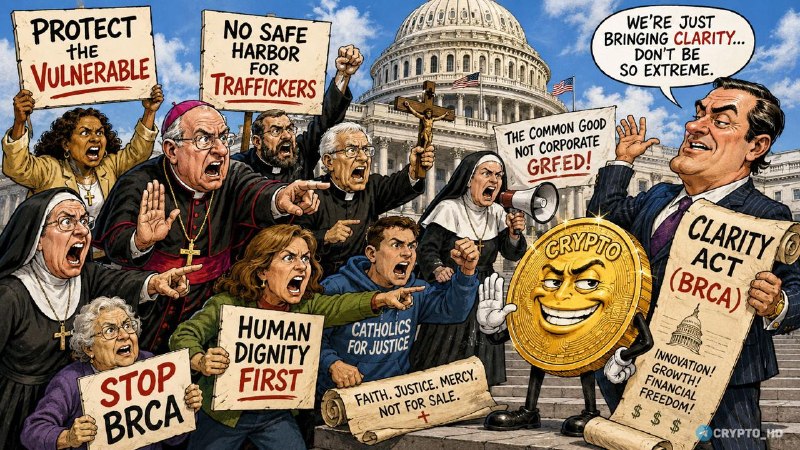
A coalition of 82 Catholic leaders and organizations sent US Senate leaders a letter opposing Section 604 of the CLARITY Act. That section would protect developers of decentralized software from criminal prosecution in some cases. For crypto groups, Section 604 is not a side clause. It is the clause. Strip it out, and some industry backers may decide the full bill is not worth saving. The Catholic groups see the same language and reach the opposite conclusion. They warn it could create “loopholes for criminals” and make it harder to trace money tied to human trafficking, child exploitation, and money laundering. Fair or not, that accusation lands hard. CLARITY was already taking fire from Wall Street, law enforcement, and other critics. Now add Catholic opposition to the Senate vote count. That makes the math uglier. If the bill does not pass in the next few weeks, its chances this year look thin, especially with the November midterm elections coming up.
This fight lands inside the broader regulation pressure already sitting on crypto. The CLARITY Act was supposed to answer a question developers hate leaving open: when is a project decentralized, and who takes the blame when something breaks or gets abused? Without Section 604, developers could face criminal liability for code they wrote or maintained. Most policy summaries frame that as a developer-rights issue. That is only half right. It is also a location issue, because that kind of legal risk pushes builders to work outside the US. My take: treating that as theoretical is a mistake. In early 2023, when the SEC increased pressure on staking services, Ethereum fell about 5% in a week, from roughly $1,650 to $1,560, as traders worried about enforcement. The CLARITY fight could trigger a similar selloff, especially in projects that rely on decentralized developer communities.
The politics are messy too. Very messy. This deadlock adds pressure to the wider macro flow around risk assets. With November midterms close, lawmakers have less room to spend political capital on a controversial crypto bill. Inflation worries and possible Fed rate hikes make that harder. Why does this matter? Because Bitcoin usually trades badly when policy risk stacks on top of rate anxiety. In the run-up to the 2020 US presidential election, BTC had short bursts of 8% to 10% volatility as investors tried to price in possible policy changes. A stalled CLARITY Act could bring back that same nervous tape. It could also make it harder for BTC to hold levels like $30,000, which has already been a tough ceiling for the market.
What this means
The Catholic Church’s intervention changes the politics around crypto regulation. Opposition is no longer coming only from banks, prosecutors, or agencies. It is also coming from moral and religious groups that see developer protections as a public safety risk. Counter to the usual crypto argument, clearer rules alone may not be enough here. The industry also has to answer a blunt public-safety objection. That slows the path to a bill and makes it rougher than many crypto advocates expected. The near term risk is simple: US developers may back away from decentralized app work if they think prosecutors could target them. Some capital may also leave US based projects for countries with clearer rules. It happens fast.
Investors should watch what Senate leaders say about the CLARITY Act over the next few weeks. Is this overkill for one section of one bill? No, because Section 604 is the pressure point that could decide whether the broader package survives. If the bill fails before the November midterms, serious crypto legislation this year looks unlikely. The market would be left with the same unclear rules, which could hurt altcoins such as Solana (SOL) and Avalanche (AVAX), both of which depend heavily on decentralized ecosystems. For Bitcoin, the level to watch is $25,000. A clear break below that would suggest traders expect a longer stretch of regulatory uncertainty. My read: that would turn this from a policy story into a market story very quickly.