
















































SEC, Hyperliquid meeting points to tighter US crypto scrutiny
The SEC recently met with representatives from the Hyperliquid Policy Center to discuss US crypto regulation. One meeting will not rewrite the market overnight. It rarely does. But this is how crypto policy in Washington tends to move: through lawsuits, settlements, applications, calendar entries, and closed-door meetings that look boring until they suddenly matter. My take: this one is worth watching because public records show the meeting came after Hyperliquid had already approached the CFTC. That makes it more than a quiet check-in with one agency. It looks like an attempt to make its case to both major US market regulators. For investors, the paperwork still matters. Rules affect market structure, product approvals, exchange behavior, liquidity access, and, eventually, what people are willing to pay for these assets.
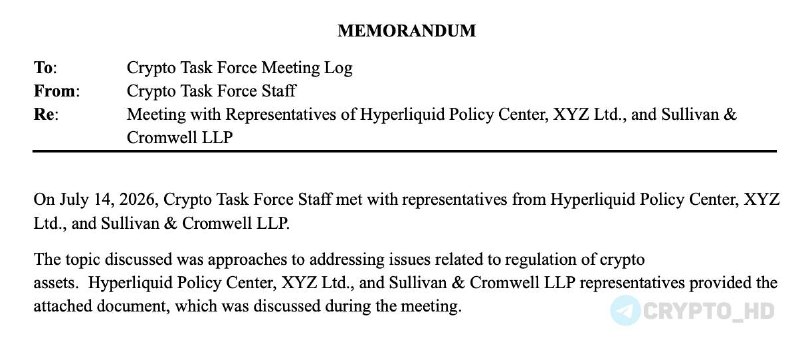
Crypto firms are trying to get in the room before the rules harden. The SEC meeting with Hyperliquid Policy Center representatives focused on US crypto regulation. The public record gives little detail about what they discussed, which is annoying but not unusual. Still, the meeting says something. Hyperliquid had already gone to the CFTC. Now its policy arm is talking with the SEC too. That is practical, not ceremonial. Most guides frame regulation as something crypto firms react to after the fact. That is only half right. If regulators are deciding how to treat DeFi, staking, exchanges, token listings, and market structure, the industry would rather make its case early than complain after the rules are written.
Crypto regulation remains one of the main pressures on the market, especially with the SEC still leaning on enforcement. This fits the regulatory pressure that has followed crypto since 2023. Gary Gensler’s SEC has relied heavily on enforcement, and traders have learned to watch court filings almost like earnings reports. XRP is the cleanest example here. In July 2023, XRP jumped about 70% after Ripple won a partial court victory. Kraken is another one. In February 2023, Kraken agreed to pay $30 million and shut down its staking service for US customers. The message was plain: staking products were in the SEC’s sights. So yes, a meeting can matter. Why does this matter? Because a calendar entry can later become context for guidance, a rulemaking fight, or an enforcement theory. Maybe nothing comes of it. Maybe it leads to guidance. Maybe it shows up later in a legal argument. Traders watch this because it can either open space for institutional products, as spot Bitcoin ETFs did, or make certain business models harder to run in the US.
Regulation changes how Wall Street treats crypto, and that changes the market. This is not a pure macro flow event. I will be honest: treating every regulator meeting like a tradable catalyst is usually sloppy. But regulation still affects how traditional finance allocates money to crypto. Clear rules can bring in institutions that do not want to explain legal risk to an investment committee every quarter. Messy rules can keep them away. The spot Bitcoin ETF approvals in January 2024 are the cleanest recent example. BTC moved past $49,000 after approval, a price it had not seen since early 2022. That was not magic. It was access. Counter to the usual advice, the point is not always the headline decision itself. Sometimes the real issue is who gets distribution, which products pass compliance review, how custody is handled, and where liquidity is allowed to concentrate. The SEC-Hyperliquid meeting is much smaller than an ETF approval, obviously, but it belongs to the same messy story: how crypto gets pulled into the US financial system, who gets to offer products, and where liquidity goes.
What this means
US regulators are still pressing crypto, and crypto firms know they need to answer. The meeting suggests the SEC is not backing off crypto scrutiny. It also suggests policy groups tied to crypto projects are trying to shape the rules while there is still time. I would not read too much into one calendar entry. I would not ignore it either. Yes, that sounds like hedging. It is. These conversations can affect how regulators think about DeFi, exchanges, staking, token classification, and investor protection. That matters for assets like ETH and SOL, which still sit close to the US securities debate.
Investors should watch what comes after the meeting, not just the meeting itself. The useful signals now would be SEC statements, Hyperliquid Policy Center documents, proposed rule changes, public comment periods, enforcement actions, or unusual price action in major altcoins with large US user bases or staking exposure. Is this overkill? For a market where XRP moved about 70% after a July 2023 court decision, no. BTC’s $60,000 area is still worth watching as a rough sentiment line, but I would be careful about treating any single level as gospel. We have seen this pattern before: regulation moves slowly, then all at once. One filing, one settlement, one judge’s order, and the whole market can decide it has a new story.