
















































Bitcoin Wobbles as Iran-US Naval Clash Reignites Safe-Haven Bid
Iranian state media claimed a two-missile strike on a US Navy vessel today. That single headline is enough to put Bitcoin’s safe-haven story back on the table. Washington denies the hit. But US forces have already been cleared to fire on IRGC fast boats and other targets — a rules-of-engagement shift traders read as escalation, not the opposite. According to Pentagon officials cited by Reuters, the new rules authorize US sailors to engage Revolutionary Guard fast boats on threat-detection alone. For crypto desks, the question isn’t whether the missile landed. It’s whether Hormuz risk just became a 72-hour tape catalyst.
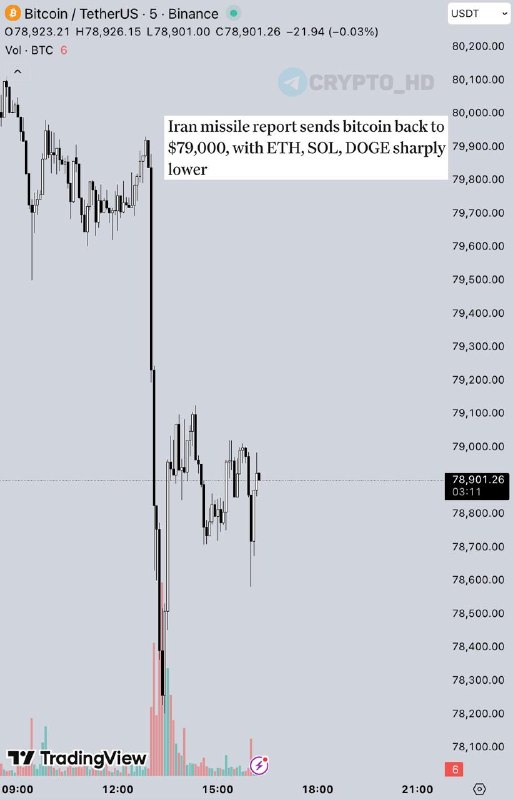
Sequence matters here, and the timeline points to coordinated escalation on both sides. Iranian outlets reported the alleged strike first. The US then publicly denied the incident while confirming a broader green light for American sailors to engage Revolutionary Guard speedboats and “other targets” in the region. That followed Donald Trump’s announcement that, starting Monday, the US Navy would begin escorting commercial ships through the Strait of Hormuz — the chokepoint through which roughly a fifth of global oil flows, according to the US Energy Information Administration. Convoy operations are a serious posture. Pair them with weapons-free orders against IRGC craft and you get the conditions for an accidental flashpoint. Think 1988 Tanker War, when a single mistaken IRGC speedboat run on the USS Roberts spiraled into Operation Praying Mantis within 72 hours. Same chokepoint. Same hair-trigger dynamic.
Bitcoin has a short but consistent track record of catching a bid on Middle East shock days. According to CoinMetrics data, when the US killed Qassem Soleimani in January 2020, BTC ran roughly 8% in the week that followed before giving most of it back. The April 2024 Iran-Israel exchange produced a similar reflex spike. The pattern isn’t gold-grade reliability — it’s a reflex trade. Money parks in BTC for a session or two while equity desks figure out whether oil is going to $90 or $120. Every prior episode reset within days once headlines cooled. Treat this as a tactical setup, not a structural thesis.
The macro-flow angle is messier and arguably more important. A Hormuz incident with real shipping disruption pushes oil higher. Higher oil pushes US headline CPI higher. Higher CPI pushes the Fed further from the cut path the rates market is currently leaning on. According to the CME FedWatch tool, rate-cut probabilities are highly sensitive to energy-driven CPI surprises. That’s a risk-off impulse for BTC, not a tailwind — the same coin that benefits from war-premium flows gets hit if rate-cut odds slide. So the trade splits: a clean fear bid lifts BTC short-term; a sustained oil shock that revives sticky inflation flips the script and drags crypto with the broader risk complex. Watch which narrative wins the tape this week. Both are live.
Worth noting what the source does not say. There is no confirmed casualty count. No named US vessel. No White House statement on the alleged strike beyond the denial. No Iranian official tying the claim to a specific operation. The asymmetry is the story: Tehran is escalating verbally, Washington is escalating posture, and neither side has handed the market a clean off-ramp. In that vacuum, crypto trades on what it always trades on during geopolitical fog — flow, not fundamentals.
The adoption-signal angle is quieter but real. Every time a US administration leans harder on sanctions and naval enforcement against Iran, the case for non-sovereign settlement rails gets a free advertisement. According to Chainalysis and Elliptic reports, Iran has been one of the louder state-level miners and crypto-payment users specifically because dollar rails are closed to it. None of that moves price in the short term — it’s the kind of structural argument that shows up in Coinbase earnings calls and Senate hearings, not on a 4-hour chart. But if convoy operations turn into a sustained enforcement regime, expect the “BTC as sanctions-resistant asset” framing to get louder from the usual desks. It’s the same flywheel that turned every fresh round of Russia sanctions into a bigger talking point for self-custody after 2022 — the policy doesn’t move BTC today, but it builds the narrative that gets cited a year from now.
The trader’s checklist for the next few sessions is short. Did Iran name the vessel or produce footage? Did the US move a second carrier group within striking distance? Did Brent break $85 on the Monday convoy headline? Each one is a step-up in real escalation. Each one historically pulls BTC with it for at least one session before the asset reverts to its own internal flows.
What this means
The signal here isn’t that war is bullish for Bitcoin. The signal is that BTC’s correlation regime is unstable right now — it can act like a risk asset on a Fed day and like a hedge on a Hormuz day, sometimes inside the same week. For traders running directional books, that means sizing has to respect headline risk, not just technical levels. For longer-horizon holders, the takeaway is simpler: a Middle East flare-up doesn’t change the four-year thesis, but it absolutely changes the path. Expect chop, not trend, until the convoy operation either passes uneventfully or produces a real incident.
Watch three things into next week. First, Monday’s convoy launch through the Strait of Hormuz — the first transit is the headline risk, and any IRGC interaction will hit tape inside minutes. Second, Brent crude — a sustained move above $85 is the level where oil starts feeding back into US inflation prints and bleeding into Fed expectations, which is where the BTC story flips from safe-haven bid to risk-asset drag. Third, BTC’s reaction to the next US CPI release. If a war-premium oil tape collides with a hot inflation number, that’s the scenario where crypto gives back any geopolitical bounce and then some. Until then, treat strength as tactical and keep the stop tight.