















































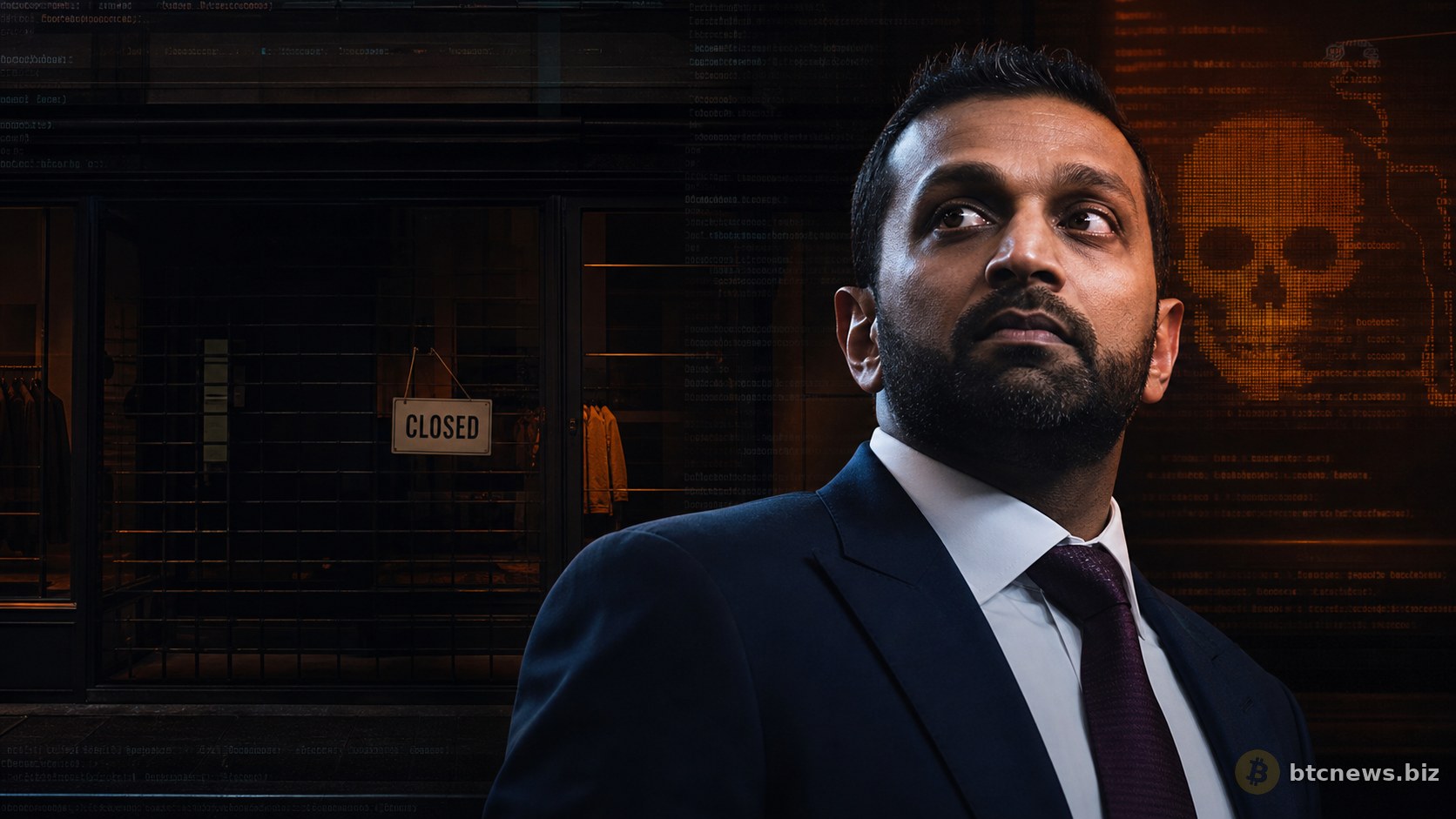
Kash Patel-linked apparel store goes dark after pushing crypto-stealing malware
A Kash Patel-linked apparel store going dark after pushing crypto-stealing malware sounds like a weird side plot. It is not. On Friday, Based Apparel, a store tied to FBI Director Kash Patel, appeared to go offline after users warned that macOS visitors were being steered toward “ClickFix” wallet-draining malware. I’ll be honest: this is exactly the kind of ugly, small-looking incident crypto people dismiss until it hits their own machine. If you hold crypto, the takeaway is bleak. One bad prompt can turn self-custody from an idea you believe in into money you no longer have.

The incident: Malware distribution through a linked apparel store
Reports said Based Apparel allegedly served crypto-stealing malware to macOS users. According to an X user cited in the source report, the site told visitors to copy and paste a command into Terminal. That command could expose session tokens, browser data, and crypto wallets to an infostealer. MetaMask users also saw a “potentially deceptive” warning about possible “malicious transactions resulting in stolen assets.” PCMag reproduced the attack. Decrypt could not, because the store later showed a message saying it would be back online shortly, “bolder than ever.” Odd choice of words, given the timing. Very odd.
Scale and affiliation: The reach of Based Apparel and its connections
Based Apparel is not some abandoned shop with three visitors a week. The Guardian reported that the venture is owned by Kash Patel and Andrew Ollis, connecting it to the Kash Foundation. Ahrefs estimates the store gets about 33,600 visits a month, and one of its top pages is for a camouflage hoodie. That number matters. A site with about 33,600 monthly visits is not Coinbase, but it is enough traffic for a wallet-drainer operator to care. Ollis is CEO on the board of the Kash Foundation, according to The Guardian. The nonprofit’s site sends visitors to Based Apparel through one of its main menus, though the foundation says Patel is no longer affiliated in any capacity and is not associated with government agencies, including the FBI.
Regulatory implications: Wallet security as a pressure point for regulators
Market analysts treated the incident as another reason regulators care about wallet interfaces. My take: that is mostly right, but a little too tidy. No new SEC or CFTC filing is needed for the concern to make sense. MetaMask’s warning appears at the exact point regulators tend to care about after crypto thefts: when a normal user is asked to approve or run something they may not understand. Why does this matter? Because after the SEC approved spot Bitcoin ETFs on January 10, 2024, BTC became easier for mainstream investors to buy, while self-custody did not become easier to protect. BTC and ETH traders should see stories like this as pressure on wallets and exchanges. Public crypto firms such as COIN also get dragged into the risk narrative when fraud warnings look too easy to ignore.
Investor behavior: Malware risk and the shift toward managed custody
Malware risk changes how people hold crypto. A BTC ETF buyer can outsource custody. A DeFi user usually cannot, at least not as neatly. Most guides say education is the answer. That’s only half right. When BTC traded around $69,000 in March 2024 after the spot ETF launch cycle, the market showed how fast money can move into regulated products. Wallet-drainer headlines push the same way. They probably will not kill crypto adoption. They do make custodians, ETF products, exchange accounts, and stricter front-end warnings look much more comfortable than casual browser-wallet self-custody.
Adoption and attack vectors: Traditional cybercrime meets crypto
Crypto is large enough now that even an apparel store linked to the FBI director can end up in a wallet-drainer story. Absurd, yes, but believable. Attackers follow traffic. They follow trust. They follow names people recognize. The source report says infostealer malware dates back to at least 2006. The FBI also said two months ago that it was investigating several PC games on Steam that installed malicious software. This is not exotic cyberwar. It is old internet crime pointed at newer wallet targets.
Technical read: User prompts as a vulnerability, not protocol exploits
For ETH and token traders, the practical read is simple. The attack described in the source does not need a protocol exploit or a bridge failure. It does not need a smart-contract bug either. It needs a user prompt, a terminal command, and access to browser or wallet data. Is this overkill to worry about from one apparel site? For a 33,600-visit-a-month store tied into a political nonprofit menu, no. That is why wallet-drainer stories can hit DeFi sentiment even when Ethereum keeps producing blocks and major protocols keep working. Sometimes the weak point is not the chain. Sometimes it is the laptop.
Political context: Kash Patel’s prior crypto-related incidents
Patel’s connection adds political heat, but investors should be careful with it. I would not overread the name. The source report says the FBI director has dealt with crypto-related trouble before, after Iranian hackers leaked his personal email and burner username and Patel-themed meme coins followed. Embarrassing, yes. A BTC signal by itself, no. Counter to the usual social-media read, the market point is narrower: a politically linked brand with an estimated 33,600 monthly visits allegedly became a malware delivery point aimed at wallets.
Loss assessment: Uncertainty and the impact on security risk perception
The source does not say whether Based Apparel’s apparent compromise caused major losses. That matters. Crypto markets usually react harder to confirmed dollar amounts than to warnings with no figure attached. Still, MetaMask’s warning about malicious transactions and PCMag’s reproduction of the attack give the story enough weight to count as a security risk for BTC, ETH, and DeFi-adjacent tokens. Yes, this contradicts the instinct to wait for a loss number. Bear with me. The absence of a public loss figure does not make the attack path harmless.
What this means
This story gets at an uncomfortable part of crypto adoption. Buying BTC or ETH has become easier. Surviving the ordinary web with a wallet attached has not. I keep coming back to that gap. Regulated products gained credibility after January 10, 2024, while browser wallets still leave a lot of execution risk with the user. That gap can affect BTC custody flows, ETH DeFi activity, and COIN’s risk narrative, because every wallet-drainer story gives managed custody and stricter front-end warnings another argument.
Watch what happens next. Does Based Apparel come back online with a real explanation? Do MetaMask or other wallets keep the domain on warning lists? Does any on-chain loss figure appear? For markets, the cleaner read is BTC versus ETH risk appetite. If BTC holds major round-number support while ETH and DeFi tokens lag, traders may be treating the headline as a self-custody problem rather than a broad crypto problem. Simple, but useful.
FAQ
Q: What is the primary issue discussed in the article?
A: Based Apparel, an online store linked to Kash Patel, allegedly pushed crypto-stealing malware at macOS users. The main issue is wallet security.
Q: How did the malware reportedly work?
A: The site reportedly asked macOS users to run a terminal command. That command could expose session tokens, browser data, and crypto wallets to an infostealer.
Q: Why does Kash Patel’s connection matter?
A: His connection adds political context. The market issue is simpler: a politically linked brand with meaningful traffic allegedly became a malware delivery point.
Q: Did the incident result in confirmed financial losses?
A: The source does not confirm major losses. MetaMask’s warning and PCMag’s reproduction of the attack still point to a credible security risk.
Q: What does this mean for crypto adoption and security?
A: It shows how much wallet security still depends on ordinary web habits. It also makes managed custody and stronger fraud warnings look more appealing.