
















































MAX App Removed from AppStore: A Digital Iron Curtain for Crypto?
MAX disappearing from the AppStore feels like another piece of Russia’s internet getting fenced off. My take: this is not a clean crypto catalyst. It is more like a pressure leak. A few users may start looking, not rushing, toward crypto and tools that are harder to block.
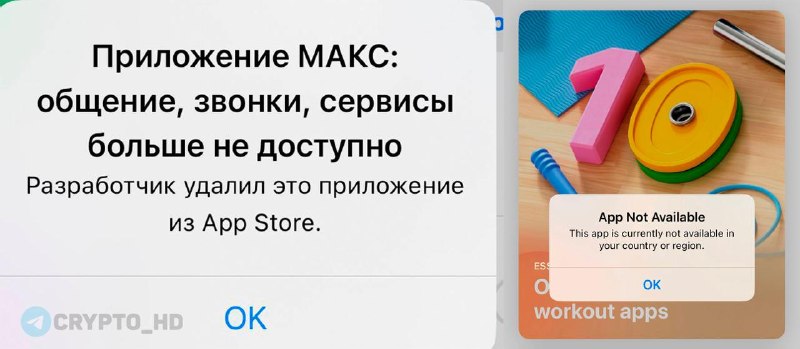
MAX, a messenger app, no longer appears in AppStore search. Users trying to update it are seeing an error instead. That matters. The app also came with baggage: authorization codes that were too easy to exploit, hundreds of reported vulnerabilities, and the “Mammoth” virus linked to it. So no, I would not frame this as just Apple making a neat policy call. It looks messier than that.
MAX is not a crypto app. Still, its removal sits inside the fight over who controls digital access in Russia, according to market analysts. Most guides jump straight from censorship to Bitcoin. That’s only half right. In late February 2022, after Russia’s invasion of Ukraine began, Bitcoin (BTC) briefly climbed near $45,000 as some buyers looked for payment routes and stores of value outside the usual channels. I would not read too much into that move, but it showed something real: when normal systems feel shaky, people start looking around. MAX being pulled does not send users straight to Bitcoin. It adds one more brick to the wall around Russia’s digital life.
Why does this matter? Because app access is boring until it breaks. MAX was not a wallet, an exchange, or a payments rail. But if people cannot access or update a messenger they rely on, they may start asking what else can disappear overnight. We have seen the same broad pattern around inflation, capital controls, and banking stress: local BTC trading volume can jump when people have fewer ways to move or protect money. That does not mean MAX users wake up tomorrow and buy BTC. It means the conditions that make crypto useful keep getting stronger: blocked services, weak trust. Limited options.
There is a safe haven angle too, though it is indirect. Counter to the usual advice, the important signal is not “messenger removed, Bitcoin up.” That is too tidy. The real signal is centralized access getting easier to interrupt across Apple, other major app stores, search listings, and updates. A widely used app with known security problems vanishing from the AppStore could quietly push some users toward tools they believe are harder to shut off. Is that overkill as a reading? For one app, maybe. For a wider pattern of restrictions, no.
What this means
MAX’s removal means more digital fragmentation for Russian users, according to cybersecurity experts. It is not a crypto story in the direct sense, but it does show how exposed centralized services are when politics, sanctions, app store rules, and security concerns collide. Communication apps can be restricted. Updates can break. Search listings can disappear. I’ll be honest: this is where decentralized tools stop sounding like ideology and start sounding like backup infrastructure. Slowly, probably. Not in one dramatic wave.
For crypto investors, the practical takeaway is simple: watch the pressure points. No single token moves because MAX left the AppStore. But the censorship resistance case for Bitcoin (BTC) and Ethereum (ETH) gets easier to grasp when ordinary apps become unreliable. I would watch three things first: more app restrictions in Russia, any change in local crypto trading volume, and official statements from Apple or other major app stores about removal policies. Yes, that contradicts the instinct to watch price first. Bear with me. The next useful signal would be a response from Russian authorities or growth in alternative app stores inside the country. That would tell us whether this is a one off removal or part of a more permanent narrowing of digital access.