














































Bali Kidnapping Shows the Ugly Physical Risk Behind Crypto Self-Custody
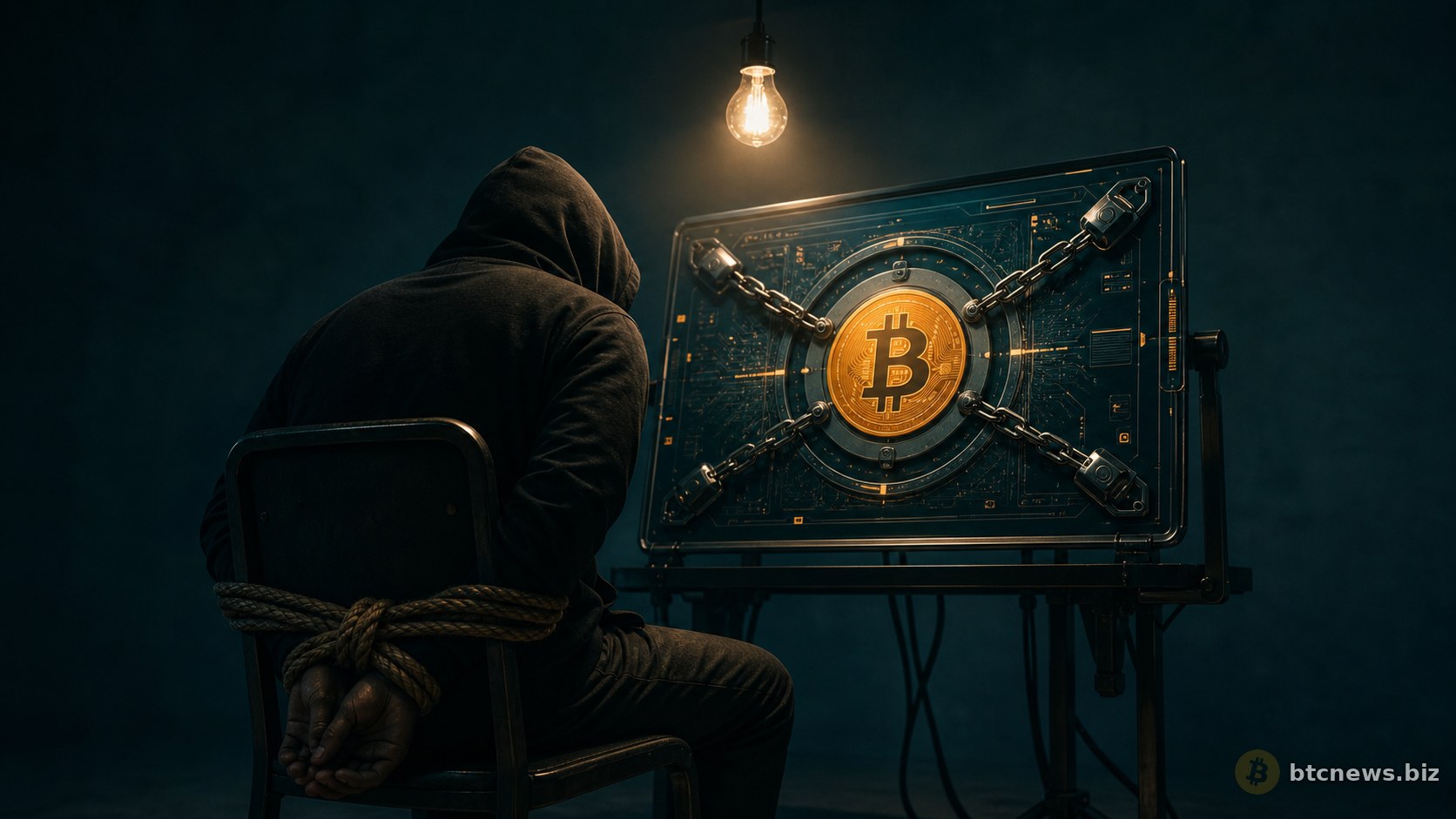
A “wrench attack” is exactly as crude as it sounds: someone uses force, or the threat of it, to make a person hand over wallet keys or account access. No clever exploit. No elegant hack. In Bali, a Russian national was kidnapped and tortured for nearly 30 hours before he gave up his crypto wallet keys. I’ll be honest: this is the part of Bitcoin (BTC) ownership that the cleaner self-custody arguments tend to skate past. If someone can find you, scare you, and force you to unlock the wallet, the math stops being the hard part.
The abduction began on July 2 near Pecatu, South Kuta, at about 9:35 p.m. Police said two masked men in a black Nissan Serena blocked the victim’s motorcycle, restrained him with plastic handcuffs, covered his head, and drove him to a two story building. Investigators said the setup, including surveillance and a prepared holding site, suggests the attackers had planned it. For roughly 30 hours, the victim was punched and kicked until he handed over his account password. The attackers took his Xiaomi phone. Then they used keys taken from him to enter his villa and collect a second device tied to his wallet. That detail matters. They were not guessing. They appeared to know that one phone might not be enough. He was released on July 4 outside Udayana University Hospital, where he received emergency treatment. Local authorities said police are reviewing CCTV footage and phone data, but no arrests have been announced, and the amount stolen has not been disclosed.
The Bali case is not a one-off. It sits inside a broader run of violent crypto robberies. French law enforcement, for example, has recorded 77 crypto kidnappings and extortion cases since January 2026. Most security guides still talk as if the main enemy is malware or a bad signature request. That is only half right. As exchanges and protocols get harder to break into, attackers go after people instead. Large holders are exposed in ways bank customers usually are not: through public wealth signals, social media, leaked information, or on-chain activity. My take: the criminal logic here is grim but simple. If the wallet is hard to crack, find the person who can open it. According to COINOTAG, the Fear & Greed Index is at 26 out of 100, with Bitcoin dominance at 69.7% of a $1.84 trillion crypto market. A lot of value sits with a smaller group of holders. For criminals, that is an incentive. For serious holders, it is a warning.
The worst part of self-custody is also the selling point: once a coerced transfer settles on-chain, it is basically final. A bank may freeze an account or reverse a card payment. Crypto usually does not work that way. Immutability sounds neat in a white paper. It feels different when someone is bleeding in a room and being told to unlock a phone. Why does this matter? Because cryptography cannot protect you if someone forces you to approve the transaction yourself. Basic operational security now has to include plain physical habits. Do not advertise holdings. Use multi-signature wallets that require approvals from different places. Keep decoy wallets, separate devices, and tighter circles around who knows what. Yes, this contradicts the usual “be your own bank” confidence a bit. Bear with me. The Bali attackers took both a phone and another device from the victim’s villa, which suggests they expected some kind of multi-device setup. As crypto wealth becomes easier to spot online, privacy stops being optional. Bitcoin (BTC) gives people direct control over their money, but that control has a very real human cost.
What this means
This incident changes the security conversation. The threat is not only a bad contract or a phishing link. It is a car blocking your motorcycle at 9:35 p.m. For crypto investors, personal OpSec now matters as much as wallet hygiene. According to COINOTAG, the market is in “Fear” territory, with Bitcoin dominance at 69.7%, which points to heavy value concentration among large holders. That makes some people worth targeting. Counter to the usual advice, the answer is not just “use better cold storage.” Wealthy holders may move toward geographically separated multi-sig setups, professional custody, insurance-backed storage, or quieter lives online. Honestly, the quiet-life part may be the most underrated security tool here.
Traders and investors should watch whether crypto security firms start treating physical protection as a normal part of custody planning. I would. Regions where these attacks are rising matter too, because lawmakers may respond with new reporting or custody rules. On the technical side, the most relevant tools are advanced multi-signature wallets that require approvals from more than one physical location. Is this overkill? For someone holding a large Bitcoin (BTC) balance, no. It makes one-person coercion harder, though not impossible. Bitcoin’s (BTC) price action around levels such as $60,000 is also worth watching. Fear from violent incidents like this can weigh on sentiment, especially if investors start wondering whether self-custody makes sense for large balances.
FAQ
What is a “wrench attack” in the context of cryptocurrency?
A “wrench attack” is when someone uses physical force, threats, or torture to make a person hand over wallet keys, passwords, seed phrases, or account access. It attacks the person instead of the code. Simple as that.
Why are Bitcoin holders becoming targets for physical attacks?
Bitcoin holders are becoming targets because some crypto wealth is visible or easy to infer. As digital defenses improve, criminals may decide it is easier to threaten the owner than hack the wallet. Ugly, but rational.
How does this incident highlight the risks of self-custody?
It shows the brutal downside of final settlement. If someone is forced to approve a transfer and that transfer settles on-chain, there may be no chargeback, reversal, or bank fraud department to call.
What security measures are recommended to reduce “wrench attack” risk?
Useful measures include keeping holdings private, using multi-signature wallets with approvals in different locations, maintaining decoy wallets, separating devices, and treating personal privacy as part of asset security. My bias is toward boring precautions here. Boring survives.
What is the current market sentiment regarding Bitcoin, according to the article?
According to COINOTAG, market sentiment is in “Fear” territory. The Fear & Greed Index is at 26 out of 100, and Bitcoin dominance is at 69.7% of total crypto market capitalization.