
















































Bitcoin’s BIP 110 rejection shows where the market stands on data vs. payments
Bitcoin’s BIP 110 deadline is close, and miners are not touching it. Support is at zero. That is not a shrug; it is a market answer. My take: this is bigger than a niche developer quarrel. Bitcoin users can keep arguing about what the network is “for,” but the people who would need to move first are not rushing to ban newer uses just because they make the chain uglier.
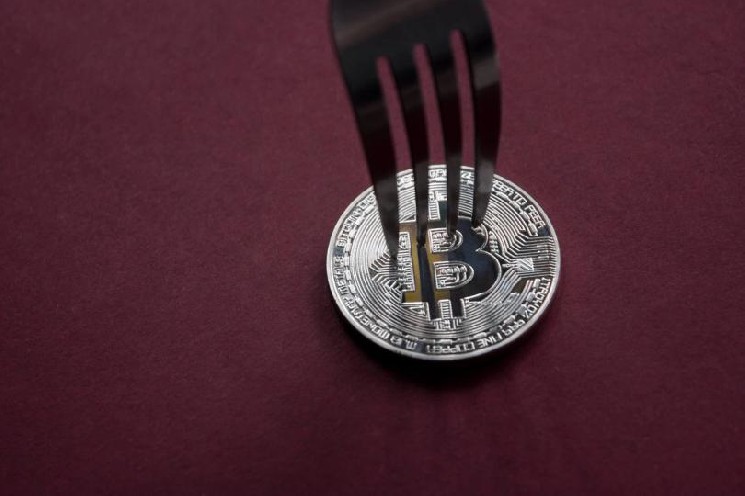
The proposal, formally called the Reduced Data Temporary Soft Fork, would tighten Bitcoin’s data storage paths for one year. It would shrink OP_RETURN back to its older limit, block most arbitrary data chunks above 256 bytes, and restrict some script formats mainly used to store data. In plain English, it targets Ordinals and inscriptions. It also targets token schemes that use these paths to put images, text, or token metadata on-chain. The deadline is in early August. Miner support is still below 1%. Right now, it is zero.
That lack of backing matters, even though BIP 110 was framed as a user-activated soft fork with a 55% signaling threshold instead of the usual 95%. Miners are not even flirting with it. Most guides frame this as payments versus spam. That is only half right. The rejection suggests much of the market is willing to let Bitcoin be more than peer-to-peer cash, whether purists like that or not. Digital art and token experiments create noise. They also bring users and fees. Attention too, for better or worse. Sometimes that attention is hollow. Sometimes it turns into demand. Bitcoin has already seen both, during institutional buying waves and bursts of new app activity.
Two major Bitcoin figures have come out against BIP 110. Michael Saylor, founder of Strategy, posted on Saturday that “there are 110 things more dangerous to Bitcoin than spam.” He said the proposal “turns a spam dispute into a consensus change that would invalidate some currently valid, fee-paying transactions.” His point was direct: the precedent is worse than the spam. Adam Back, Blockstream co-founder and creator of hashcash, which is cited in the Bitcoin white paper, made the same basic argument in rougher language. “Bitcoin respectfully says no to what you want,” he wrote. If supporters still want those rules, he suggested they fork away. “Bitcoin won’t be joining it.”
There are 110 things more dangerous to Bitcoin than spam.
BIP 110 turns a spam dispute into a consensus change that would invalidate some currently valid, fee-paying transactions.
That precedent is the danger. We should save our energy for threats that really matter. $BTC https://t.co/LoSkl9XSo1
– Michael Saylor (@saylor) July 11, 2026
The pushback is lopsided, despite the online fighting. I will be honest: that split tells us more than another week of forum arguments would. Supporters of BIP 110 argue that data limits would keep Bitcoin focused on payments and make life easier for nodes. That concern is not absurd. Bloated chains are a real problem. But critics see the proposal as a policy fight disguised as a consensus rule. Why does this matter? Because once consensus rules start filtering currently valid, fee-paying transactions by social preference, every future content fight gets a template.
This is the part that matters. Bitcoin is slow to change by design, and sometimes that is maddening. Here, that slowness may be doing its job. Yes, this sounds like praise for inertia after saying the chain is getting messier. Bear with me. A vocal group can complain loudly, but it still has to persuade miners, users, businesses, infrastructure operators, and developers to move together. BIP 110 has not done that. For investors, that resistance matters. It suggests the rules are hard to bend quickly, even when influential people are arguing in public. Boring governance has its uses.
What this means
BIP 110’s rejection points to a plain market answer: much of Bitcoin is willing to tolerate data-heavy use cases, at least for now. That does not mean everyone likes Ordinals. Plenty of people hate them. I get why. But the market is not treating them as an emergency that justifies changing consensus rules. For traders, BTC is no longer just a single-purpose payments asset. It now has a messy extra source of demand from inscriptions and collectibles. Token experiments sit in that same bucket, though some will probably age badly. Some may stick.
Investors should watch what builders do next. Since BIP 110 has no miner traction, Ordinals and related protocols have room to keep growing. The useful numbers are simple: daily inscriptions, Bitcoin transaction fees, activity around Bitcoin-based token protocols, serious integrations from wallets, exchange support, and infrastructure firm adoption. Is this overreading one failed proposal? Maybe for a tiny alt chain, yes. For Bitcoin, no. The early August deadline now looks likely to pass quietly. If it does, the status quo holds, and the next round of Bitcoin data experiments gets more room to show whether it is real demand or just another speculative burst.