















































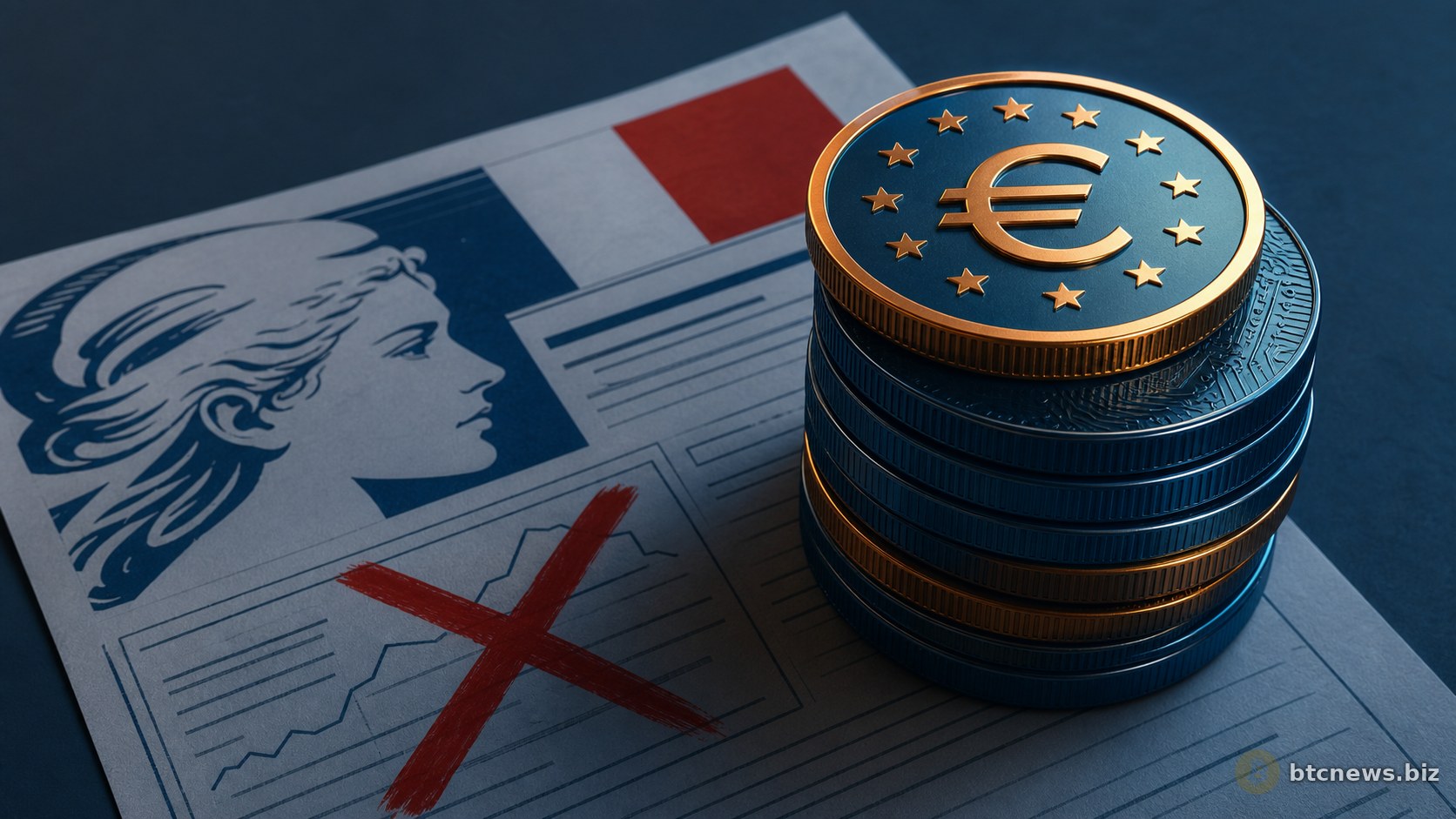
French crypto leaders want stablecoin payments fixed in law
French crypto leaders want stablecoin payment rules written into law because France’s tax code still treats some stablecoin payments like investment sales instead of ordinary purchases. That is the problem. MiCA can regulate issuers, but if paying with a euro stablecoin creates a tax headache, people will hesitate. Not in stores. Not online. Not through AI agents. Not on exchanges where euros need to move fast. My take: this is where crypto policy stops being abstract and starts breaking checkout flows.

The push came in a Le Monde op-ed from three people in France’s crypto industry, though the first report did not name them. Their point is blunt: French tax rules have not caught up with the European Central Bank’s treatment of compliant stablecoins as electronic money. Under current French law, turning stablecoins into euros can trigger capital gains tax, even when someone is only paying for a product or service. The authors compared it to taxing every PayPal transfer back to a bank account. That comparison works. Why does this matter? Because a payment system that makes users calculate a tax event at checkout is not a payment system in any normal sense. It feels broken.
MiCA gives Europe rules for stablecoins, but it does not settle the tax issue. The EU’s Markets in Crypto Assets regulation covers reserves and disclosures. It also covers consumer protection for stablecoin issuers. Taxes still belong to national governments. That puts France in an awkward spot: one rule set says compliant stablecoins can be used for payments, while another can make using them feel like selling an asset. Most guides say MiCA is the big stablecoin unlock. That’s only half right. France is not starting from scratch on crypto regulation. It created its digital asset service provider framework in 2019. So the issue is not an empty legal map. It is a mismatch between what the law allows and what people can actually use.
For BTC, ETH and listed crypto names such as COIN, the pressure point is easy to see. Context/analysis: usable stablecoin rules help exchange liquidity, on-chain settlement, fiat ramps and merchant settlement. When tax rules make payments painful, liquidity tends to stay inside trading venues or move through offshore channels. BTC and ETH do not need euro stablecoin payments to survive. Obviously. But easier euro rails make crypto easier to enter, exit and use. For Coinbase, Circle-linked USDC activity and European compliance plans, “regulated” is not enough if normal users still get punished at checkout. I’ll be honest: that word gets overused in crypto. Regulated by whom, and usable for what?
The adoption signal may matter more than the legal fight. The Le Monde op-ed says AI agents are already making online transactions and that stablecoins are becoming a favored settlement method because they are programmable and cheap. I would not call that mainstream yet, but it is not nothing. If it moves into digital services, subscriptions, cross-border commerce and machine-to-machine payments, the tax treatment starts to matter quickly. French e-commerce and digital service companies face messy reporting if they accept stablecoins. Consumers can get surprise tax bills for normal spending. Is this overkill? For a tiny pilot, maybe. For recurring payments, cross-border invoices or agent-driven purchases, no. So, yes, it makes sense that investors and businesses keep profits in stablecoins instead of converting them back to fiat.
There is a macro-flow angle too, even though the op-ed is about France. Context/analysis: stablecoins often work as crypto’s cash layer. Traders park value there before moving into BTC, ETH or other tokens. In risk-on markets, deeper regulated stablecoin rails can push capital into spot markets faster. In risk-off markets, they can make exits cleaner without sending every user through a bank transfer. Counter to the usual advice, the key issue is not just whether France likes crypto. It is whether France lets routine payments behave like routine payments. If France keeps routine stablecoin payments tax-heavy while Switzerland and Singapore offer cleaner treatment, the money does not disappear. It goes somewhere else. Simple as that.
One caveat: the source does not include a direct quote from the three contributors, and the initial report did not disclose their names. That matters. I would not overread the politics from an unnamed first report. Still, the policy issue is clear enough. France has built part of the crypto framework, but stablecoin payments are still caught between legal recognition and tax treatment. ECB recognition of compliant stablecoins as e-money gives lawmakers something to work with. The open question is simple: should spending a euro-backed stablecoin count like spending digital cash, or like selling an investment?
What this means
Europe’s next crypto fight is not only about issuer rules under MiCA. It is about the tax treatment that decides whether stablecoins become real payment tools or stay as balances on exchanges. For BTC, ETH and COIN, the channel to watch is market access. Regulated euro stablecoins can help liquidity and merchant settlement. They can also help fiat conversion. Tax friction keeps adoption slower and more tied to exchanges. France’s 2019 DASP framework showed that the country wanted to regulate early. Yes, this sounds like a narrow tax detail after all that policy language. It is not. This stablecoin fight tests whether that framework can support payment use, not just licensing.
Watch the next French legislative response, any tax guidance tied to MiCA implementation, and ECB language on compliant stablecoins as electronic money. For markets, watch EUR stablecoin issuance, USDC activity in Europe, BTC and ETH liquidity on euro pairs, and COIN’s European stablecoin strategy through 2026. The important level is not just a BTC chart line. It is whether France removes the taxable-event burden from routine stablecoin payments. If it does, euro stablecoins get a clearer path from trading collateral to something people and businesses can actually use. My read: that would matter more than another polished policy speech.