















































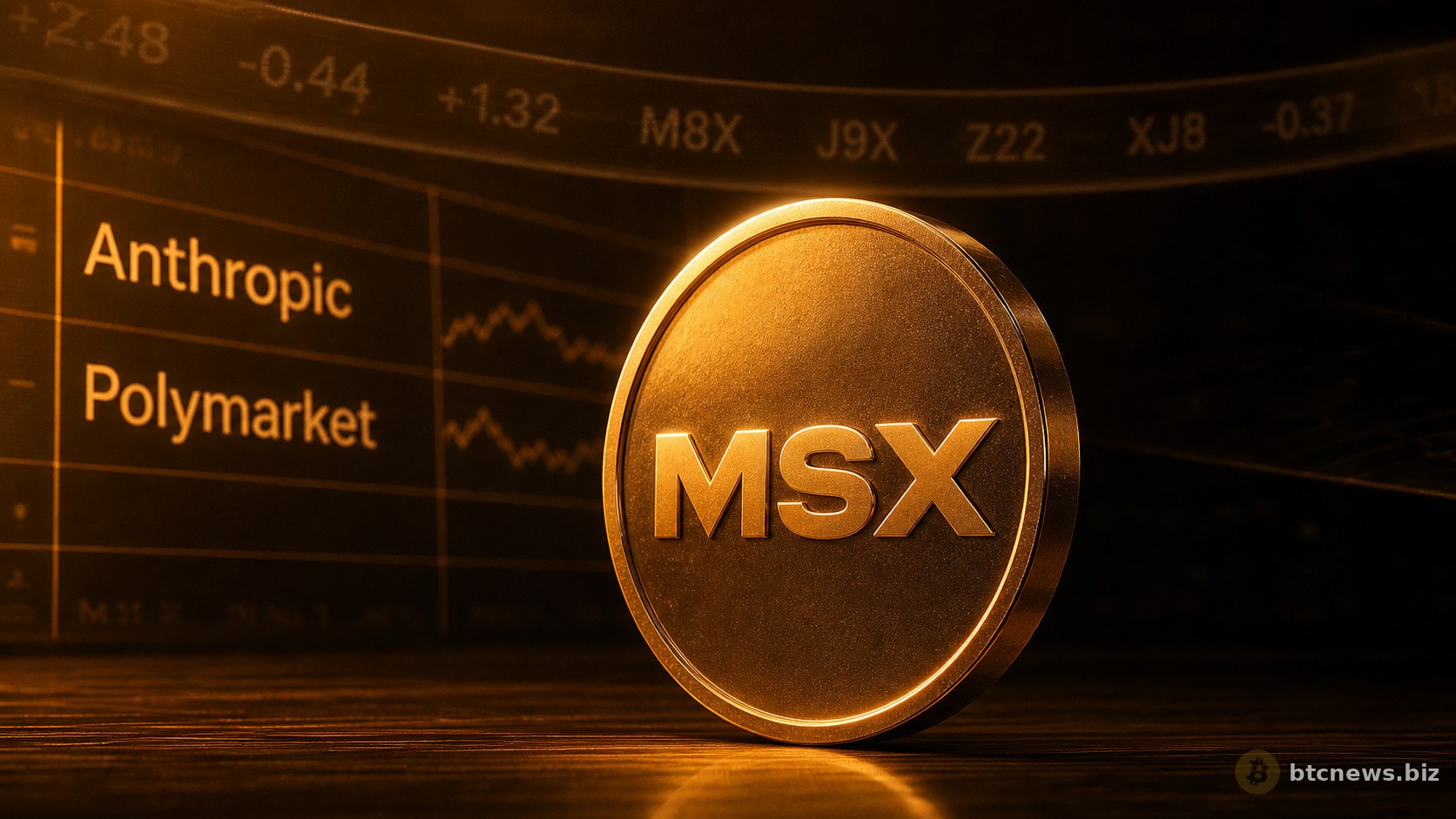
MSX Opens Pre-IPO Subscriptions for Anthropic and Polymarket on RWA Platform
MSX has opened pre-IPO subscriptions for Anthropic and Polymarket on its RWA platform, giving crypto investors USDT-priced exposure to two private companies tied to AI and prediction markets. Sounds clean enough. My take: the interesting part is not the branding, it is the access model. This pushes tokenized real-world assets into a corner of finance usually controlled by venture funds, brokers, and accredited investor networks. The catch has not changed. A tokenized route into Anthropic at a $950 billion valuation, or Polymarket at $15 billion, is still a high-risk bet with a cleaner-looking wrapper.
MSX said early participants can subscribe to Anthropic at 855 USDT and Polymarket at 152 USDT. Anthropic is priced at a $950 billion valuation. Polymarket is priced at $15 billion. MSX has not given the subscription window, individual caps, fees, settlement process, or expected token distribution date yet. That matters. In pre-IPO products, timing can decide whether a position behaves like an investment, a locked wager, or a claim nobody can price with confidence.
This is not just another RWA announcement. Most RWA writeups stop at “private markets are coming on-chain.” That is only half right. The real test is whether crypto rails can sell private equity exposure in a format ordinary users can understand and trust when the exit is still undefined. MSX’s first pre-IPO project involved Cerebras Systems, and the source says buyers who entered before the IPO and sold after it made a 300% return. That number will travel fast. It should. It will also pull in traders who have seen tokenized products look simple at entry and become awkward once settlement, rights, and liquidity show up.
The adoption signal is clear enough. MSX is using USDT as the subscription currency for Anthropic and Polymarket exposure, putting stablecoins in the middle of a private-market access product. For BTC and ETH investors, this is less about today’s candle and more about market plumbing. Why does this matter? Because if real-world assets keep moving on-chain, demand can spread beyond spot trading, DeFi leverage, and the usual exchange-token loop. RWA tokenization became one of crypto’s cleaner institutional stories in 2024, the same year BTC went through the January 10, 2024 spot ETF approval cycle and ETH picked up its own ETF narrative. Investors notice when access expands. They also notice when the product still looks rough around the edges.
Polymarket gives the story a sharper crypto angle. Prediction markets sit between trading and information. Regulation sits right next to them. The source describes Polymarket as a prominent decentralized prediction market platform, and tokenized exposure to Polymarket gives investors a private-market proxy for one of crypto’s more interesting use cases: markets that price probabilities in real time. I get the appeal. I also get the concern. Prediction markets, tokenized shares, pre-IPO claims, USDT settlement, and cross-border access all sit in areas where rules can shift faster than product pages.
Regulation is the stress test. The source says Anthropic and Polymarket both operate in fast-changing regulatory environments that could affect long term valuations and the tradability of tokenized shares. Crypto traders have heard this before. COIN has often traded as a liquid proxy for U.S. crypto regulatory risk, while BTC and ETH have reacted repeatedly to ETF, staking, and exchange enforcement headlines. Counter to the usual advice, “more access” is not always automatically bullish. The lesson from 2024 was blunt: new access can reprice a market quickly, but it can also put legal risk into a nicer package. MSX is selling exposure. It is not deleting the uncertainty.
Anthropic brings a different risk into the crypto stack. AI is still one of the strongest private-market stories, and the source says Anthropic is known for large language models and AI safety. A $950 billion valuation attached to a pre-IPO subscription at 855 USDT tells investors that a lot of demand is already in the price. No surprise there. AI and crypto have shared speculative capital before, especially when traders rotate out of BTC into higher beta themes after major market catalysts. Still, a tokenized claim on a private AI company is not the same as buying a liquid AI token. Liquidity matters. Settlement matters. Share rights matter a lot.
Polymarket’s 152 USDT subscription price and $15 billion valuation are smaller, but the signal may be louder for crypto-native investors. Prediction markets are closer to crypto culture than enterprise AI. Their users already think in odds and event risk. Reflexive narratives, too. If MSX can make that exposure tradable with credible settlement after an IPO or another liquidity event, the model could pull in traders who normally sit in BTC, ETH, stablecoins, and exchange tokens. Is this overkill for one pre-IPO product? No, because the mechanics here could become the template. If the settlement terms disappoint, that crowd will not wait around politely.
Investors should separate access from liquidity. I’ll be honest: the famous-company part is doing a lot of work here until MSX publishes the missing mechanics. MSX says it will provide the schedule, individual limits, fees, and settlement mechanics later. Until then, this is an announcement with Anthropic, Polymarket, Cerebras Systems, 855 USDT, 152 USDT, and one very large question mark around execution. The 300% Cerebras Systems return gives MSX a strong marketing hook, but it does not tell buyers what happens next time. Valuation uncertainty and thin liquidity are not side issues in pre-IPO exposure. They are the product.
What this means
This shows RWA tokenization moving past Treasury-style products and simpler collateral into riskier private-market exposure. That matters for crypto infrastructure, especially with subscriptions priced in USDT and tied to names like Anthropic, Polymarket, and Cerebras Systems. Yes, this slightly contradicts the “access is not enough” point above. Bear with me. For BTC and ETH, the near-term effect is narrative, not mechanical. Stronger RWA adoption supports the idea that blockchains can distribute financial assets, not just host speculative tokens.
The next MSX disclosure matters more than the headline. Watch for the subscription schedule, individual limits, fees, settlement process, and token distribution date. I would put settlement terms first, not last. Traders should also watch USDT liquidity around the offering, Polymarket-related sentiment, RWA token demand, and whether MSX confirms tradability terms. For broader crypto risk, keep BTC and ETH on the screen during the next major macro checkpoint. Tokenized private-market products still need risk appetite. If rates, liquidity, or regulatory headlines turn against high beta assets, an 855 USDT Anthropic ticket and a 152 USDT Polymarket ticket will not trade in isolation.