
















































us stock market crash, bitcoin dip tests BTC macro trade
“A sharp U.S. stock selloff and a Bitcoin break below $79k look like a leverage washout across risk assets, with crypto longs hit first.” The U.S. stock market lost almost $1 trillion in market value today, and BTC slipped below $79k after already losing $80,000. For crypto traders, “us stock market crash, bitcoin dip” is not just a search phrase. My take: the cleaner signal is leverage, not the headline price print. Coinglass showed LONG liquidations jump from more than $107,000,000 in 1 hour to more than $182m. Watch that part. Price fell. Leverage got cleared.
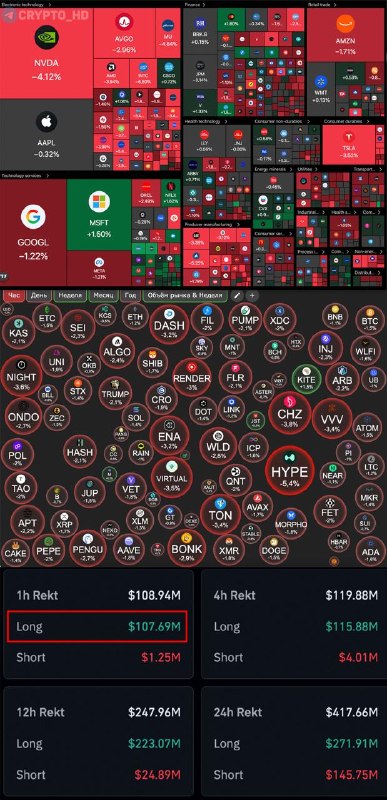
“The move started in U.S. equities, then hit Bitcoin, then showed up in rising long liquidations.” The source post gives a rough sequence: U.S. stocks shed almost $1 trillion, Coinglass reported more than $107,000,000 in LONG-position liquidations over 1 hour, Bitcoin traded below $80,000, and the update put long liquidations above $182m with BTC under $79k. Ugly tape. Crypto did not shrug off the stock selloff. Most guides say Bitcoin either acts like “digital gold” or it does not. That is too neat. On days like this, BTC looks more like a high-beta liquidity trade with a better myth attached to it.
“BTC below $79k during a U.S. stock selloff shows how tied Bitcoin still is to risk assets when volatility picks up.” The immediate crypto read is macro flow. BTC below $79k tells traders that Bitcoin is still wired into the same risk circuit as U.S. stocks when markets get jumpy. The source does not mention the Federal Reserve, rates, or inflation, so those are not facts to add here. Why does this matter? Because almost $1 trillion disappearing from U.S. equity market value in one session usually makes funds cut exposure first and explain it later. Leveraged crypto longs tend to get hit early. I would not overcomplicate it.
“The Coinglass liquidation jump points to forced selling, not ordinary spot selling.” The liquidation numbers matter because they show where the stress landed. Coinglass moving from more than $107,000,000 in 1 hour to more than $182m in long liquidations means this was not just spot holders selling BTC. Some traders were forced out. BTC under $80,000 was the first warning. BTC under $79k was the update that said momentum had gotten worse. That difference matters. A clean spot-led dip can settle down fast. A liquidation-led move often hunts for the next obvious level before buyers step in. We tried to read moves like this as simple “panic selling” before. It usually missed the mechanics.
“Bitcoin falling with U.S. stocks makes the safe-haven argument harder to defend today.” The second crypto angle is the safe-haven debate. Bitcoin bulls often frame BTC as an asset outside the traditional financial system, but this tape does not help that case in the short run. Gold is not mentioned in the source, so there is no clean BTC-versus-gold comparison to make. Still, the read is blunt. When U.S. stocks lose almost $1 trillion and BTC breaks below $79k, traders are not treating Bitcoin like automatic shelter. They are treating it like liquid collateral they can sell quickly. Harsh, but fair.
“The Jan-2020 Soleimani move was a different market shock than this equity-led selloff.” History helps. It also gets abused. During the Jan-2020 Soleimani strike, BTC gained 8% as geopolitical risk briefly supported the safe-haven story. Today looks different based on the source numbers. The pressure is coming through U.S. equity losses and crypto long liquidations, not a war headline or sanctions shock. Same old question, though: does BTC behave like an alternative reserve asset, or like Nasdaq leverage with a 24/7 order book? Counter to the usual advice, the answer can change by regime, not by slogan.
“BTC is still the main signal for broader crypto risk, even though the source only names Bitcoin and Coinglass.” For ETH, COIN, and the rest of crypto beta, the BTC level is the signal. That is analysis, not an extra reported fact. When BTC trades below $79k after LONG liquidations top $182m, crypto desks usually rethink exposure across majors. They also look at exchange-linked stocks. Perpetual futures get checked fast. ETH often follows BTC during macro liquidation moves. COIN usually reflects both crypto prices and stock market appetite. The source gives no ETH or COIN prices, so the clean read stays centered on BTC.
“The jump from $107m to $182m in long liquidations shows the stress spread after the first report.” The update matters more than the first number. A move from more than $107,000,000 in 1 hour to more than $182m in long liquidations shows stress kept building. Is this just a bigger number on a dashboard? No. Derivatives traders watch that kind of move because liquidations can feed on themselves. The market does not need a fresh headline every minute once trapped leverage starts getting forced out. Below $80,000, then below $79k, BTC gave sellers two clean markers.
“U.S. stocks dropped, Bitcoin broke lower, and long liquidations rose. That is enough to show crypto did not decouple today.” There are no quotes in the source, and making one up would weaken the piece. I’ll be honest: fake color is exactly how market notes start sounding less useful. The takeaway is cleaner without it. U.S. stocks lost almost $1 trillion. BTC broke below $79k. Coinglass long liquidations rose above $182m. Those facts are enough. Crypto did not split away from equities when risk appetite cracked.
What this means
“BTC still reacts hard to macro risk-off selling, and the next clues are price levels and liquidation data.” This move shows that BTC remains sensitive to macro risk-off flows when U.S. stocks sell hard. The ticker is BTC. The levels are clear: below $80,000 first, then below $79k after the update. Price matters, but it is not the only thing to watch. Yes, this slightly cuts against the clean safe-haven version of the BTC story. Bear with it. The next tell is whether long liquidations keep rising past $182m or forced selling fades and spot buyers absorb the move.
“For now, $79k and $80,000 are the near-term BTC lines to watch.” Watch BTC around $79k and $80,000 next, because those levels now mark the short-term fight. On May 16, 2026, traders should also watch the next Coinglass liquidation update, CME Bitcoin futures positioning, and the next FOMC-related rate signal. That should help separate a one-day leverage flush from a wider macro de-risking move. If BTC cannot reclaim $80,000, the safe-haven story stays under pressure. My read: $80,000 is the cleaner tell.