















































Prediction markets weigh hardware flaws against Nvidia’s quarterly earnings streak
Nvidia reports on May 20, and prediction markets are leaning hard toward another beat. Crypto traders should not shrug at that. AI chip demand has become part of the same risk trade that can pull BTC, ETH, and COIN around when investors feel like reaching for beta. If Nvidia clears expectations again, money may rotate back into high-beta tech and crypto. If the call gets stuck on hardware problems, the AI trade could wobble fast. That is the setup.

Nvidia will report first-quarter fiscal 2027 earnings next week. Polymarket users put the chance of a beat near 97%, while Kalshi traders also look upbeat across gaming and large data center segments. Wall Street expects $78.8 billion in revenue and earnings of $1.77 per share. Goldman Sachs analyst James Schneider thinks final sales could come in about $2 billion above the standard forecast. My take: the beat itself is almost the boring part now.
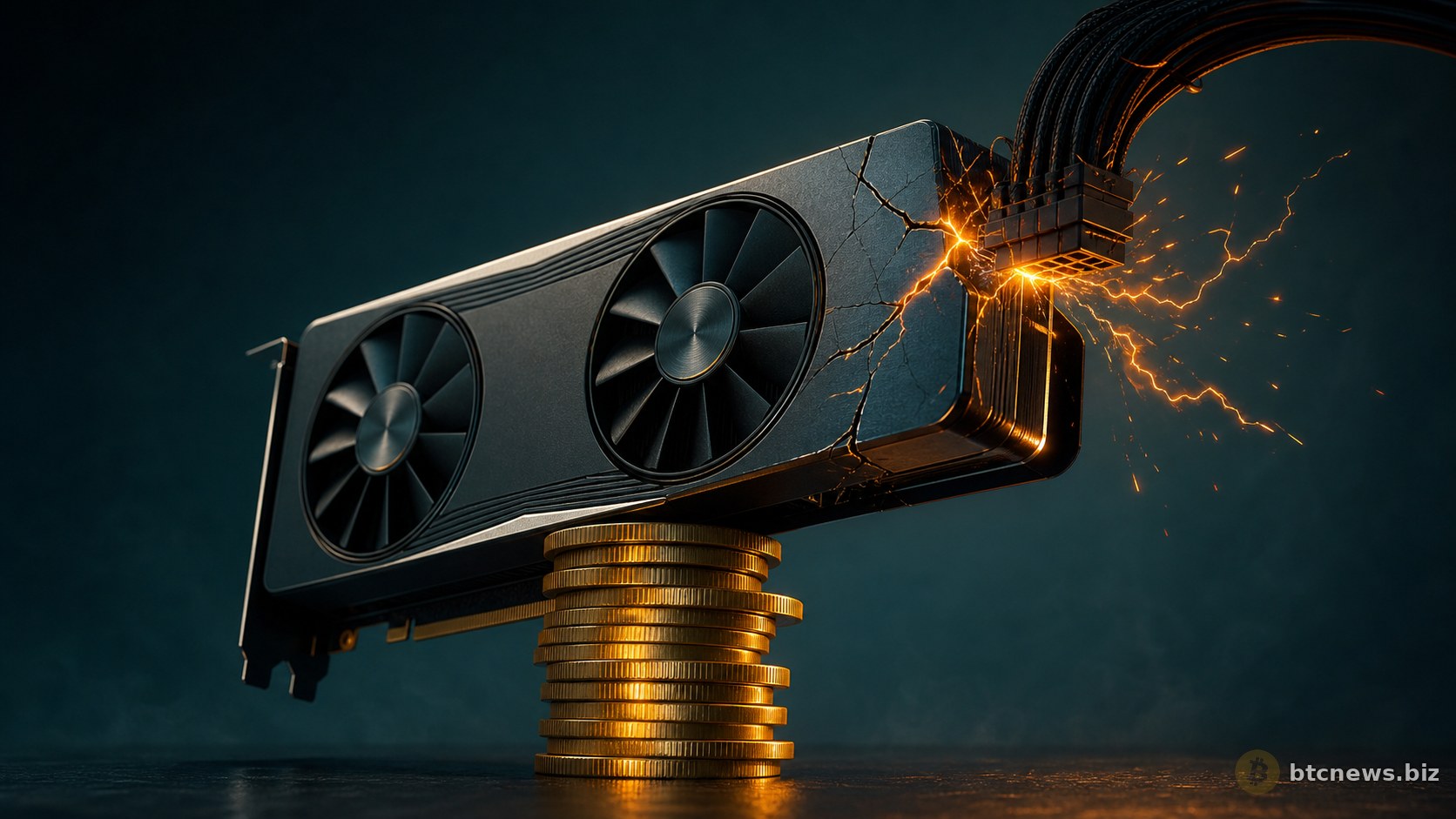
The weak spot is hardware. Nvidia released GeForce 595.71 drivers to fix earlier issues, but users are now reporting new problems. The update appears to limit electrical power draw on RTX 50 series GPUs, with Blackwell cards staying below 3,000 megahertz in tests. Some analysts think Nvidia may be trying to prevent overheating in the 12V-2×6 power connector. Nvidia has not explained the change. That silence matters.
For crypto, the first thing to watch is money flow. This is my read, not a new reported fact: BTC, ETH, and COIN often trade like long-duration risk assets when investors expect easier rates, strong tech earnings, or more liquidity. Why does this matter? Because Nvidia’s May 20 report now reaches well outside semiconductors. A clean beat could keep the “AI capex is still alive” trade intact, which tends to help appetite for BTC and ETH. A messy call points the other way.
Prediction markets can get the headline right and still miss the trade. I’ll be honest: that is the trap in this one. Polymarket’s roughly 97% beat probability says traders expect Nvidia to clear the earnings bar. It does not say whether guidance will land well. It also does not answer the margin question or the hardware question. Crypto traders know this pattern: BTC can rally into an event, then fade quickly if too many people were already leaning the same way.
The adoption story matters too. Nvidia’s four biggest data center chip customers, Alphabet, Amazon, Meta, and Microsoft, are set to spend more than $700 billion on equipment and infrastructure by 2026. That keeps AI compute near the center of corporate spending plans. It also drags crypto infrastructure into the same investor conversation around attention, power capacity, data center demand, and who gets paid for the buildout. To be clear, this is not direct crypto adoption. It is about the capital cycle around compute-heavy assets.
SanDisk’s quarterly revenue of $5.9 billion gives the market another demand clue, since memory chips sit next to graphics processors in the buildout. If GPU-linked demand stays healthy, investors may keep paying more for infrastructure stories. That matters for COIN as a listed crypto beta play. It matters for BTC as the broad liquidity gauge. ETH gets the software-platform read-through tied to developer appetite. Same event, different sensitivity.
Competition still makes the bullish case harder to keep clean. Google has TPU processors. Amazon has Trainium chips. Both are built for artificial intelligence workloads. Most Nvidia bull cases treat custom chips as a background risk. That’s only half right. If big buyers move more work to their own chips, Nvidia’s future revenue could face pressure. Server makers are adjusting too: Dell, HPE, Lenovo, and Supermicro cannot just sell Nvidia boxes. They also need software, consulting, cooling support, power planning, and credible deployment help.
Dell recently announced $9 billion in income from AI-optimized servers. Supermicro generated $10.2 billion in sales, with AI graphics processor-based platforms making up more than 80 percent. So the market is not pricing only Nvidia chips. It is pricing the whole AI buildout: power, cooling, networking, software, and the messy service layer around all of it. Nvidia still has a real edge in graphics hardware, Cuda, and data center networking. I would not hand-wave that away.
Crypto investors should not treat Kalshi or Polymarket odds as a clean trading signal. Counter to the usual advice, the public probability may be less useful than the reaction after the number hits. Even the source flags the problem: casual bettors usually do not have private information that Nvidia’s share price has missed. Supply-chain specialists and large investment firms probably matter more here. In crypto terms, the lesson is familiar. Public odds show consensus. Price action shows who is actually positioned.
What this means
Nvidia’s May 20 earnings call will test whether the AI growth trade can look past real hardware friction. Is this overkill for crypto traders? No, not when BTC, ETH, and COIN keep reacting to the same liquidity and growth cues that move high-beta tech. If the numbers and the company’s $60.6 billion cash reserve calm worries about RTX 50 series power limits, BTC and ETH could get a lift from renewed risk appetite. If the call gets pulled into Blackwell performance issues, supply-chain limits, or chip substitution from Google TPU and Amazon Trainium, the AI-led risk trade could lose momentum.
Watch May 20 first. Then watch BTC around major technical levels instead of relying only on prediction-market odds. Yes, this slightly contradicts the obsession with the 97% beat probability above; bear with me. For COIN, the question is whether equity traders keep buying high-beta growth after Nvidia reports against $78.8 billion in expected revenue and $1.77 in expected earnings per share. For ETH, the read-through is developer and infrastructure sentiment. The clean signal is simple enough: strong numbers with confident guidance, or strong numbers buried under hardware questions.