















































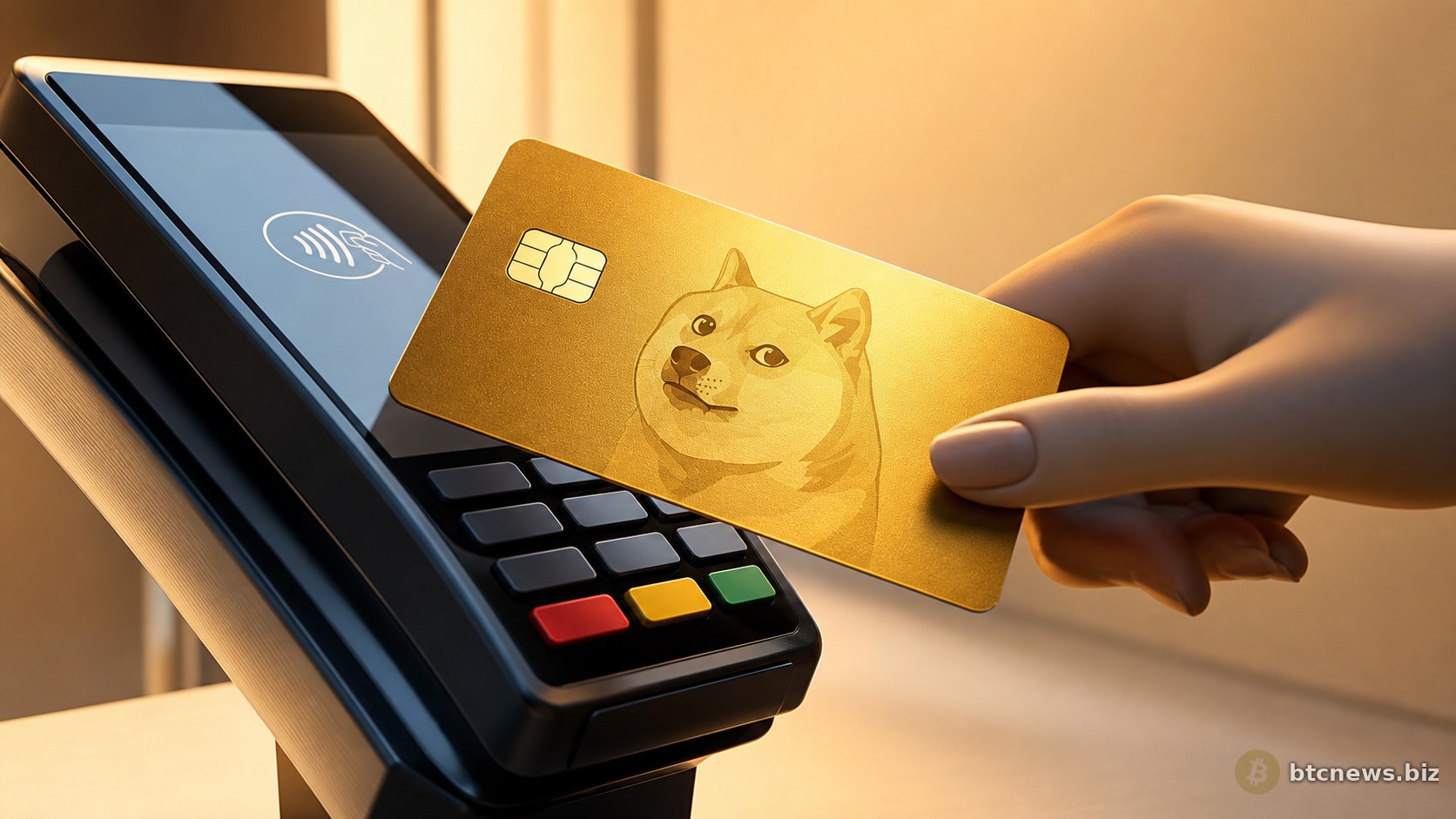
Revolut Wants to Take Dogecoin Mainstream With Its New Physical Payment Card
Revolut is trying to drag Dogecoin out of the meme corner and into the checkout line. The U.K. fintech said Monday that its Dogecoin-themed physical debit card will launch first in the United Kingdom and the EU, excluding Hungary, Switzerland and Portugal. My take: the plastic itself is mostly theater. The payment rails are the actual story. Revolut is plugging DOGE spending into the Visa (V) and Mastercard (MA) networks people already tap without thinking.
The card will work anywhere Visa (V) and Mastercard (MA) are accepted, according to Revolut’s Monday announcement. Revolut also said on X that users will not pay extra exchange fees on purchases. Clean headline. Messier reality. Crypto card payments still use the exchange rate at the moment of purchase, and local tax rules may apply. Why does this matter? Because a Dogecoin card still lives inside the same awkward crypto payment machine: conversion timing, taxable disposals, accounting records and the strange feeling of spending a token that might pump tomorrow.
DOGE has always run on culture before utility. That is the story, or close to it. Most guides would stop there and call this adoption. That’s only half right. A physical debit card does not suddenly turn Dogecoin into BTC, ETH or a serious settlement network. But it does give DOGE a familiar consumer shape. Pull out a card. Tap it. Leave. Revolut is trying to make a meme coin feel like a normal payment option instead of something people refresh on a chart. Investors now have to decide whether that creates real DOGE activity or just a Monday-to-Friday branding spike.
The crypto card market is already crowded. The source notes that Coinbase (COIN) and Crypto.com have expanded their own card programs as companies try to connect digital assets with everyday spending. No surprise there. In the last two crypto payment cycles, the same bottleneck kept showing up: people buy tokens, park them somewhere and rarely use them like regular money. Cards are the shortcut. They ride existing payment networks instead of asking every merchant to understand wallets, blockchains, confirmations or DOGE-denominated settlement.
For markets, this is an adoption story. It is not a macro lifeline. BTC still tends to move with liquidity, rates and risk appetite. DOGE can run on retail attention, platform access, exchange placement and whatever the internet decides to care about that week. Revolut’s launch does not change Federal Reserve policy, inflation expectations or the risk trade that usually drives BTC and ETH over longer stretches. It does give DOGE another distribution channel. For this coin, visibility matters more than many serious investors like to admit.
Regulation is sitting just under the rollout. Revolut said crypto card payments may create tax obligations depending on local rules. That sentence is easy to skim. Don’t. Paying with crypto through a card can feel clean at checkout, but taxable disposal rules are still a headache in many places. Is this overkill for a small coffee purchase? Maybe economically, yes. On the paperwork side, no. For DOGE, BTC and ETH holders, the practical issue is simple: spending crypto may feel like using cash, but the records can look a lot more like trading.
Revolut’s wider expansion makes the card worth watching. In 2025, the company added Polygon to its app, letting users send remittances, stake POL tokens and make in-app crypto card payments. In March, Revolut received approval to launch a fully licensed bank in the U.K. It has also applied for a de novo banking license in the U.S. Put together, those moves suggest Revolut is folding crypto into banking services instead of leaving it as a side menu item. I’ll be honest: that matters more than the Dogecoin logo.
That matters for listed crypto names too. Coinbase (COIN) and Crypto.com have pushed cards because payments give them a reason to stay in a user’s financial life after the trade is over. Visa (V) and Mastercard (MA) still matter because merchants already accept their networks at huge scale. Counter to the usual crypto-native advice, the boring rails may be the advantage here. If Revolut makes DOGE spending feel normal in the United Kingdom and the EU, excluding Hungary, Switzerland and Portugal, exchanges and fintech apps still trying to make crypto useful outside speculation will feel the pressure.
One detail is easy to miss: the Dogecoin branding is loud, but the infrastructure is ordinary. The card uses Visa and Mastercard rails. It is not a new merchant standard built around Dogecoin. That limits the technical story, but it also removes a lot of friction. We have seen this pattern before with crypto products that look radical on the surface and conventional underneath. I would treat this as a distribution test. If people actually spend through the card, DOGE gets a better payments argument. If they frame it, post it and never use it, the market impact probably fades fast.
What this means

Fintech firms still think crypto payments have room to grow in 2026, even after years when adoption mostly meant trading. DOGE is the headline ticker, but the read-through also touches BTC, ETH, COIN, Visa (V) and Mastercard (MA). Payment access is becoming a product feature, not a separate crypto experiment. Yes, this slightly contradicts the skepticism above. Bear with me. A product can be overhyped and still signal where platforms are allocating attention. Watch whether Revolut expands beyond the United Kingdom and the EU exclusions named Monday. More important, watch whether DOGE volume stays elevated after launch or slips once the announcement buzz is gone.
The next thing to watch is not just the card launch date, which Revolut has not specified beyond the first markets. Watch DOGE liquidity when the card actually becomes available. Watch Coinbase (COIN) commentary on card programs in later updates. Watch local tax guidance too, because that could determine whether people use the card casually or decide it is more trouble than it is worth. What is the cleanest trading signal? DOGE holding higher volume after launch instead of fading after Monday’s news cycle.
FAQ
Q: What is Revolut’s new Dogecoin payment card?
A: It is a physical debit card that lets users spend Dogecoin (DOGE) at merchants that accept Visa and Mastercard.
Q: Where will the Dogecoin card be available first?
A: Revolut said the card will launch first in the United Kingdom and the EU, excluding Hungary, Switzerland and Portugal.
Q: Will there be additional fees for using the Dogecoin card?
A: Revolut said on X that users will not pay extra exchange fees when making purchases. The payment still uses the exchange rate at the time of the transaction.
Q: What are the tax implications of using the Dogecoin card?
A: Revolut said crypto card payments may create tax obligations depending on local rules. Users may still have reporting duties even if the payment feels like a normal card purchase.
Q: How does this card affect Dogecoin’s adoption?
A: The card puts Dogecoin spending inside the Visa and Mastercard networks, which could make DOGE feel more like a payment option and less like a token people only trade.
Q: How does Revolut’s card compare to other crypto cards?
A: Coinbase (COIN) and Crypto.com also have crypto card programs, according to the article. Revolut is joining the same push to connect digital assets with everyday spending.
Q: What does Revolut’s broader expansion mean for this card?
A: Revolut has added Polygon support and is pursuing banking licenses in the U.K. and U.S. That gives the Dogecoin card more context: crypto is becoming part of its banking strategy, not just a standalone feature.
Q: What should traders watch for after the card’s launch?
A: Watch DOGE liquidity and trading volume after the card becomes available. Also watch Coinbase card commentary and any local tax guidance on crypto card spending.
Q: Does the Dogecoin card use a new payment network?
A: No. It uses Visa and Mastercard networks rather than a new Dogecoin-specific payment standard.
Q: What is Revolut trying to do with this Dogecoin card?
A: Revolut is trying to make DOGE spending feel ordinary. The bet is that a familiar card format can move Dogecoin closer to payment use and further from pure speculation.