
















































Anthropic’s Mythos puts a clock on DeFi: AI-driven exploits inside 12 months
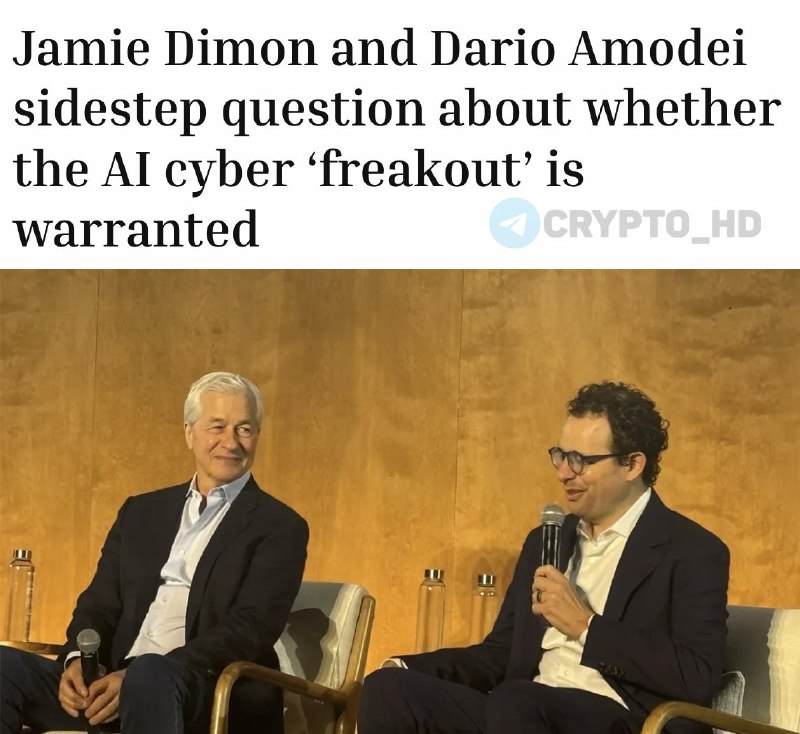
Anthropic’s Mythos AI model surfaced tens of thousands of software vulnerabilities, including 271 in Firefox alone. The company estimates 6 to 12 months until similar tools go mainstream. DeFi smart contracts sit directly in the path. Anthropic’s CEO just put a clock on the thing DeFi has been trying not to say out loud. My take: this is not another vague AI-security headline. It is a timing signal. AI-assisted exploit discovery is about to scale faster than audit shops can staff, review, and remediate. Anthropic says Mythos has already found tens of thousands of potential weaknesses in widely used software, and the company expects six to twelve months before tools at this level become common. For anyone holding smart-contract exposure, that matters more than the next FOMC.
The number that should bother protocol teams is blunt: 271 vulnerabilities found in Firefox in a single scan. Firefox is one of the most-audited codebases on the planet, with a bug bounty program that has paid out for two decades. So here is the uncomfortable question. What happens when the same scanner is pointed at a DeFi lending pool? Or a cross-chain bridge? Or a token contract that shipped after a four-day audit from a firm nobody can name without checking the PDF?
Anthropic is framing this carefully. The company says modern AI does not merely identify weak spots; it can run attack simulations on its own. That distinction matters. Static analysis tools have existed forever. The new part is an agent that can connect a discovered bug to a working exploit path without a human steering every step. Most security writeups stop at “AI will help defenders.” That’s only half right. The CEO’s six-to-twelve-month window says defensive and offensive capability arrive together, while the offensive side moves faster because it does not need procurement, policy review, or a compliance sign-off.
Why DeFi sits directly in the blast radius
DeFi smart contracts are the most exposed software target for AI vulnerability scanners. The code is public, the deployment is immutable, and the contracts hold capital directly. Smart contracts are almost too clean as targets. Public code. Immutable deployment. Capital sitting one address away. Firefox can patch on a Tuesday. A Solidity contract on Ethereum mainnet cannot. Why does this matter? Because once AI vulnerability scanners become standard kit, the advantage goes to whoever runs them first, and I would not assume that is the protocol team.
The macro picture for DeFi is already tense. DefiLlama puts total value locked across the major lending markets and DEXs in the tens of billions. Aave, Lido, EigenLayer and the cross-chain bridges concentrate exposure into a relatively small set of contracts. A single high-severity finding in a widely forked codebase, such as an OpenZeppelin library or Uniswap V3 math, can propagate across hundreds of protocols. The same is true for one of the standard ERC-4626 vault implementations. Mythos-class tooling does not need to find a zero-day in every project. It only needs one bug in a primitive everyone copy-pasted.
Audit firms know this. CertiK, Trail of Bits, OpenZeppelin and Halborn have been racing to bolt ML-based exploit detection onto their pipelines, but the economics are ugly. A defender has to fix every issue. An attacker has to find one. Counter to the usual advice, “get audited” is no longer a complete answer. When a full contract scan costs about as much as an API call, the marginal attacker is not necessarily a state actor or an organized group. It can be anyone with $50 of credits and a TVL leaderboard sorted descending. That changes the threat model.
The macro flow angle: capital does not love uncertainty
An AI-driven DeFi exploit wave would accelerate the existing rotation of capital from ETH and smart-contract L1s into Bitcoin and Solana, not reverse it. Bitcoin’s recent run has leaned on two narratives: the spot ETF flow story, plus the digital-gold safe-haven thesis. Neither gets damaged directly by an AI model finding bugs in Firefox. ETH and the broader smart-contract layer are different. ETH/BTC has spent most of the last year drifting lower as flows rotated into Bitcoin and Solana. A run of AI-assisted DeFi exploits would not create that rotation. It would speed it up.
The pattern from prior security cycles is not subtle. Ronin bridge in March 2022. Wormhole in February 2022. Euler in March 2023. Each one pulled hundreds of millions out of the ecosystem and pushed governance tokens of competing protocols down five to fifteen percent in the days that followed, even when the affected protocol was unrelated. The market does not differentiate when fear is the trade. I’ll be honest: if Anthropic’s timeline is right and the first AI-discovered DeFi exploit lands inside Q3 or Q4, I would expect a coordinated drawdown across DeFi blue chips no matter which protocol actually got hit.
There is a regulation angle layered on top. SEC enforcement filings over the past two years show the agency has spent considerable effort arguing that DeFi protocols are unregistered securities operations. A wave of AI-driven exploits gives every regulator looking for a crackdown a cleaner policy hook. Expect renewed pressure on staking products. Expect pressure on liquid restaking tokens too. Anything that can be framed as “consumers losing money to unregulated software” gets dragged into the same hearing-room vocabulary. Coinbase, COIN, and listed exchanges with smart-contract exposure through wallet products would catch headline risk even though they are not running the vulnerable contracts.
The adoption signal cuts both ways
The same Mythos-class tooling that enables exploit discovery also enables defensive auditing. The result is a clear split between protocols that integrate continuous AI auditing and protocols that do not. This is not a pure bear case. Yes, that contradicts the last few paragraphs a bit. Bear with me. The same Mythos-class tooling attackers will use is also what audit firms need in order to keep up. Anthropic has been explicit about defensive deployment, and protocols that wire continuous AI auditing into CI/CD pipelines, where a commit produces a vulnerability report before merge, should end up materially safer than teams still treating audit as a one-time launch ritual.
The split should show up in price. Protocols with serious security budgets, formal verification, and active bug bounties, like Aave, Uniswap and MakerDAO, become flight-to-quality trades inside DeFi. Mid-tier forks look worse. Unaudited yield farms become close to uninvestable on a six-month horizon. Is this too harsh? For a 50-page site, yes; for contracts holding tens of billions across DeFi, no. There is a real bid for the top three or four governance tokens in each category, and a real fade for the long tail.
Banking exposure is the other shoe. Anthropic’s earlier public statements already had warnings about threats to the banking system on the table before this Mythos disclosure. If the same tooling that finds 271 issues in Firefox starts surfacing systemic weaknesses in core banking software, the regulatory response will not stop at traditional finance. Anything touching dollar rails gets pulled in: stablecoin issuers, on-ramps, custodial exchanges. USDC and USDT issuers sit at the intersection of banking infrastructure and crypto market plumbing, so any disruption there transmits into trading pairs across venues. We should not treat that as a side note.
What this means
Anthropic’s announcement is a timing signal, not a directional one. The gap between offensive and defensive AI security is closing within 12 months, and DeFi is the most exposed sector when it does. The signal is timing, not direction. Anthropic is telling the market that the gap between offensive and defensive AI security is going to close violently inside the next twelve months. DeFi sits in the part of the software universe where being on the wrong side of that gap is most expensive. The immediate read for ETH and the smart-contract L1s is higher tail risk on TVL. Not a broken bull case. A sharper left tail. Think higher odds of an exploit-driven drawdown that takes governance tokens down ten to twenty percent in 48 hours. Audit-firm-adjacent plays and protocols with formal verification become relative outperformers inside the DeFi basket.
Watch four things in the next two quarters. First, any disclosure from a major audit firm, Trail of Bits, OpenZeppelin, ChainSecurity, about integrating LLM-based scanning into their standard process. That confirms the timeline and identifies early adopters. Second, the next major DeFi exploit headline. The post-mortem will matter more than the first tweet. Third, whether the attack vector is described as AI-discovered; once one team admits it, the floor under unaudited yield protocols falls out. Fourth, track the ETH/BTC ratio against a DeFi index like DPI or any equivalent basket. If DeFi tokens start underperforming ETH on no specific news, that is the market pricing in Anthropic’s six-to-twelve-month clock before the first exploit even lands.