
















































Michael Saylor’s MicroStrategy Stock Decline: A Warning for Crypto Bulls
Michael Saylor, probably the loudest Bitcoin bull in public markets, may be closing in on a rough milestone: a second 99% collapse in his company’s stock. I’ll be honest: that number still feels absurd even after years of crypto drawdowns. This is a stock story on paper, but crypto investors should pay attention, especially anyone using MSTR as a backdoor Bitcoin trade or a quick read on Wall Street’s mood toward BTC.
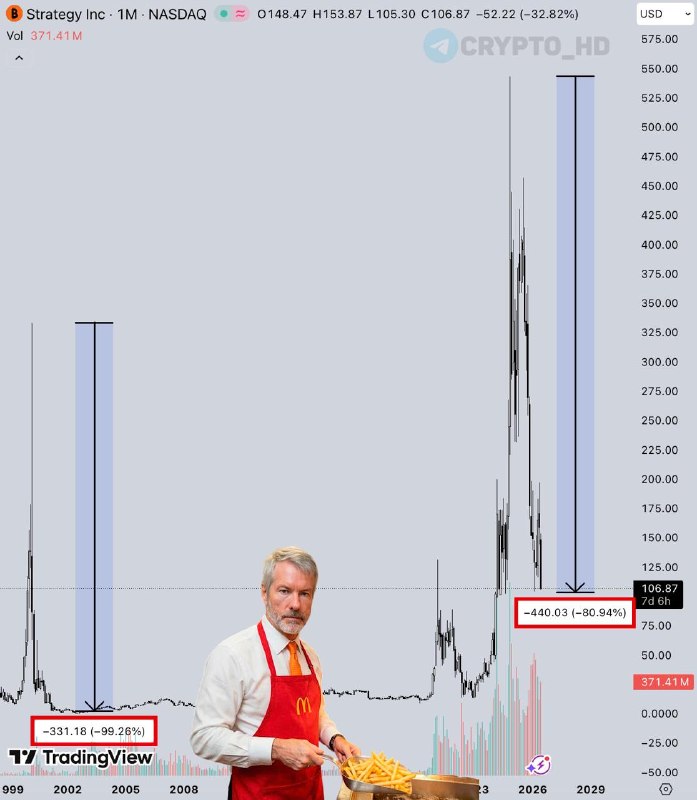
The point is blunt. Huge concentrated bets can wreck people. Crypto traders know this, or at least they say they do after the candle has already gone vertical in the wrong direction. Saylor’s Bitcoin strategy turned MicroStrategy into something close to a public Bitcoin proxy before spot Bitcoin ETFs made that trade easier and cheaper. Some investors admired the nerve. Others looked at a software company’s balance sheet loaded with Bitcoin and debt and thought, this could get ugly. My take: a second 99% drawdown would make that risk impossible to dress up as visionary patience.
The frustrating part is that MSTR is not Bitcoin. Markets often behave as if it is anyway. Why does this matter? Because sentiment trades on shortcuts, not footnotes. We saw that in 2022, when Bitcoin fell through the bear market and MSTR often looked even worse. In June 2022, when BTC dropped below $20,000, MSTR was already well below its highs. Then came the talk about margin calls and forced selling. Some of it was overblown. Some of it was useful panic fuel. Fear usually moves faster than the facts.
The macro backdrop matters too, although people sometimes overstate it like it explains every tick. When the Fed sounds hawkish and inflation keeps investors on edge, speculative assets get less room for error. MicroStrategy sits in a strange spot: part software company, part Bitcoin treasury, part leveraged market bet, part public-market mood ring. Higher rates make capital more expensive. They also make investors less forgiving. Counter to the usual advice, watching the stock can sometimes tell you more about risk appetite than watching a tidy on-chain chart. If traders see MSTR as a risky Bitcoin trade, a sharp fall in the stock can look like a broader retreat from risk. BTC and ETH can get pulled into that selling even when nothing has changed on-chain. Strong dollar periods and rising bond yields have already hurt crypto funds. A bad run for one of the best known crypto-linked stocks could add to that pressure.
What this means
A possible second 99% drop in Saylor’s company stock is a reminder that conviction does not erase leverage. It just makes the story louder. MicroStrategy owns Bitcoin, yes, but it also has shareholders, debt, market psychology, and a stock price that can wander far away from the clean Bitcoin bull case. Most guides say Bitcoin exposure is Bitcoin exposure. That’s only half right. Institutional crypto adoption is broader than it was in 2020 or 2021, but the market still reacts when one of its most visible names starts bleeding. A deep MSTR selloff could hurt crypto sentiment and weigh on BTC, along with other listed crypto names like COIN.
Traders should keep an eye on MSTR, especially when volatility is already high. Is it a perfect signal? No. It is a useful one, and that is enough. Bitcoin’s $60,000 area matters here too. A clear break below that level could point to a wider risk-off move, not just a MicroStrategy problem. FOMC meetings also matter because even a small shift in rate expectations can change how investors price speculative assets. Yes, this slightly contradicts the clean “MSTR is not Bitcoin” point above. Bear with me: in stressed markets, clean distinctions get ignored first. The stock, the coin, and the macro tape keep reacting to each other. Sometimes too loudly.