
















































Russia weighs crypto experience for qualified investor status
Russia’s central bank wants cryptocurrency trading experience to count when someone applies for “qualified investor” status. Small change. Real consequences. Crypto experience would move closer to traditional market experience, at least when regulators decide whether a person understands risky investments. My take: this is not Russia suddenly embracing crypto. It is the CBR admitting that trading BTC or ETH teaches a person something about risk that a regulator can measure.
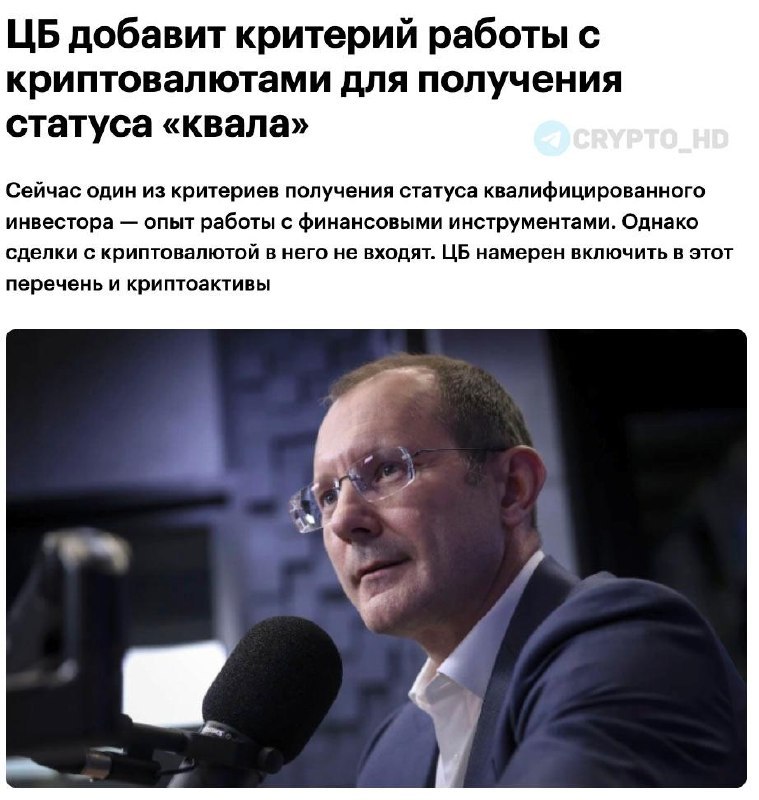
The Central Bank of the Russian Federation (CBR) is behind the proposal. Today, only experience in traditional financial markets counts toward the status. Vladimir Chistyukhin, Deputy Chairman of the CBR, gave the basic argument: if someone has already dealt with a high risk instrument like cryptocurrency, that should matter when deciding whether they can handle other risky products. Most guides would frame this as “crypto adoption.” That’s only half right. It is also a gatekeeping decision. Anyone who has lived through a few crypto cycles has probably learned, painfully, about leverage and volatility. Terrible timing too. RBC reported that the proposal will be part of a wider package of Russian crypto market bills. Chistyukhin also said the draft law “On Digital Currency and Digital Rights” could be adopted by the State Duma before July 26.
Russia has spent years trying to decide what to do with crypto. The official tone has moved between restriction and cautious acceptance, sometimes in the same political season. This proposal is more practical than dramatic. If the CBR counts crypto experience, it treats digital asset trading as a real financial activity, while still labeling it risky. Why does this matter? Because markets usually price rules better than warnings. The SEC vs. Ripple case is the clean example: regulatory uncertainty can hold an asset back, and XRP spent long stretches range-bound while BTC moved above $61.4K earlier this year. Clear rules do not guarantee a rally. They just remove one source of drag. The opposite showed up when major firms such as BlackRock filed for spot Bitcoin ETFs and BTC often jumped 3-5% around the announcements.
There is also an adoption signal here, but keep it in proportion. I’ll be honest: calling this a major pro-crypto pivot would be too generous. Russia is not adding Bitcoin to state reserves. It is not telling companies to put ETH on their balance sheets. This is smaller, bureaucratic, and still meaningful. Recognizing crypto experience for investor status means the CBR does not see the market as just some internet casino. It sees a volatile investment area where experience counts. Counter to the usual advice, the boring paperwork may matter more than the speechmaking. Signals like this can affect sentiment, especially when they come from a national regulator. El Salvador’s Bitcoin legal tender move was much bigger and much messier, but it kept BTC in conversations about national finance. Russia’s proposal is nowhere near that. Still, it suggests crypto is being worked into the country’s financial rulebook, which could draw more domestic capital toward BTC, ETH, and regulated local platforms.
What this means
Russia appears to be moving away from blanket suspicion and toward a risk based model for crypto. The message is not “crypto is safe.” It is closer to: “If you have handled this market, that experience may count.” That distinction is dry, but important. It could help some Russian investors qualify for a wider set of financial products. Is this explosive for BTC? Probably not. The first market effect would likely be slow: more domestic interest, more exchange activity, deeper local liquidity for major assets like BTC and ETH, and a clearer compliance path for platforms that want to stay inside the rules.
The date to watch is July 26, when the “On Digital Currency and Digital Rights” bill may come before the State Duma. If it passes, investors will get a clearer view of how Russia plans to classify and supervise crypto activity. Yes, this sounds like it contradicts the caution above. Bear with me. The headline is not the trade; the criteria are. Watch how much crypto trading experience counts, how it is verified, whether it opens access to specific investment products, and which local platforms receive formal approval. My read: if the rules give institutions a cleaner path into digital assets, BTC and ETH could react. Russian exchanges or crypto projects could benefit too, but only if approval is specific rather than symbolic.