















































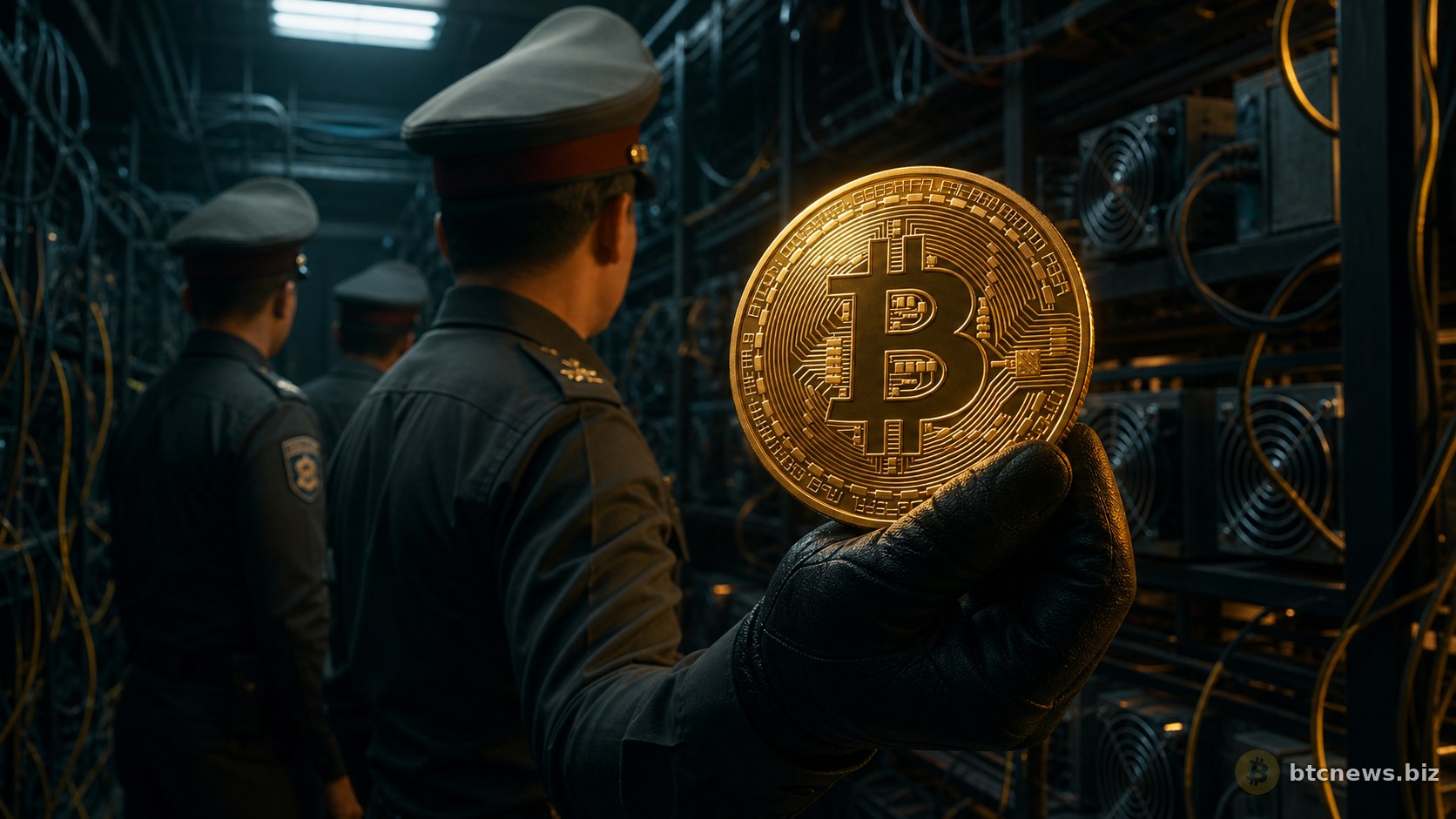
Thai authorities bust illegal Bitcoin mining ring, seize equipment worth thousands
Bitcoin miners keep running into the same problem: power is political. Thai authorities recently shut down illegal Bitcoin mining operations and seized equipment tied to alleged electricity theft. I’ll be honest: I would not trade this as a BTC price shock by itself. But I would not ignore it either. Mining raids can dent confidence in hash rate, pressure miner margins, and remind the market that Bitcoin still carries a regulatory premium.
Illegal miners often try to make the math work by stealing power or hiding how much they use. The Thai reports are not vague. Nan Province involved more than $80,000 worth of alleged stolen electricity. Pathum Thani involved 63 mining rigs and an estimated loss of more than 11 million baht, or about $327,000. Chon Buri brought 996 rigs tied to reportedly tampered meters. The Department of Special Investigation case was larger again: 3,642 mining rigs, plus about 19 million baht in cash and bank deposits. That is not hobby mining in a spare room.
Bitcoin’s price does not move only on block rewards and ETF flows. It also moves on a duller question: can miners keep operating without making governments angry? China answered that in 2021. BTC traded near $58,000 in early May 2021, then fell toward $30,000 by May 19, 2021, as China cracked down and miners scrambled to relocate. Thailand is not China in hash rate. Most guides blur that distinction. That’s only half right. This is an alleged power theft case, not a national mining ban, but the policy signal is still blunt: governments are more likely to tolerate miners who pay for electricity and accept inspections. Grid stress is where patience ends.
Regulatory headlines can hit BTC, COIN, and listed miners before anyone reads the fine print. Spot Bitcoin ETFs began trading in the United States in January 2024 after years of pushback from regulators. BTC was near $46,000 at launch, then dropped to around $38,500 later that month. Good news, bad reaction. We have seen that movie. Illegal mining headlines work differently, though. They do not create direct selling pressure the way ETF outflows can, but they do hand regulators a cleaner argument for local permits, utility reports, financial tracing, and tougher inspections.
For Bitcoin traders, energy costs and interest rates still matter a lot. Miners are basically energy businesses with BTC exposure. Why does this matter? Because a miner’s spread can vanish even when Bitcoin itself is technically working as designed. When electricity gets more expensive or harder to access, weaker operators start losing the gap between power input and Bitcoin output. During the 2022 rate hike cycle, BTC fell from its November 2021 high near $69,000 to below $16,000 in November 2022 as liquidity left risk assets. That lesson still applies. If power costs rise, rates stay tight, and grid scrutiny increases at the same time, mining stocks can weaken before spot BTC fully reacts.
The Thai cases sound organized, not amateur. Reports point to remote operation, modified meters, and locations picked to avoid easy scrutiny. My take: that detail matters more than the headline number. Large scale Bitcoin mining already has a public relations problem around electricity use. Add fire hazards. Add overloaded wiring. Add worse service for paying customers. Suddenly the debate is not only about crypto speculation; it is about public safety, and that argument is easy for regulators in Thailand, the United States, or anywhere else to sell.
The immediate BTC impact should be limited unless this turns into a wider Southeast Asia enforcement push. The numbers are serious locally: more than $80,000 in alleged stolen electricity in Nan Province, more than 11 million baht in Pathum Thani, 996 rigs in Chon Buri, and 3,642 rigs in the DSI case. Still, those figures do not point to a network level shock. Is this overkill for traders to watch? No, but it is not a panic signal either. BTC usually absorbs isolated mining raids unless they show that a major jurisdiction is changing the rules for legal operators too.
The adoption read is messier. Bitcoin wants sovereign and institutional legitimacy, especially after the January 2024 ETF launch. Cases like this hand skeptics an easy counterargument: adoption without compliance can look like infrastructure abuse. Counter to the usual crypto defense, “the network kept running” is not the whole answer here. Ethereum is less exposed to this specific issue after its September 15, 2022, move to proof of stake, which ended proof of work mining. Bitcoin kept the energy link by design. That link is part of its security model. It is also where the politics gets uncomfortable.
The source material does not need dramatic quotes to make the point. The numbers do enough work by themselves: 63 rigs in one place, 996 in another, 3,642 in the largest reported DSI operation, and about 19 million baht in cash and bank deposits. For traders, the point is not that Thailand suddenly controls BTC’s price. It is that mining regulation remains one of Bitcoin’s less glamorous risk channels. Boring, yes. Ignorable, no.
What this means
Future fights over Bitcoin mining may be less about ideology and more about electricity bills. For BTC, the issue is not one Thai headline. It is whether the market starts applying a mining risk discount when price pushes toward big levels like $60,000, $70,000, or the prior cycle high near $69,000 from November 2021. Yes, this contradicts the calmer tone above a bit. Bear with me. A local raid can be small in hash rate terms and still useful as a preview of how regulators frame the next fight. If more countries describe illegal mining as grid theft and a safety problem, listed miners and BTC linked sentiment may react before spot BTC does.
Traders should watch whether leveraged money shrugs this off. The next CME Bitcoin futures positioning update on Friday, May 22, 2026, should show whether leveraged traders are ignoring mining risk headlines or trimming exposure. The next FOMC decision on June 17, 2026, also matters. If rates stay high, energy heavy miners face a tougher cash flow test. The price level I would watch is BTC’s old cycle high near $69,000. Holding above it would support the institutional adoption story. A rejection there would make regulatory and energy headlines, including the ones from Thailand, harder to dismiss.