















































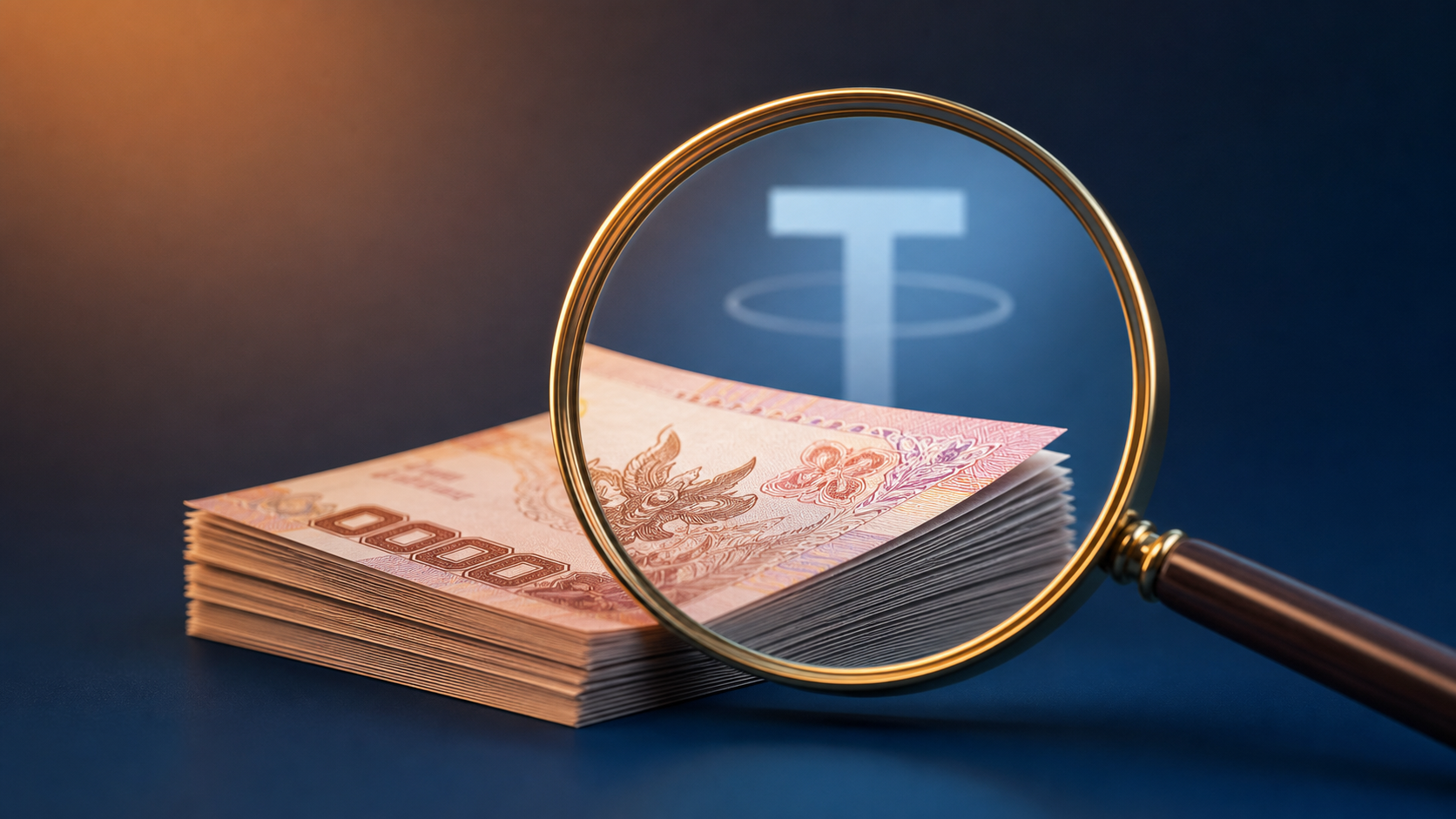
Thailand’s Cash Crackdown: New Rules Squeeze Crypto Liquidity, Tether Under Watch
Thailand’s central bank is making large cash deposits harder to slip through without questions. Starting in Q4 2026, anyone depositing 5 million baht, about $150,000, or more in cash will need to declare and verify where the money came from, according to the Bank of Thailand. My take: this is not a small paperwork tweak. For crypto, it matters because the same push puts stablecoin activity under a brighter light, especially Tether. Why does this matter? Because cash-to-crypto flow is often where liquidity starts before it shows up as USDT, Bitcoin, or Ethereum demand. Regulators seem to be watching that doorway much more closely now.

The Bank of Thailand and the local SEC are expanding a policy that started in April 2026. The first phase covered cash withdrawals above 5 million baht. Customers had to explain why they wanted the cash and why a transfer or check would not work, according to the Bank of Thailand. Afterward, large cash withdrawals fell 35%, the central bank said. Now deposits get the same treatment. Simple signal. Less anonymous cash, more bank-visible movement.
Thailand is not banning crypto here. It is making the cash side more painful, which can still move markets. Most crypto headlines will frame this as a Tether story. That’s only half right. The line about “large stablecoin operations, primarily Tether,” is the part to watch, but the bigger pressure point is the conversion path between baht, USDT, and other assets. Financial authorities worry stablecoins can help move money out of the country or route it through channels that are harder to see, according to financial analysts. For crypto investors, this means more forms, more questions, and slower movement. Traders moving size between baht and USDT may notice it first. OTC desks could feel it too. Bitcoin and Ethereum are not named as targets, but stablecoins sit in the middle of many trades. Put friction there, and large orders can become harder to fill at clean prices.
This is also a cash-control story, not only a crypto story. I’ll be honest: the crypto angle is more dramatic, but the central-bank logic is almost boring. When a central bank tightens rules on large cash movement, it is usually trying to pull more money into the banking system. For crypto, that cuts both ways. Some privacy-minded users may look for decentralized routes. At the same time, the focus on stablecoins suggests regulators do not want crypto turning into a parking lot for unreported money. Yes, that sounds like standard compliance language. It still bites. The April 2026 withdrawal rule already led to a 35% drop in large cash withdrawals, according to the Bank of Thailand. If deposits fall in a similar way, there may be less loose fiat available for crypto buying, especially from people who prefer to avoid normal bank trails. This is not a rate hike, but it still tightens the pipes. Quiet size gets harder.
What this means
Thailand’s central bank and SEC are narrowing their focus on the crypto plumbing. They are not going after the whole market. Counter to the usual advice, I would not only watch exchange volumes. Watch the boring parts: deposits, withdrawals, and stablecoin conversions. Stablecoins, especially Tether, are one of those points where crypto meets the banking system. They are useful because they move fast, and that is exactly why regulators care. Is this overkill? For a small retail trade, probably. For larger stablecoin-linked transactions involving Thai financial institutions, no. Exchanges and OTC desks in Thailand may face more compliance checks around large deposits and withdrawals, plus extra scrutiny when baht moves into USDT. Traders should expect more KYC/AML questions from Thai financial institutions and slower handling for larger stablecoin-linked transactions.
The test is whether USDT liquidity in Southeast Asia actually changes. I would watch Q4 2026 like a before-and-after chart, not as a single announcement date. If large-volume stablecoin activity drops after Q4 2026, the rules are probably doing real work. Investors should also watch for statements from Tether or other stablecoin issuers on how they plan to handle Thailand’s new requirements. The date that matters is Q4 2026, when the deposit rules begin. Around then, BTC and ETH trading against THB or USDT should show whether this is just compliance noise or a real drag on Thai crypto liquidity. We will know fast.
FAQ
Q: What is the main change in Thailand’s cash regulations?
A: Starting in Q4 2026, people must declare and verify the source of cash deposits of 5 million baht, about $150,000, or more, according to the Bank of Thailand.
Q: How does this affect stablecoins like Tether?
A: The rules bring closer monitoring of stablecoin activity, especially Tether, because regulators see stablecoins as a major route between banks and crypto markets.
Q: What was the impact of the earlier cash withdrawal policy?
A: The April 2026 withdrawal policy led to a 35% drop in large cash withdrawals, according to the Bank of Thailand.
Q: Why is Thailand implementing these new rules?
A: The Bank of Thailand and SEC want to close gaps that could be used for illicit finance and move more large cash activity into the formal banking system.
Q: Will this directly affect Bitcoin and Ethereum trading?
A: The rules do not directly target Bitcoin or Ethereum. But if stablecoin transactions slow down, liquidity can thin out and large BTC or ETH trades may face more slippage.
Q: What should crypto traders in Thailand expect?
A: Traders should expect tougher KYC/AML checks and slower processing for large stablecoin-related transactions involving Thai financial institutions.
Q: When do the new cash deposit rules officially begin?
A: The new cash deposit rules begin in Q4 2026.