
Latest

Unions drag US Treasury to court for giving Elon Musk’s D.O.G.E read-only access to data

Unions drag US Treasury to court for giving Elon Musk’s D.O.G.E read-only access to data

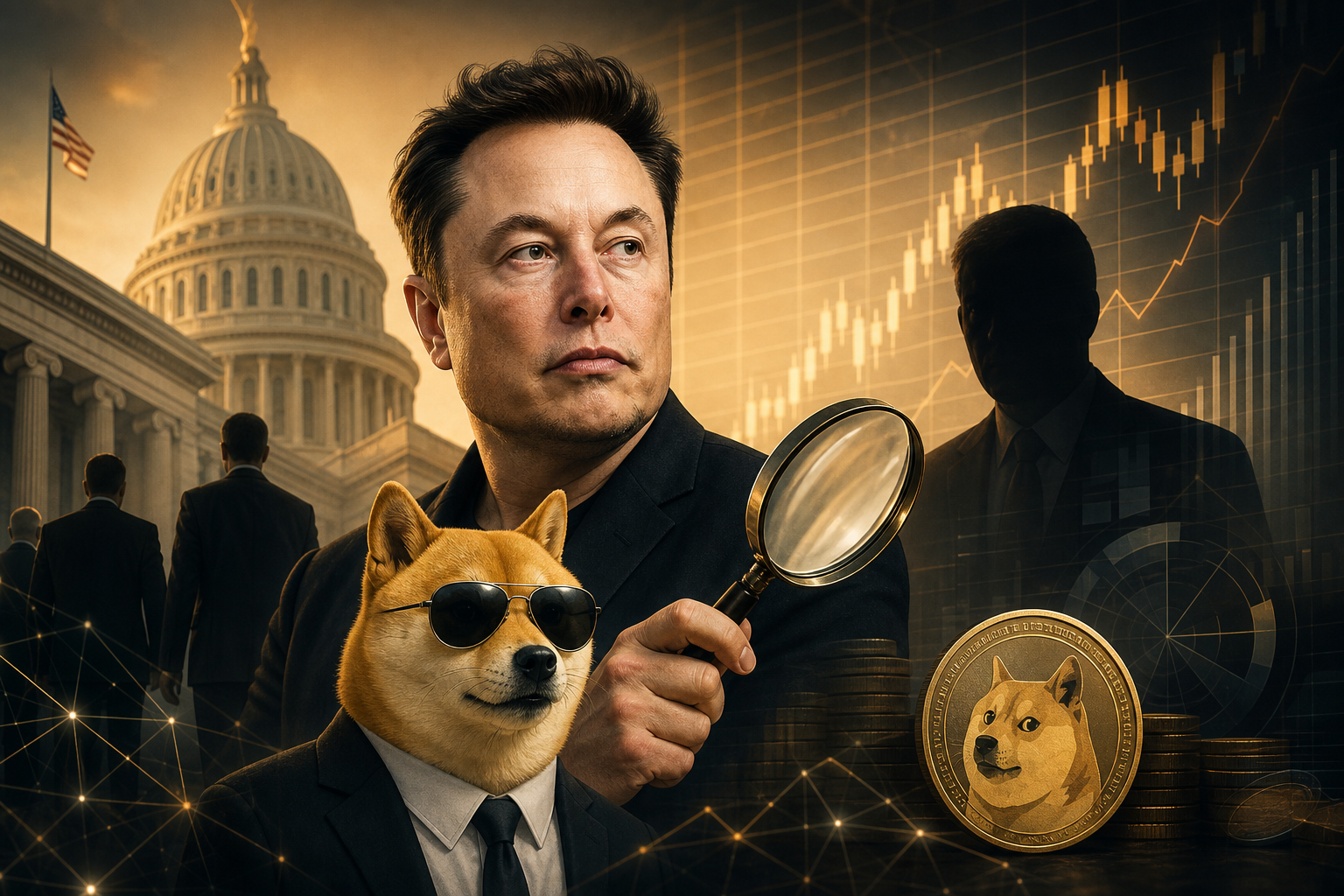
A powerful group of unions has declared war on the US Treasury Department, filing a lawsuit to stop Elon Musk’s Department of Government Efficiency (D.O.G.E) from accessing sensitive financial and personal information yesterday.

The unions want an immediate court order slamming the brakes on Elon’s access to federal payment systems, saying the Treasury illegally handed Elon’s team the keys to the nation’s confidential data, including records tied to taxpayers, federal employees, and companies.

The lawsuit was filed after Scott Bessent, who now heads the Treasury, approved the access, which the unions are saying violates federal privacy protections and places all Americans at risk. In the lawsuit, they demand that any data already collected by D.O.G.E be retrieved and locked away for good.

Elon’s team has been on a mission to sniff out waste in government spending and drag federal tech systems into the 21st century ever since President Donald Trump signed an executive order for D.O.G.E on Jan. 22nd.

Treasury payment systems at the center of controversy

According to the union’s lawsuit, those systems process more than 1.2 billion federal transactions annually, covering everything from Social Security benefits to Medicare payments and defense contracts.

The complaint claims that Elon’s access was granted just after David Lebryk, Treasury’s acting Deputy Secretary, suddenly quit after working in the Treasury for years, helping oversee its payment processes. The unions are using his departure as evidence that something isn’t right.

“Our members’ privacy is being violated, and once that damage is done, you can’t undo it,” their court filing said. Treasury officials aren’t exactly scrambling to apologize. In fact, they’re defending the decision, claiming Elon’s team only has “read-only” access to “coded data.”

According to a report from Fox Business, a Treasury spokesperson told Congress that the access is necessary for operational reviews but won’t impact payments or give D.O.G.E control over the system. “No valid payment requests have been blocked or delayed,” they said.

Congress demands answers on Elon’s growing power

Democrats in Congress, led by Senator Patty Murray, are coming down hard on the Treasury for letting Elon’s hands anywhere near government finances. “Why should we believe them when Elon is bragging on X (formerly Twitter) that D.O.G.E could shut down payments to organizations he doesn’t like?” Murray asked.

She was referring to Elon’s online posts suggesting that D.O.G.E could halt payments to a Lutheran charity if it wanted to. Treasury’s defense? Tom Krause, the CEO of Cloud Software Group and a key member of D.O.G.E, is working as a special government employee under less strict ethical guidelines than full-time federal employees.

Treasury Secretary Bessent says Krause’s role is standard and involves reviewing payment systems to make them more efficient. “He has read-only access, similar to external auditors,” the Treasury’s statement reads.

Rep. Maxwell Frost took it further by showing up at the Treasury, demanding the same access Elon’s team got. “We’re here on behalf of our constituents,” Frost posted on X. “Let us in.” His stunt didn’t work. Steven Cheung, White House communications director, mocked him in fact, calling him “just another example of Democrats chasing social media clout instead of solving problems.”

Latest

Securitize in the Red: Record Quarter Fuels Public Listing Plans

Securitize’s Losses, RWA Growth: A Public Listing Test for Tokenization

Securitize is still losing money, even after its best quarter so far. That is the tension here. Tokenized real-world assets, or RWAs, keep attracting institutional money, but the companies building the infrastructure are not automatically turning that interest into profit. My take: this is not just another crypto company dragging around ugly numbers. Securitize is a fairly clean test of whether tokenization can move from a strong pitch into a public market business.

Securitize in the Red: Record Quarter Fuels Public Listing Plans

The Miami tokenization platform reported $19.5 million in Q1 revenue, its highest quarterly total yet and up 39% from a year earlier. Asset servicing carried the quarter, rising 201% to $8.3 million as Securitize Fund Services reached 650 active funds. Tokenization revenue barely moved at $11.1 million, close to last year’s $11 million. The firm reported $3.4 billion in tokenized assets under management, $24.9 billion in assets under administration, and $1.9 billion in aggregated transaction volume. Serious numbers. Not clean victory-lap numbers.

The company is still burning cash. Net loss widened to $7.9 million, or 88 cents per diluted share. Adjusted EBITDA fell to $800,000 from $4.1 million in the same period last year. Securitize says the drop came from expansion spending and preparation for its public listing through a SPAC merger with Cantor Equity Partners II (CEPT). CFO Francisco Flores pointed to higher headcount and infrastructure costs as the company gets ready for public markets, while still claiming “disciplined expense management.” I’ll be honest: that phrase has to carry a lot of weight here. The numbers make it work pretty hard.

For crypto, this is an adoption signal with some dirt under its nails. Securitize’s assets under management and administration suggest institutions are doing more than testing tokenized assets in small pilots. Some are using the rails. Real estate, private equity, credit funds, and other old financial products are being put into blockchain wrappers, which creates demand for companies like Securitize. Most RWA bulls talk as if adoption automatically means margin. That’s only half right. More activity can also help stablecoins such as USDC and USDT, since they often sit underneath settlement for tokenized assets. Why does this matter? Because more RWA activity could mean deeper stablecoin liquidity and more collateral moving into DeFi. We already saw how fast traditional finance can move when the wrapper feels familiar: BlackRock’s IBIT gathered more than $17 billion after its January 2024 launch. RWAs do not have to follow that path, but it shows how quickly money can show up when the access point feels safe enough.

Securitize’s planned public listing also puts regulation closer to the center of the story. If the merger goes through, Securitize would be one of the few public companies built mainly around tokenized securities and RWAs. That brings more scrutiny. The SEC still has not made life easy for tokenized securities, and a public Securitize would have to explain its model under a brighter light than most crypto firms ever face. Its listing could affect how other RWA platforms handle compliance and custody. Issuance and exchange listings get pulled into the same debate. Counter to the usual advice, vague regulation may not be the worst short-term outcome for every tokenization firm; vague rules can leave room to operate. But public-market investors hate uncertainty once losses are visible every quarter. If regulators give clearer signals after the listing, the sector becomes easier to price. If they stay vague or lean into enforcement, investors could get nervous quickly.

CEPT shares rose 5% on Wednesday after the news, which suggests the market sees something worth betting on. Is that confidence in the current financials? No. It looks more like a bet that tokenization gets big enough to make today’s losses tolerable. I would read the move as curiosity with a price tag, not a full endorsement.

What this means

Securitize’s results are mixed. RWA adoption is growing, but the business model still has work to do. The rise in assets under management and administration shows traditional finance is taking blockchain-based asset infrastructure more seriously. That should help the wider crypto market, especially stablecoins and protocols that can handle tokenized collateral. DeFi platforms such as MakerDAO (MKR) and Aave (AAVE) could benefit if more RWA collateral moves on-chain and investors keep looking for yield tied to real assets instead of purely crypto-native risk. Yes, this slightly contradicts the caution above. Bear with me: a sector can be commercially messy and still be useful for the rest of crypto.

The SPAC listing with CEPT is the next thing to watch. Nasdaq trading will show how much appetite public investors have for a focused RWA company that is still losing money. SEC comments on tokenized securities matter too, especially once Securitize has public company reporting duties. Clear guidance could speed up the RWA trade. A hard enforcement signal could cool it down. Watch CEPT after the merger. Watch major stablecoin market caps. Watch stablecoin trading volume too. If those keep rising alongside RWA activity, the tokenization story gets harder to dismiss.