















































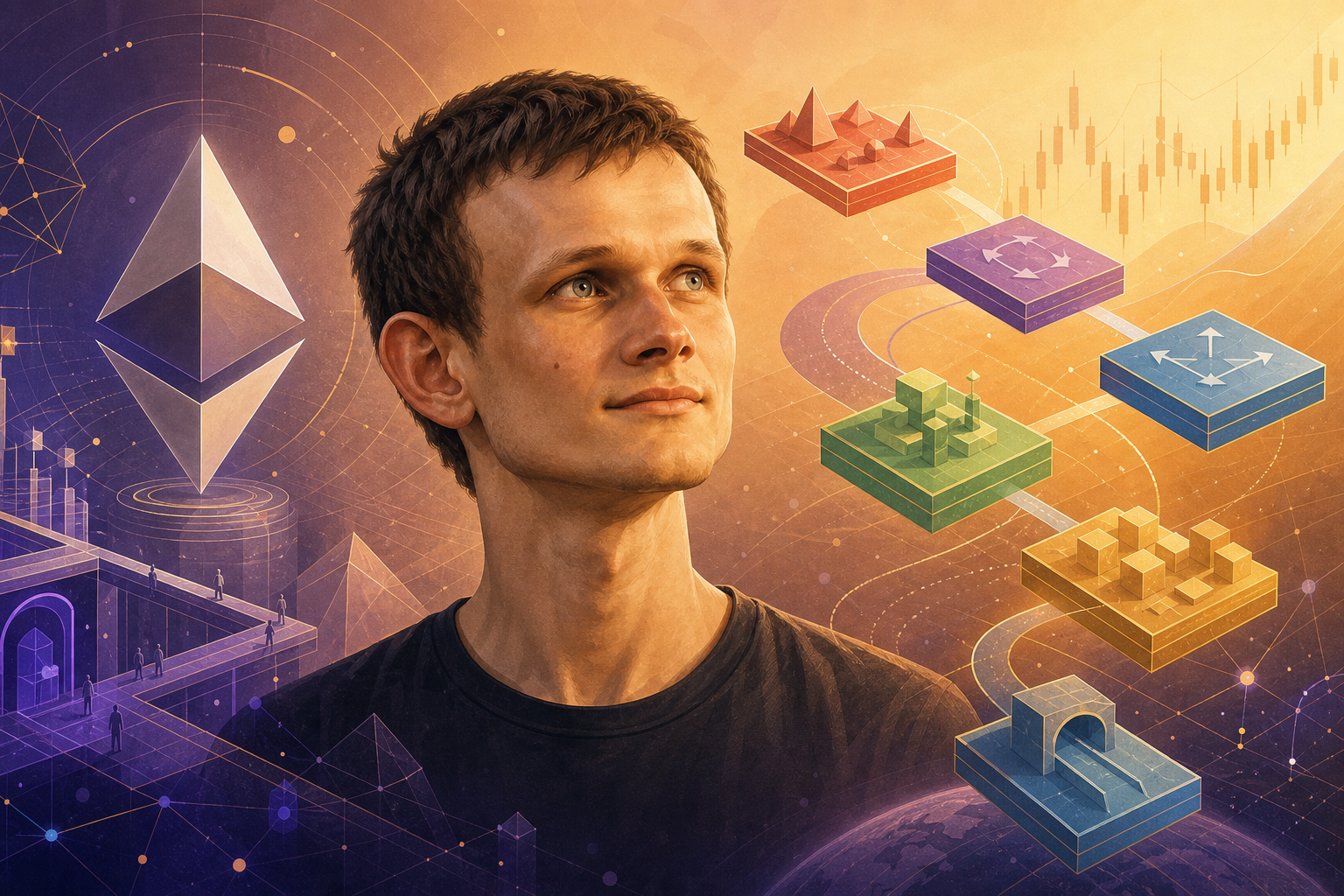
Vitalik Buterin, one of the co-founders of the Ethereum network, has put forth a proposal to scale Ethereum’s Layer 1 (L1) in order to facilitate growth at Layer 2 (L2). In an article titled “Possible futures for the Ethereum protocol, part 2: The Surge”, Buterin discussed the importance of achieving maximum scalability at L2 and the implications of a limited L1.
According to the article, if L2 scaling solutions for Ethereum become more successful without a corresponding increase in L1 capacity, several risks could arise. One major concern is the long-term security of the Ethereum network, as a weak L1 could undermine the economic viability and value of Ether (ETH). L2 solutions benefit from being closely integrated with a robust financial ecosystem on L1, and a weakened L1 could diminish the incentive to operate on L2.
Buterin also pointed out that the security guarantees of L2 solutions are not yet on par with L1, which poses risks in the event of L2 failure. In such cases, users would still need to rely on L1 for asset recovery, emphasizing the need for L1 to be capable of managing complex operations during an L2 wind-down.
To tackle these challenges, Buterin emphasized the importance of scaling L1. One approach suggested is gradually increasing the gas limit, although this carries the risk of centralization. A more balanced strategy involves improving Ethereum client software and implementing advanced technologies like multidimensional gas pricing and reduced gas costs for specific operations.
Buterin also mentioned proposals such as EVM-MAX and SIMD, which aim to enhance computation efficiency, and native rollups, which enable parallel execution of transactions and boost Ethereum’s overall scalability. However, he emphasized the need to balance these innovations with Ethereum’s core values of decentralization and security as the ecosystem continues to evolve.
In conclusion, Buterin stated that not everything should rely solely on L1, but there needs to be a guiding principle to avoid a situation where increasing the gas limit significantly damages the decentralization of Ethereum L1. The goal should be to achieve a world where the majority of activity takes place on L2 without sacrificing what makes Ethereum L1 special.