















































Sevilla FC Players Crypto Scam Hits €24M as Shirtum Probe Widens
The Sevilla FC players crypto scam is a Spanish criminal investigation into six former Sevilla FC footballers accused of promoting Shirtum, a sports-NFT and BNB Chain token venture that allegedly took at least €24 million from retail investors between 2021 and 2023. The case just got bigger. Spanish judicial filings reported by El Confidencial and Cinco Días show investigators are now looking at six former players of the Andalusian club over their roles in Shirtum, a venture prosecutors say funneled at least €24 million out of retail investors before it collapsed. My take: this isn’t another celebrity rug pull buried in a Twitter thread. It’s a MiCA-era enforcement target with direct relevance for PancakeSwap, BNB Chain, and the whole athlete-fronted token playbook that somehow dragged itself from 2021 into the current cycle.
According to the case file at the Juzgado de Instrucción in Seville, six ex-Sevilla footballers became named subjects in the Shirtum probe. The pitch was simple. Buy a digital collectible tied to a famous athlete. Hold a piece of the brand. Ride the upside. Investors paid roughly €450 per “NFT” with the players’ faces on it. Investigators say those NFTs never actually existed on a blockchain. No on-chain provenance. No contract address holding the tokenized asset. Just a receipt and a brand. Why does that matter? Because that one missing blockchain record is what turns the case from a messy consumer dispute into a fraud file.
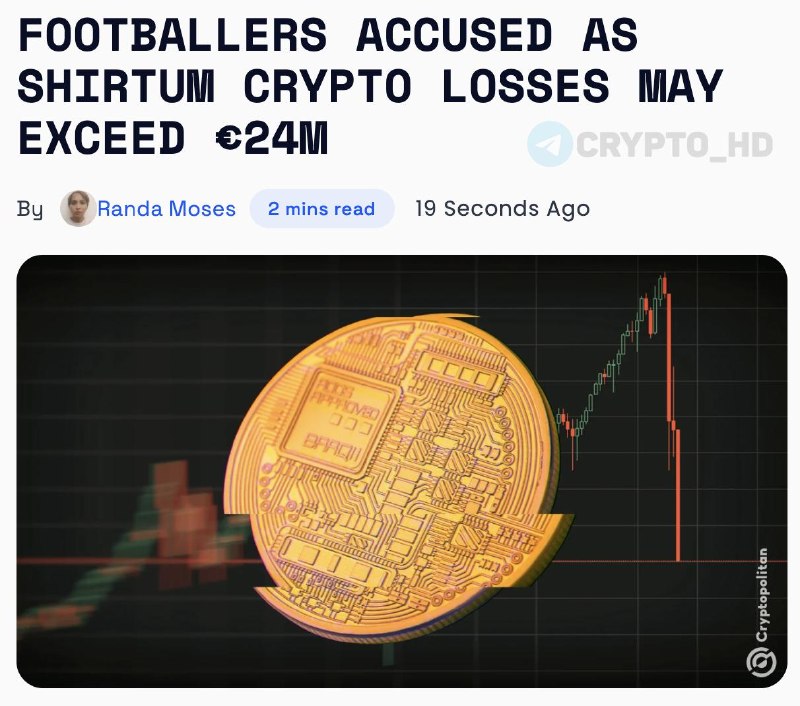
On top of the NFT sleeve, the Shirtum team raised about €3 million in BNB to build an app that, according to the probe, never launched. Another €1 million in sales receipts didn’t show up in the project’s official accounting. Then came SHI, the project’s native asset on BNB Chain. It launched with 78% of supply handed to insiders for free. The price was pumped on PancakeSwap. Liquidity was pulled. Holders watched the chart rip upward, then collapse to zero. Spanish prosecutors say at least €20 million was extracted through token manipulation alone, with combined losses across the NFT sale, the unlaunched app, and the SHI dump above €24 million.
That ratio matters. Roughly 83% of the alleged damage sits inside one liquidity-rug on a public AMM. The NFT layer was the customer acquisition funnel. The token was the exit. Brutal, but clean.
The regulation angle
Shirtum is the first major European celebrity-token enforcement action under the MiCA regime, which means Spanish and EU regulators will reference it when prosecuting future athlete-fronted token launches. European watchdogs have been waiting for a case like this. MiCA, the EU’s Markets in Crypto-Assets framework, is now live across the bloc. The CNMV, Spain’s securities regulator, has spent the last two years warning about celebrity-promoted tokens and unregistered offerings. Shirtum hits almost every red flag in the CNMV’s 2024 investor alerts: athletes as the marketing layer, an unregistered token sale, an “NFT” product that doesn’t deliver the on-chain asset it advertises, and a pump executed on a permissionless DEX rather than a regulated venue. I’ll be honest: I’d expect this case to be cited inside ESMA briefings within months. Anyone running sports IP wrapped in a BEP-20 should assume the legal cost of that structure just went up sharply.
For listed crypto businesses, the read-through is direct, but not simplistic. Binance operates BNB Chain, the network where SHI traded. PancakeSwap (CAKE) is the AMM where the alleged pump and dump cleared. Neither is accused of wrongdoing here, and honestly neither should be. That’s how permissionless venues work. Most commentary will blame the rails. That’s only half right. MiCA’s “responsible issuer” language, plus the parallel push from EU national regulators to put guardrails on DEX front-ends and influencer-promoted launches, will keep pressure building on every BNB-Chain-adjacent listed name. CAKE has already underperformed the broader DeFi basket through this cycle. Cases like Shirtum tighten the discount.
The adoption-signal angle
Athlete crypto endorsements have shifted from a marketing tailwind to a regulatory liability, and Shirtum is the first European case where the athletes themselves face criminal investigation, not just the promoters around them. The 2021 cycle leaned hard on one idea: sports IP plus a token equals instant distribution. Ronaldo with Binance. Messi with Socios. Tom Brady with FTX. Logan Paul with CryptoZoo. Some of those deals ended in lawsuits; others ended in regulatory fines. Shirtum is the first European football case where the athletes themselves, not just promoters, are the ones under investigation. Six players. One club. One project. That changes the risk calculus for every agent handling a footballer’s commercial portfolio. It also changes how institutional money looks at the fan-token category overall, including Chiliz (CHZ) and the Socios ecosystem, even though those are structured very differently from Shirtum and have not been linked to the case.
Fan-token volumes have been bleeding for two cycles. The category needed one more headline. It just got it. Not helpful.
How the mechanics played out
Shirtum’s alleged structure followed a standard insider-extraction pattern: a 78% insider token allocation, a phantom NFT product priced at €450, a €1 million accounting gap, and a coordinated PancakeSwap liquidity pull. Worth pausing on the mechanics. The 78% insider allocation on SHI is the part that should make any crypto investor flinch, not because it’s rare, but because it’s still common. On-chain data referenced in the case file shows that low-cap tokens launching on BNB Chain, Solana, and Base in 2025 and 2026 still ship with insider allocations between 60% and 85%, often vested over timelines that look long on paper but unlock in tranches that line up neatly with marketing pushes. Counter to the usual advice, the problem isn’t always the unlock schedule. Sometimes the whole structure is the warning sign. Shirtum’s alleged execution, pump SHI on PancakeSwap, pull the LP, walk away, is the standard end-state when there’s no real product underneath. The €450 NFT layer just made it feel friendlier.
The €1 million accounting gap is the other tell. In a legitimate token project, sale proceeds either sit in a treasury wallet visible on-chain, get converted to stablecoins through a documented OTC desk, or hit a corporate bank account that matches the project’s filed accounts. When €1 million in receipts doesn’t reconcile with any of those, prosecutors don’t usually need a long philosophical debate about intent. The gap does a lot of the work. That’s why, according to the Spanish judicial filing, the case is being built as a fraud and money-laundering case rather than a softer consumer-protection action.
What this means
The Shirtum case will become the European reference precedent for prosecuting celebrity-fronted token launches under MiCA, with knock-on effects expected for fan-token valuations, BNB Chain risk premiums, and athlete endorsement structures. Shirtum is going to become the reference case for how European prosecutors approach celebrity-fronted token launches under MiCA. The combination of athlete defendants, an unregistered token, a phantom NFT product, and an on-chain pump-and-dump on a permissionless DEX gives Spanish authorities, and by extension ESMA, almost every fact pattern they need in one file. Yes, this slightly contradicts the idea that infrastructure is neutral. Bear with me. CAKE and BNB themselves aren’t legally exposed by this case, but the regulatory tone around BNB Chain just got sharper, and that bleeds into how custodians and asset managers underwrite the chain in their internal risk frameworks. I’d expect knock-on investigations into other Spanish-language sports-token launches from the 2021 to 2023 window, and at least one major exchange will probably delist or restrict trading of the SHI token if it hasn’t already.
Watch the next 60 days closely. First, whether the CNMV publishes a formal investor alert tied to Shirtum. That would be the trigger for follow-on civil cases across Spain and likely Italy. Second, whether the SHI token contract on BNB Chain shows any movement from the original deployer wallets. On-chain analytics teams at Arkham and Nansen say any such movement could mark assets as recoverable. Third, the next ESMA statement on celebrity crypto promotions, expected in late spring. Is this overkill for one failed sports-token project? No, because Shirtum gives regulators a clean case study. For traders, the read-across is narrow but real. Any low-cap token currently relying on athlete endorsements as its main growth story is now a higher-beta short into negative news. Any fan-token rebound through summer should probably be sized smaller than fundamentals alone would suggest. The €24 million number is the headline. The structural shift in how Europe enforces against this product category is the trade.
Frequently asked questions
What is the Sevilla FC players crypto scam?
It’s a Spanish criminal investigation into six former Sevilla FC footballers accused of promoting Shirtum, a sports-NFT and BNB Chain token project. Spanish prosecutors say the venture took at least €24 million from retail investors.
What is Shirtum and how did it allegedly work?
Shirtum was a sports-themed crypto venture that sold roughly €450 NFTs featuring footballers, raised about €3 million in BNB for an app that never launched, and issued the SHI token on BNB Chain with 78% of supply allocated to insiders. Prosecutors say insiders pumped SHI on PancakeSwap and pulled liquidity, extracting at least €20 million.
How much money did investors lose in the Shirtum case?
The Spanish case file puts total losses above €24 million. Around €20 million came from the SHI pump-and-dump, with the rest split between the €450 NFT sales and the €3 million raised for the unlaunched app.
Are Binance, BNB Chain, or PancakeSwap implicated?
No. SHI traded on BNB Chain and was pumped on PancakeSwap (CAKE), but neither Binance, BNB Chain, nor PancakeSwap is accused of wrongdoing in the Shirtum case. They operated as permissionless infrastructure used by the alleged perpetrators.
How does this case relate to MiCA regulation?
Shirtum is the first major European celebrity-token enforcement action since MiCA, the EU’s Markets in Crypto-Assets framework, became fully active. The CNMV says the case fits nearly every red flag in its 2024 investor alerts, and it’s expected to become a reference precedent for ESMA and national regulators.
Does this affect fan tokens like Chiliz (CHZ) or Socios?
Chiliz (CHZ) and the Socios ecosystem are structured differently from Shirtum and have not been linked to the case. That said, institutional sentiment toward the broader fan-token category is likely to weaken on the back of the investigation.
What should crypto investors watch over the next 60 days?
Three signals: a formal CNMV investor alert tied to Shirtum, on-chain movement from the original SHI deployer wallets tracked by Arkham and Nansen, and the next ESMA statement on celebrity crypto promotions expected in late spring.